Description
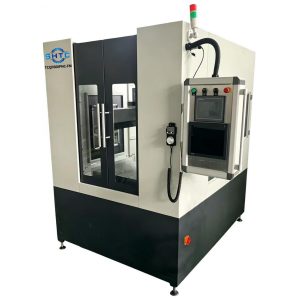
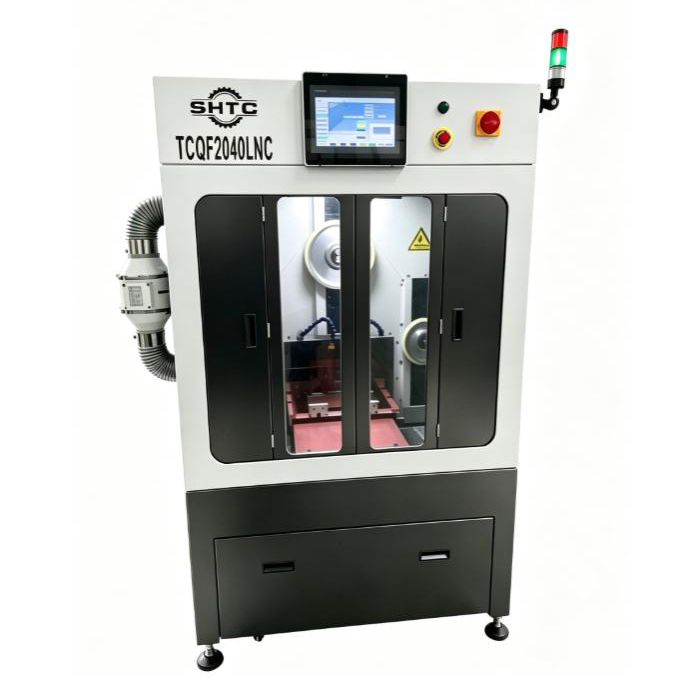
Engineered for industrial procurement teams managing advanced material processing lines, this diamond ring saw machine eliminates the residual stress, micro-cracking, delamination, and grain pull-out commonly induced by conventional abrasive or mechanical cutting methods when machining precision ceramics.
It is explicitly validated for cutting precision ceramics—as confirmed by the manufacturer’s stated application scope—and excels with dense, brittle, and thermally sensitive materials such as alumina (Al2O3), zirconia (ZrO2), and silicon nitride (Si3N4). These are critical in high-reliability aerospace components, hermetic medical device housings, and semiconductor-grade substrates.
The machine’s single-wire architecture—combined with adjustable wire tension (0–300 N), ultra-fine feed control (0.01–35 mm/s on X/Y axes), and variable wire speed (0.1–50 mm/s)—enables deterministic kerf control and minimal subsurface damage. Constructed from Q235 structural steel, SS304 stainless, and 6061 aluminum, it ensures dimensional stability during prolonged ceramic machining cycles.
This diamond ring saw machine delivers ultra-precise, low-stress slicing of fine-grained technical ceramics—including alumina (Al2O3), zirconia (ZrO2), and silicon nitride (Si3N4)—for demanding aerospace, medical implant, and microelectronics manufacturing lines.
This precision ceramic cutting saw machine is purpose-built for industrial procurement teams managing high-reliability material processing lines. It uses a single-diamond-wire architecture to deliver ultra-low-stress, deterministic slicing of dense, brittle technical ceramics—including alumina (Al2O3), zirconia (ZrO2), and silicon nitride (Si3N4). Unlike conventional abrasive or mechanical methods, it prevents micro-cracking, grain pull-out, delamination, and thermal damage—critical for aerospace structural components, hermetically sealed medical implant housings, and semiconductor-grade substrates. With fine-tuned control over wire tension (0–300 N), feed rate (0.01–35 mm/s), and wire speed (0.1–50 mm/s), it ensures repeatable kerf width and minimal subsurface damage across extended production runs.