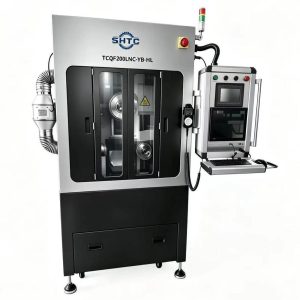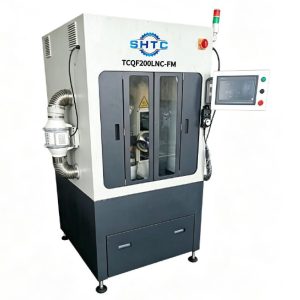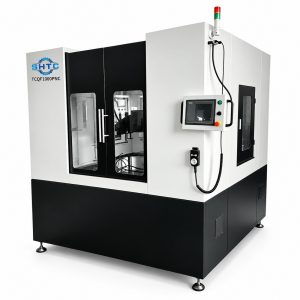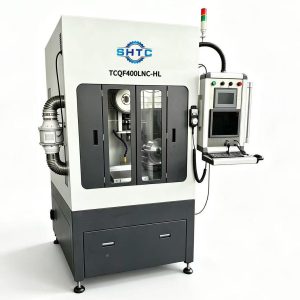
Description
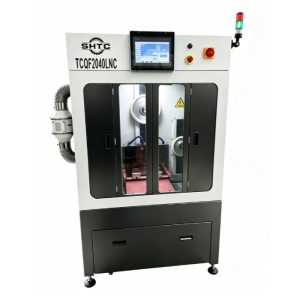
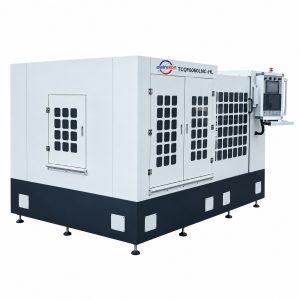
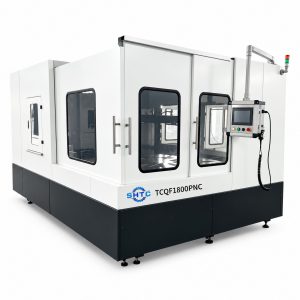
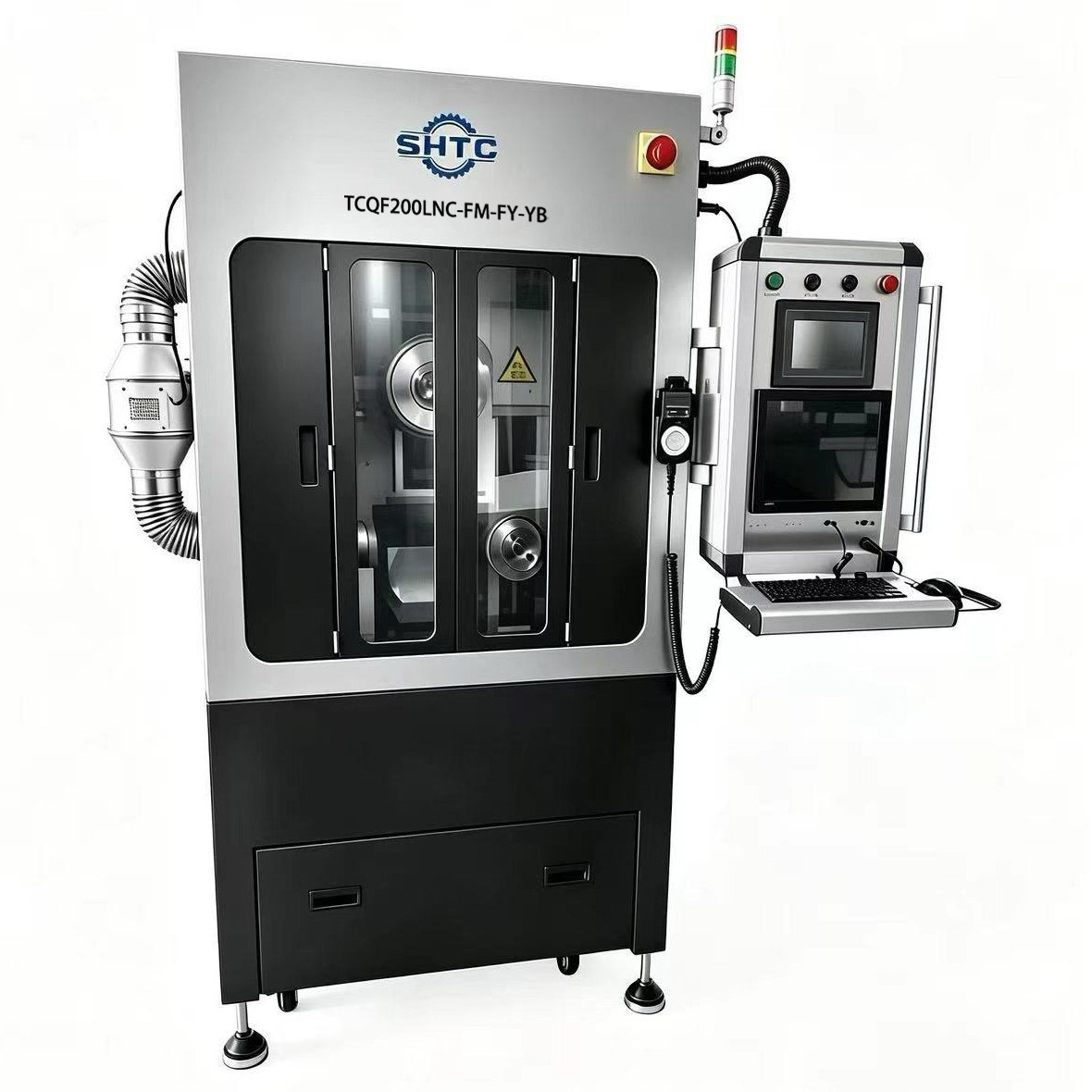
Engineered for electronics packaging and power device assembly lines, this diamond ring saw delivers the ultra-stable motion control and micro-adjustable feed required to slice fragile, high-performance semiconductor packaging substrates. Its rigid Q235+SS304+6061 frame suppresses vibration, while the 0.01–35 mm/s X/Y axis feed rate and 0.1–50 mm/s wire speed enable precise tuning for brittle ceramics like silicon carbide and aluminum nitride. The 0–300 N tension range ensures consistent wire engagement without cracking, critical when processing low-fracture-toughness LTCC and AlN wafers.
Unlike abrasive blade saws, the single-wire diamond configuration eliminates lateral force-induced warping and thermal distortion—preserving planarity and dimensional integrity across thin, thermally conductive substrates. CE-certified and built for 24/7 operation in cleanroom-adjacent environments, it integrates seamlessly into semiconductor backend processes where yield, edge quality, and kerf loss directly impact device reliability.
Industrial single-wire diamond ring saw optimized for clean, repeatable slicing of thermally conductive but brittle semiconductor packaging materials—including silicon carbide (SiC), aluminum nitride (AlN), and LTCC—delivering sub-5µm positional repeatability and minimal subsurface damage.
Designed specifically for the demanding requirements of semiconductor backend manufacturing, this industrial diamond ring saw uses a single-diamond-impregnated wire to slice fragile, high-performance packaging substrates with exceptional dimensional fidelity. Its rigid hybrid frame—constructed from Q235 steel, stainless steel 304, and aerospace-grade 6061 aluminum—actively suppresses mechanical vibration, eliminating lateral forces that cause warping or micro-cracking in thermally conductive but low-fracture-toughness materials like silicon carbide (SiC), aluminum nitride (AlN), and low-temperature co-fired ceramic (LTCC). With micro-adjustable feed rates (0.01–35 mm/s) and fine-tuned wire tension control (0–300 N), it delivers sub-5µm positional repeatability and minimal subsurface damage—critical for maintaining thermal performance and electrical reliability in power modules and advanced optical packages. CE-certified and built for continuous operation near ISO Class 5–7 cleanrooms, it integrates directly into electronics packaging and power device assembly lines where kerf loss, edge chipping, and planarity directly impact final device yield and lifetime.