Description
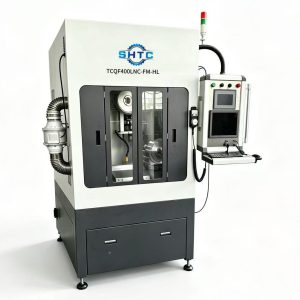
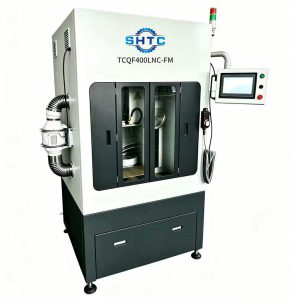
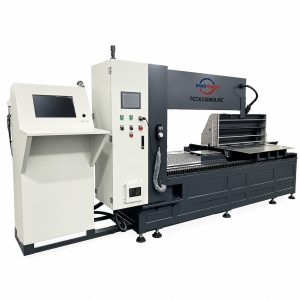
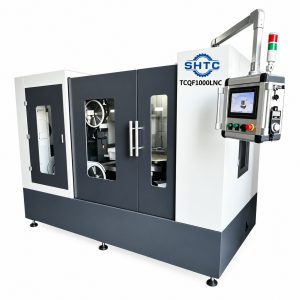
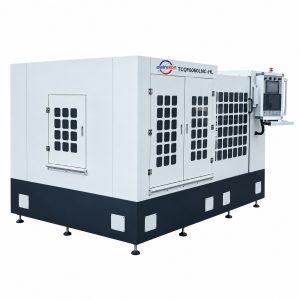
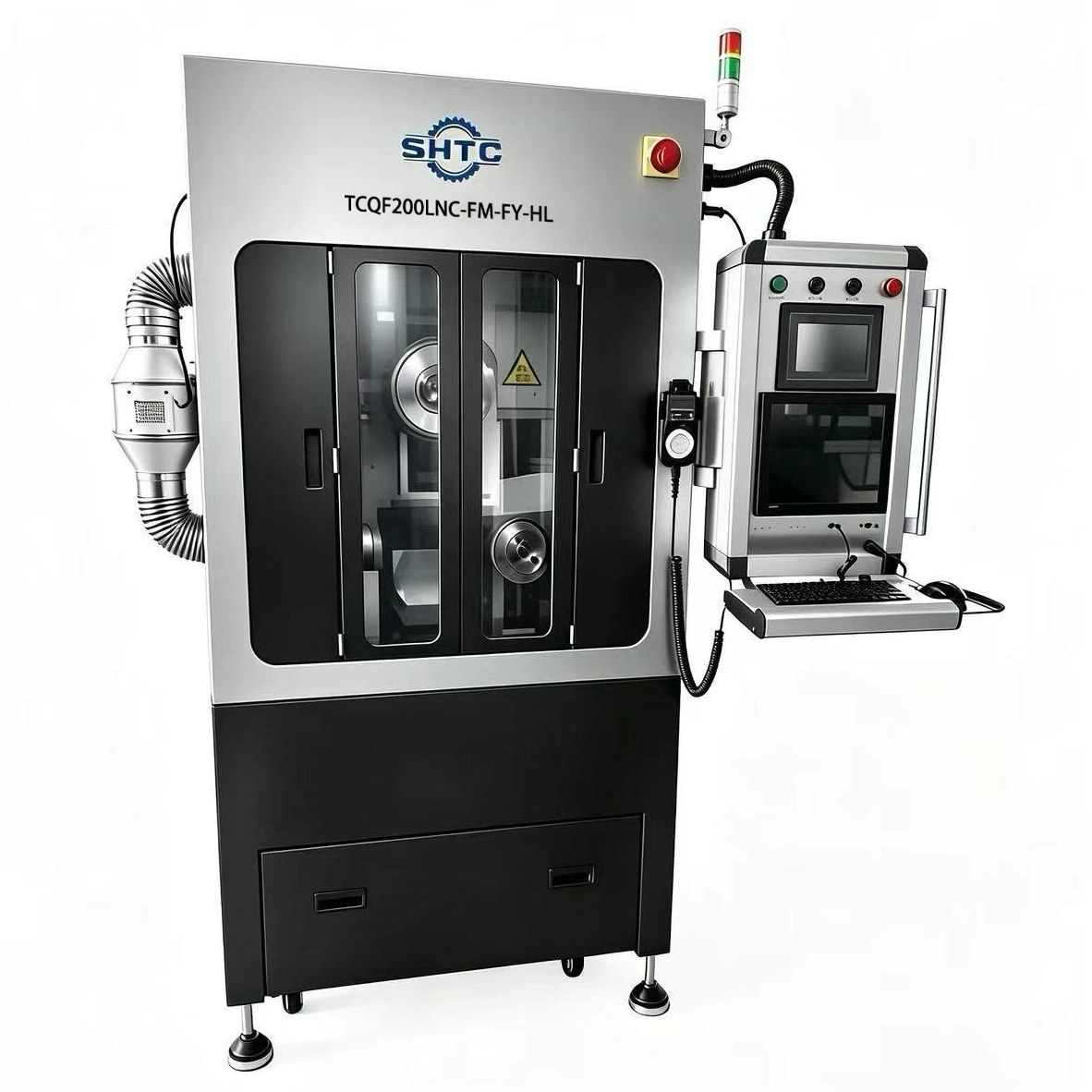
Designed specifically for photonics research labs and synthetic crystal growers, this diamond ring saw meets the exacting demands of post-growth orientation-specific slicing. Unlike conventional abrasive or blade-based methods, its single-wire architecture minimizes mechanical stress and thermal distortion—critical when cutting high-purity sapphire and birefringent optical crystals where cleavage plane alignment directly impacts polarization fidelity and laser performance.
The system supports fine control over wire speed (0.1–50 mm/s) and tension (0–300 N), allowing operators to match parameters to crystallographic orientation, hardness anisotropy, and desired surface integrity. Its X/Y axis feed rate (0.01–35 mm/s) enables sub-micron positioning repeatability, essential for producing uniform wafers from boules grown for quantum sensing platforms or ultrafast laser hosts.
Constructed with Q235 structural steel, SS304 stainless components, and 6061 aluminum for dimensional stability, the saw operates at 380 V / 3.6 kW and complies with CE safety standards. Customization is available to integrate with crystal orientation mapping software or automated loading systems used in advanced photonics fabrication workflows.
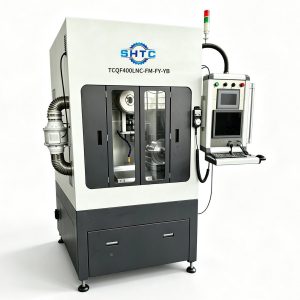
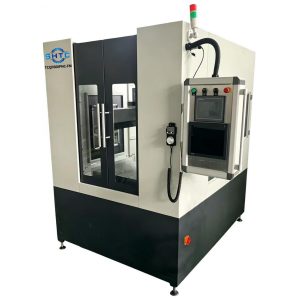
Precision single-wire diamond ring saw for low-distortion slicing of sapphire and optical crystals—optimized for photonics labs, quantum sensing platforms, and laser host material fabrication.
This diamond ring saw is purpose-built for laboratories and crystal growers requiring micron-level precision in slicing high-purity sapphire and sensitive optical crystals—such as YAG, LBO, BBO, and lithium niobate. Its single-wire architecture eliminates blade-induced microcracks and thermal gradients, preserving crystallographic integrity critical for polarization control, laser damage threshold, and quantum coherence in advanced photonic devices. With fully adjustable wire speed (0.1–50 mm/s), tension (0–300 N), and X/Y feed rates (0.01–35 mm/s), it enables adaptive cutting across anisotropic hardness planes and cleavage orientations. Constructed from Q235 structural steel, SS304 stainless components, and 6061 aluminum, the system ensures long-term dimensional stability during extended runs. CE-compliant and rated at 380 V / 3.6 kW, it integrates seamlessly into automated photonics workflows—including orientation mapping and robotic boule loading—supporting R&D and pilot-scale production of wafers for ultrafast lasers, quantum sensors, and electro-optic modulators.