Description
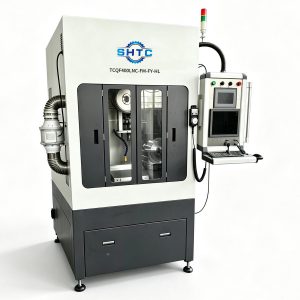
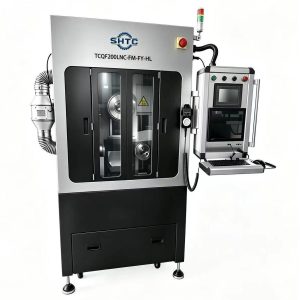
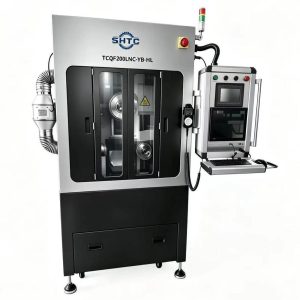
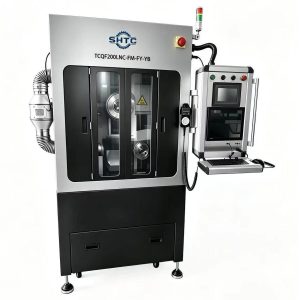
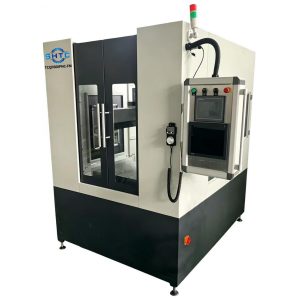
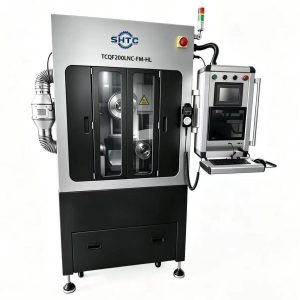
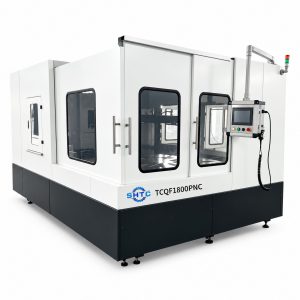
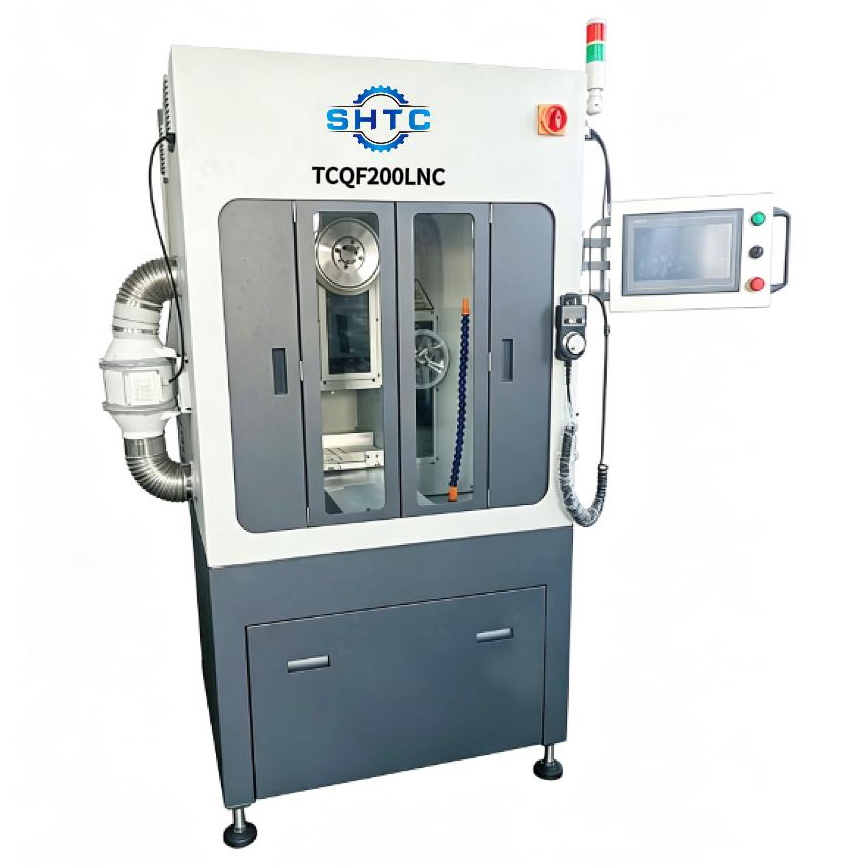
For Australian research laboratories and photonics manufacturers requiring micron-level accuracy in optical glass processing, this diamond ring saw delivers unmatched precision without chipping, microcracking, or thermal distortion. Unlike conventional abrasive or mechanical saws, its controlled single-wire diamond abrasion enables clean, straight kerfs and exceptional surface integrity — critical for high-performance lenses, prisms, beam splitters, and laser-grade substrates.
The system supports fine-tuned process parameters essential for brittle optical glass: adjustable wire speed (0.1–50 mm/s), ultra-low feed rates (0.01–35 mm/s on X/Y axes), and precise tension control (0–300 N) to prevent wire deflection or material fracture. Constructed from Q235 structural steel, SS304 stainless, and 6061 aluminium, it ensures long-term dimensional stability in lab environments. CE-certified and rated for 380V industrial supply, it integrates seamlessly into cleanroom-adjacent or controlled R&D workflows.
Single-wire diamond ring saw for micron-accurate, subsurface-damage-free cutting of optical glass, sapphire, and precision ceramics — trusted by Australian photonics labs and optical R&D engineers.
Designed specifically for demanding photonics and optical engineering applications, this diamond ring saw enables distortion-free, chipping-free cutting of brittle optical materials — including BK7, fused silica, sapphire, and laser-grade substrates. Its single-wire diamond abrasion system eliminates thermal stress and microcracking, preserving surface integrity critical for high-performance lenses, prisms, beam splitters, and semiconductor packaging. With ultra-fine control over wire speed (0.1–50 mm/s), feed rates (0.01–35 mm/s), and tension (0–300 N), it supports repeatable, clean kerfs down to micron-level tolerances. Built with Q235 structural steel, SS304 stainless, and 6061 aluminium, the system maintains long-term stability in controlled lab and cleanroom-adjacent environments. CE-certified and engineered for 380V industrial power, it integrates reliably into Australian R&D workflows focused on next-generation optical systems.