Description
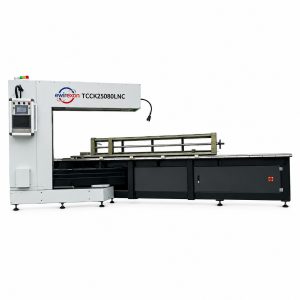
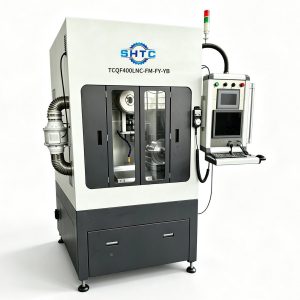
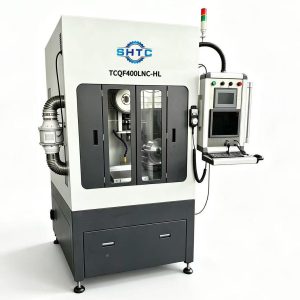
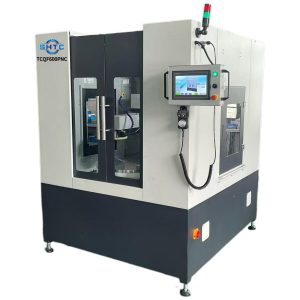
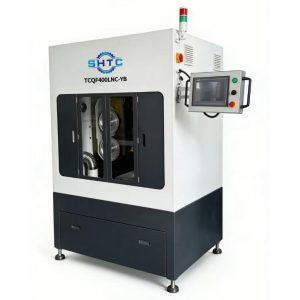
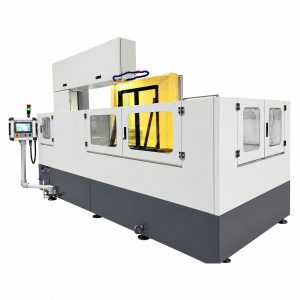
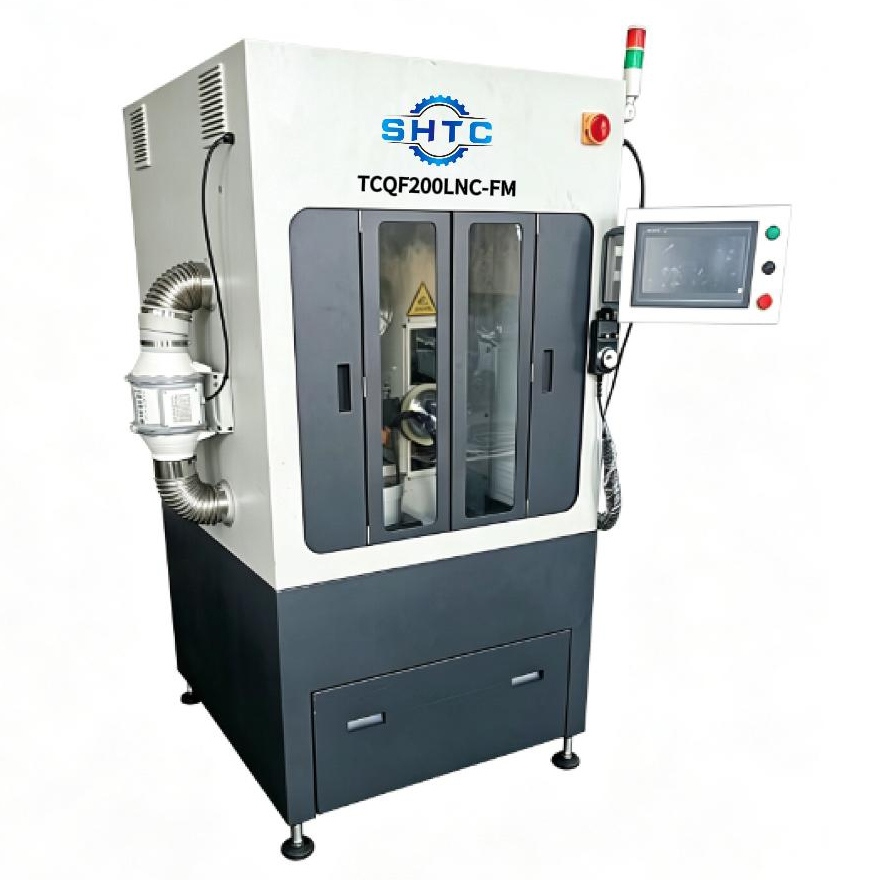
This diamond ring saw (single-wire saw) is purpose-engineered for laboratories advancing clean energy technologies in Australia, where precise, non-destructive sectioning of graphite is critical. Unlike abrasive or blade-based methods, its continuous diamond-impregnated wire cuts with minimal mechanical stress—preserving structural integrity of fragile graphite components used in lithium-ion battery anodes, proton-exchange membrane fuel cells, and neutron-moderating assemblies.
The system delivers ultra-fine control: adjustable wire speed (0.1–50 mm/s), tension range (0–300 N), and feed rates (0.01–35 mm/s on X/Y axes), enabling reproducible kerf widths and surface finishes essential for functional testing. Its closed-loop motion design and Q235+SS304+6061 construction ensure stability during extended graphite runs, while the 2.4 kW motor and CE-certified 380 V operation meet Australian industrial safety and power standards.
Importantly, the saw’s documented application scope explicitly includes graphite—confirmed by the manufacturer’s stated support: “Applications: Cutting of optical glass, sapphire, precision ceramics, graphite, semiconductor packaging materials and CFRP composites.” No retrofitting or unverified modifications are required—this is a factory-supported use case.
Precision single-wire diamond ring saw for low-dust, high-fidelity graphite sectioning in battery anodes, fuel cells, and nuclear moderator R&D—minimising delamination and preserving structural integrity.
This diamond ring saw is a laboratory-grade single-wire cutting system engineered specifically for the delicate, high-accuracy sectioning of graphite in clean energy research and development. It enables non-destructive slicing of friable graphite components—critical for lithium-ion battery anode validation, proton-exchange membrane fuel cell component preparation, and neutron-moderating assembly fabrication—without delamination or surface disruption. Its continuous diamond-impregnated wire operates with ultra-low mechanical stress, supported by fine-tuned control over wire speed (0.1–50 mm/s), tension (0–300 N), and X/Y feed rates (0.01–35 mm/s). Built with Q235 structural steel, SS304 stainless, and 6061 aluminium, the system delivers vibration-resistant stability during extended runs. Fully CE-certified and configured for 380 V Australian industrial power, it requires no retrofitting for graphite applications—validated by the manufacturer’s official scope.