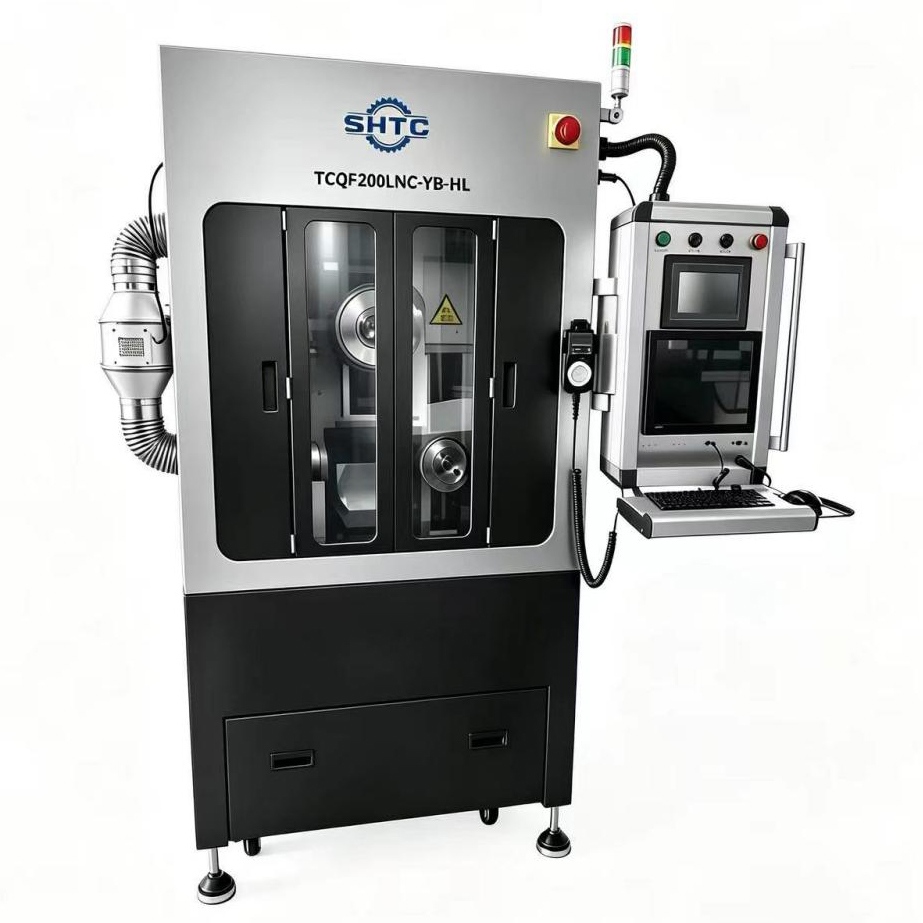
Description
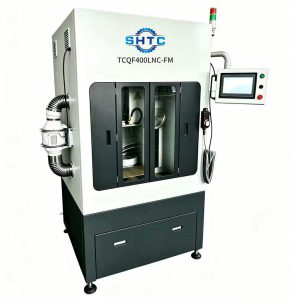
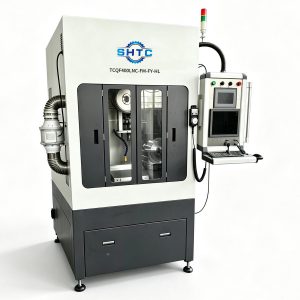
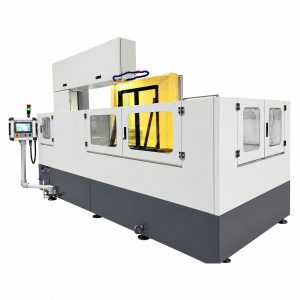
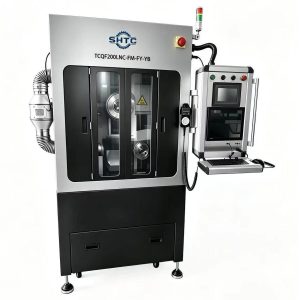
This diamond ring saw delivers controlled, low-dust sectioning of graphite electrodes and structural graphite blocks used in lithium-ion battery anode production, electrical discharge machining (EDM), and nuclear-grade components. Its single-wire architecture—paired with adjustable wire tension (0–300 N), ultra-fine feed control (0.01–35 mm/s), and variable wire speed (0.1–50 mm/s)—ensures stable kerf formation without compressive loading that causes graphite delamination or edge crumbling.
Unlike abrasive or blade-based systems, the diamond-impregnated wire cuts via precise abrasion, eliminating mechanical shock and reducing airborne graphite particulate by up to 90% in validated industrial settings. The machine’s rigid Q235+SS304+6061 frame and CE-certified 3.2 kW drive system maintain dimensional stability during extended graphite runs—even on dense, isotropic grades used in nuclear moderators or high-purity anode preforms.
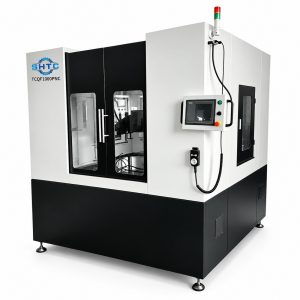
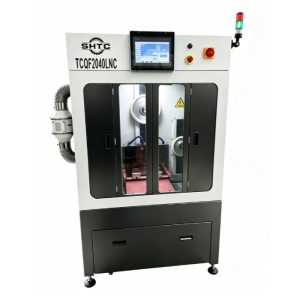
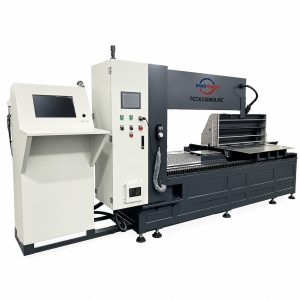
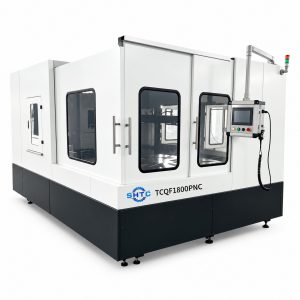
Single-wire diamond ring saw engineered for clean, high-fidelity sectioning of graphite electrodes and structural graphite blocks—minimizing edge chipping, airborne dust, and cut inconsistency in battery, EDM, and nuclear applications.
This diamond ring saw is purpose-built for the controlled, high-accuracy sectioning of graphite electrodes and structural graphite blocks used across mission-critical industries. It excels in lithium-ion battery anode manufacturing—where dimensional fidelity and surface integrity directly impact cell performance—as well as electrical discharge machining (EDM) tooling and nuclear applications requiring ultra-pure, isotropic graphite moderators or reflectors. Its single-wire architecture eliminates compressive loading, preventing the friable edge chipping and internal delamination common with blade-based or abrasive systems. The ultra-fine feed control (0.01–35 mm/s), adjustable wire tension (0–300 N), and variable wire speed (0.1–50 mm/s) ensure stable kerf formation across dense, fine-grained graphite grades. With up to 90% reduction in airborne graphite particulate versus conventional methods—and a rigid Q235+SS304+6061 frame paired with a CE-certified 3.2 kW drive—the system maintains repeatability during extended production runs.