Description
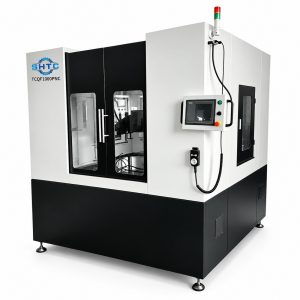
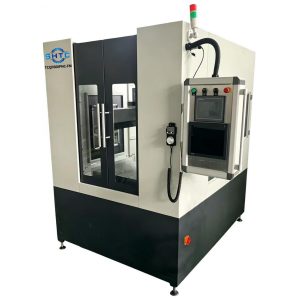
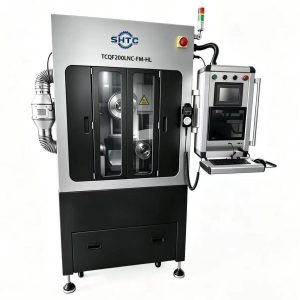
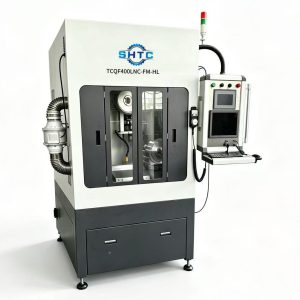
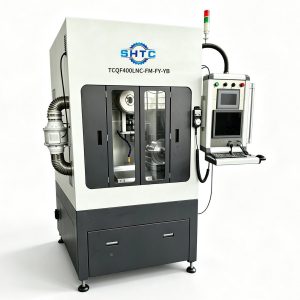
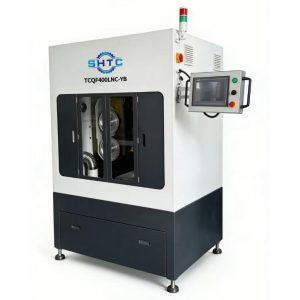
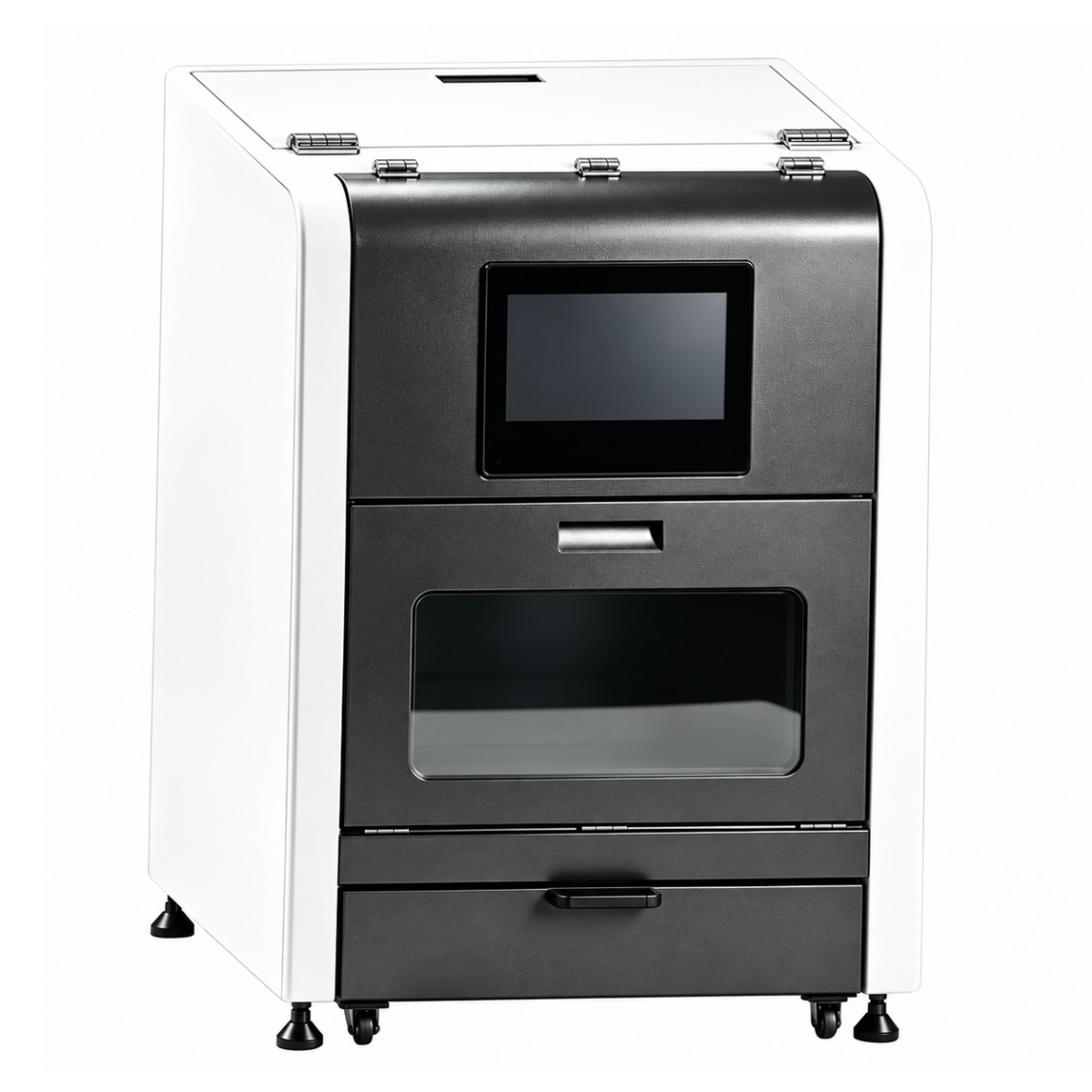
Designed specifically for energy materials laboratories, this diamond ring saw delivers precision, repeatable slicing of graphite blocks and electrodes without thermal damage, delamination, or hazardous dust generation. Its single-wire architecture applies minimal mechanical force while maintaining tight kerf control—critical when preparing anode precursors, bipolar plates, or EDM electrodes where dimensional fidelity and surface integrity directly impact test validity.
The system operates dry (no coolant required), eliminating slurry handling and enabling rapid sample turnaround in controlled lab environments. Adjustable wire tension (0–150 N), ultra-fine feed rates (0.01–35 mm/s), and programmable wire speed (0.1–50 mm/s) allow researchers to tune cutting parameters for varying graphite densities, grain orientations, and thicknesses—from 5 mm electrode blanks to 100+ mm research-grade blocks.
Constructed with Q235 structural steel, SS304 wetted components, and 6061 aluminum framing, the unit ensures long-term stability and corrosion resistance in demanding R&D settings. At 350 kg and compact 640×620×670 mm footprint, it integrates seamlessly into shared lab spaces without requiring floor anchoring or dedicated HVAC.
Desktop diamond ring saw optimized for dry, low-force slicing of graphite blocks and electrodes used in battery R&D, fuel cell prototyping, and EDM electrode fabrication—reducing dust, preserving microstructure, and ensuring sample integrity.
This diamond ring saw is purpose-built for energy materials laboratories requiring micron-level dimensional control and microstructural preservation when slicing graphite blocks. Unlike abrasive or coolant-dependent methods, its single-wire diamond architecture cuts dry—eliminating slurry waste, thermal distortion, and hazardous airborne dust. Researchers use it to prepare high-fidelity anode precursors for lithium-ion battery testing, dimensionally stable bipolar plates for PEM fuel cell prototyping, and EDM electrodes where grain orientation and surface integrity directly influence electrochemical performance. Programmable feed rates (0.01–35 mm/s), ultra-precise wire tension control (0–150 N), and variable wire speed (0.1–50 mm/s) enable adaptive optimization across diverse graphite densities—from fine-grained synthetic electrodes to coarse, porous research-grade blocks up to 100+ mm thick. Built with Q235 structural steel, SS304 wetted parts, and 6061 aluminum framing, the system delivers long-term stability in shared lab spaces without floor anchoring or HVAC upgrades.