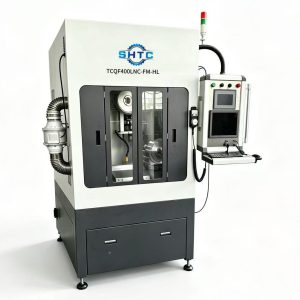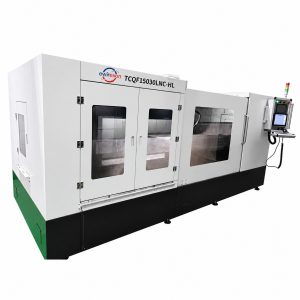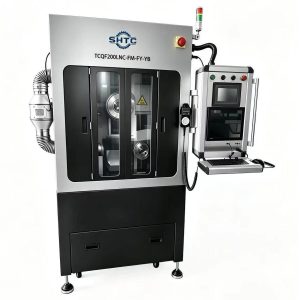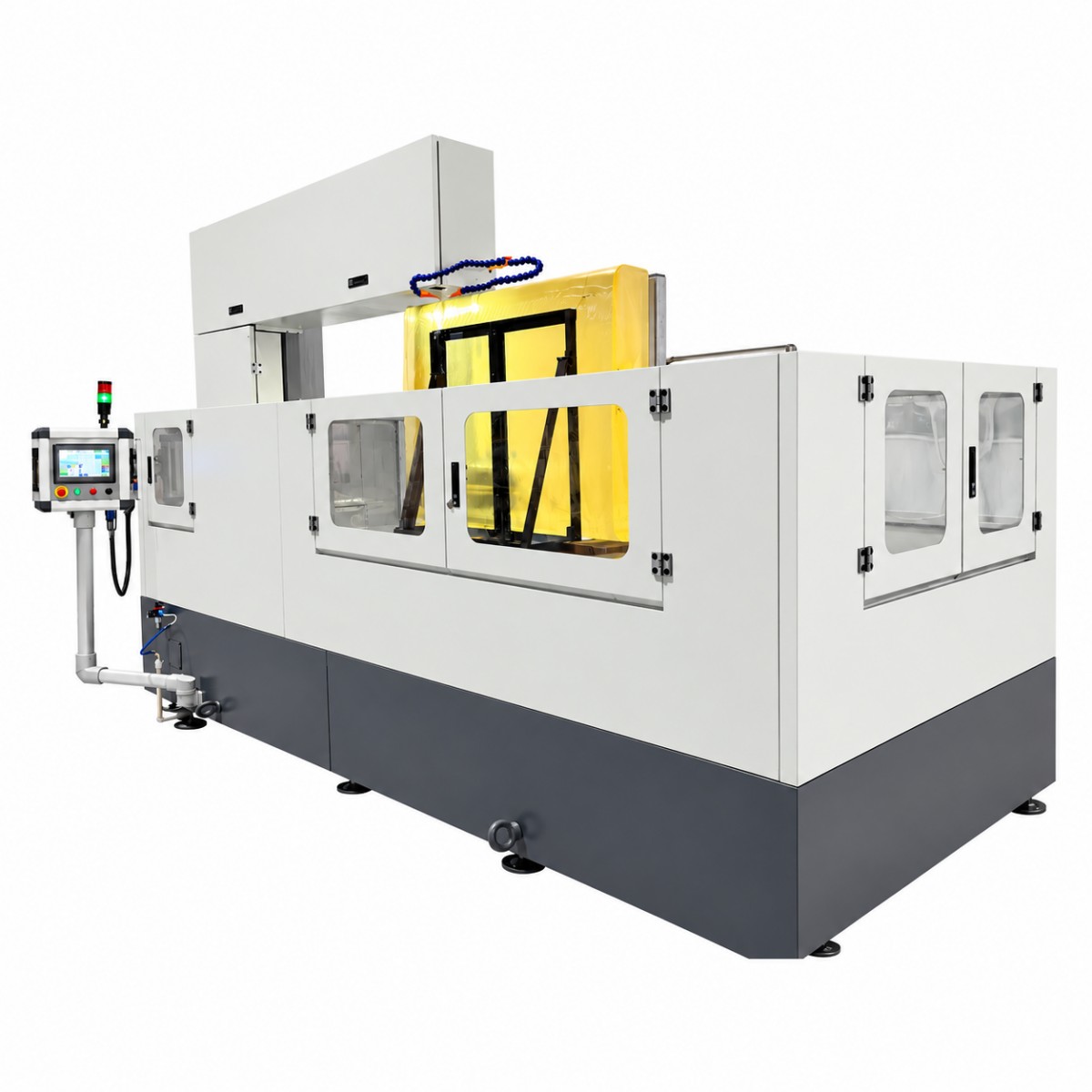
Description
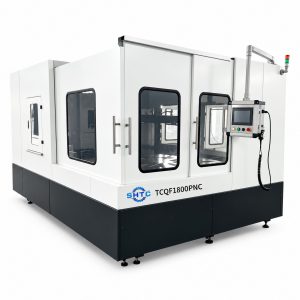
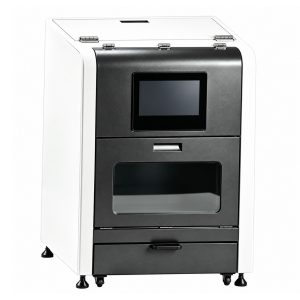
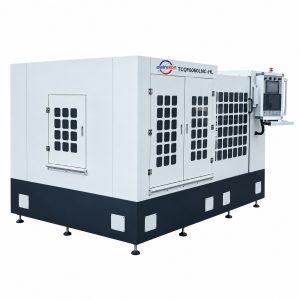
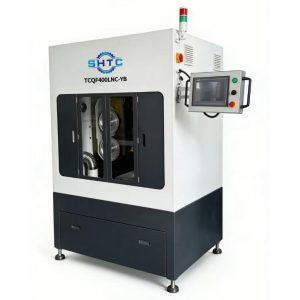
Engineered specifically for the demanding requirements of battery and nuclear material processing, this wire cutting machine enables precise, cold-sectioning of isotropic graphite blocks and electrodes without thermal distortion or structural compromise. Unlike conventional abrasive or blade-based systems, the single-wire diamond ring saw applies consistent tension and ultra-fine feed control to prevent micro-cracking, layer separation, or surface contamination—critical when preparing high-purity graphite for lithium-ion anodes or neutron moderator components.
The system’s adjustable wire speed (0.1–35 mm/s), fine-tuned tension range (0–500 N), and sub-millimeter X/Y axis feed rate (0.01–35 mm/s) ensure reproducible kerf width and dimensional accuracy across large-format graphite electrodes. Its sealed Q235+SS304+6061 construction supports operation in controlled environments, while the 5.6 kW motor and 380 V supply deliver stable performance during extended graphite sectioning cycles.
As confirmed by its official application scope, this wire cutting machine is explicitly validated for graphite cutting—making it a purpose-built procurement solution for manufacturers requiring dust-controlled, non-thermal, high-fidelity sectioning of conductive brittle materials.
Non-thermal diamond ring saw for precision graphite block sectioning—prevents delamination, thermal damage, and airborne dust in battery anode and nuclear graphite applications.
This diamond ring saw is a purpose-built non-thermal wire cutting system designed exclusively for high-fidelity sectioning of isotropic graphite blocks and electrodes. Used extensively in advanced battery manufacturing and nuclear material processing, it delivers cold, dust-controlled cuts that preserve structural integrity—critical for lithium-ion anode material preparation and neutron moderator fabrication. Its ultra-fine feed control (0.01–35 mm/s), precise wire tension (0–500 N), and adjustable wire speed (0.1–35 mm/s) ensure consistent kerf width and dimensional accuracy across large-format graphite components. Constructed from sealed Q235 steel, SS304 stainless, and 6061 aluminum, the system operates reliably in controlled environments while meeting CE safety standards.