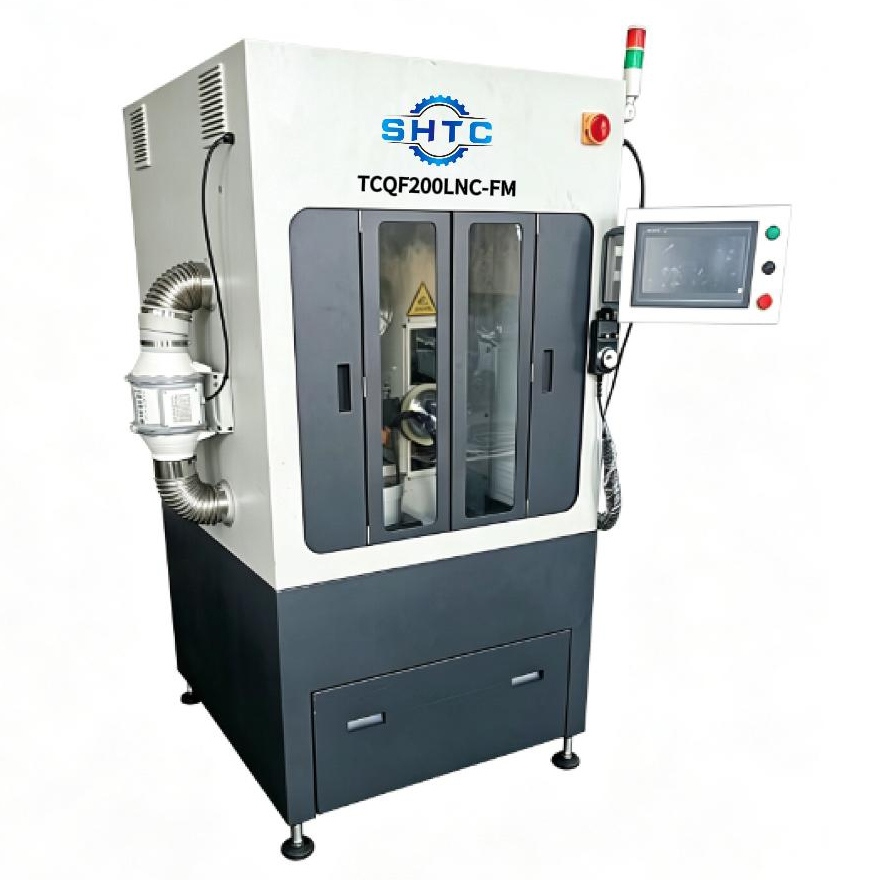
Description
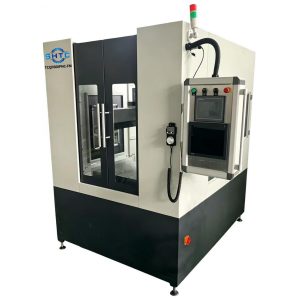
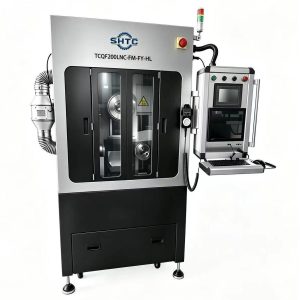
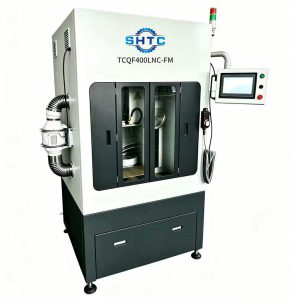
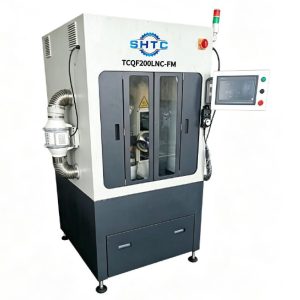
For UAE-based R&D labs and advanced manufacturing facilities working with carbon fiber reinforced polymer (CFRP) composites, this diamond ring saw cutting machine enables precision sectioning where conventional blades fail. Its single-diamond-impregnated wire operates at ultra-low tension (0–300 N) and finely adjustable feed rates (0.01–35 mm/s), minimizing mechanical stress on anisotropic laminates. The 0.1–50 mm/s wire speed range supports both high-fidelity surface cuts and deep-sectioning passes—critical when preparing CFRP samples for microscopy, mechanical testing, or joint interface analysis.
Unlike abrasive or rotary saws that generate localized heat and cause resin matrix breakdown, this saw cutting machine uses cold-cutting wire technology to preserve material integrity. Its rigid Q235+SS304+6061 frame ensures vibration-free operation during extended cuts, while CE certification confirms compliance with international safety and electromagnetic standards for industrial deployment.
Precision diamond ring saw for clean, low-stress CFRP composite sectioning—prevents delamination and resin degradation during sample prep for microscopy, mechanical testing, and interface analysis.
This diamond ring saw is engineered specifically for the demanding requirements of carbon fiber reinforced polymer (CFRP) composite sectioning in UAE-based R&D laboratories and high-precision manufacturing facilities. Unlike conventional abrasive or rotary tools that induce heat, vibration, and delamination, it employs a single-diamond-impregnated wire with ultra-low tension (0–300 N) and finely tuned feed rates (0.01–35 mm/s) to preserve laminate integrity. Its cold-cutting technology prevents resin matrix breakdown and fiber pull-out—critical when preparing specimens for scanning electron microscopy (SEM), tensile testing, or adhesive joint interface evaluation. Built on a rigid hybrid frame (Q235 structural steel, SS304 stainless, and 6061 aluminum), it delivers vibration-free performance during extended cuts. CE-certified for industrial safety and electromagnetic compatibility, it supports wire diameters from Φ0.3 to Φ1.0 mm and variable speeds up to 50 mm/s—enabling both surface-finishing passes and deep-sectioning operations.