Description
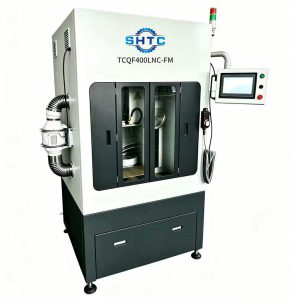
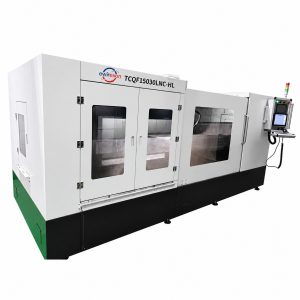
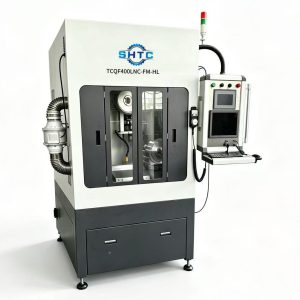
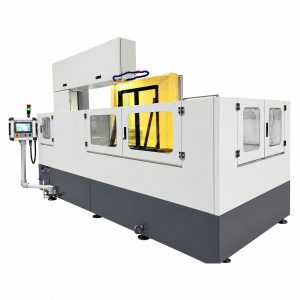
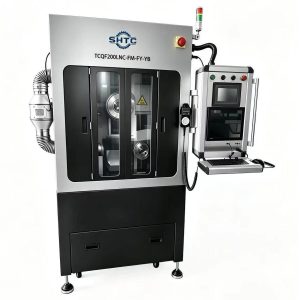
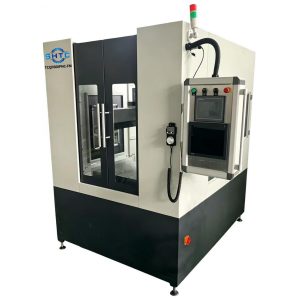
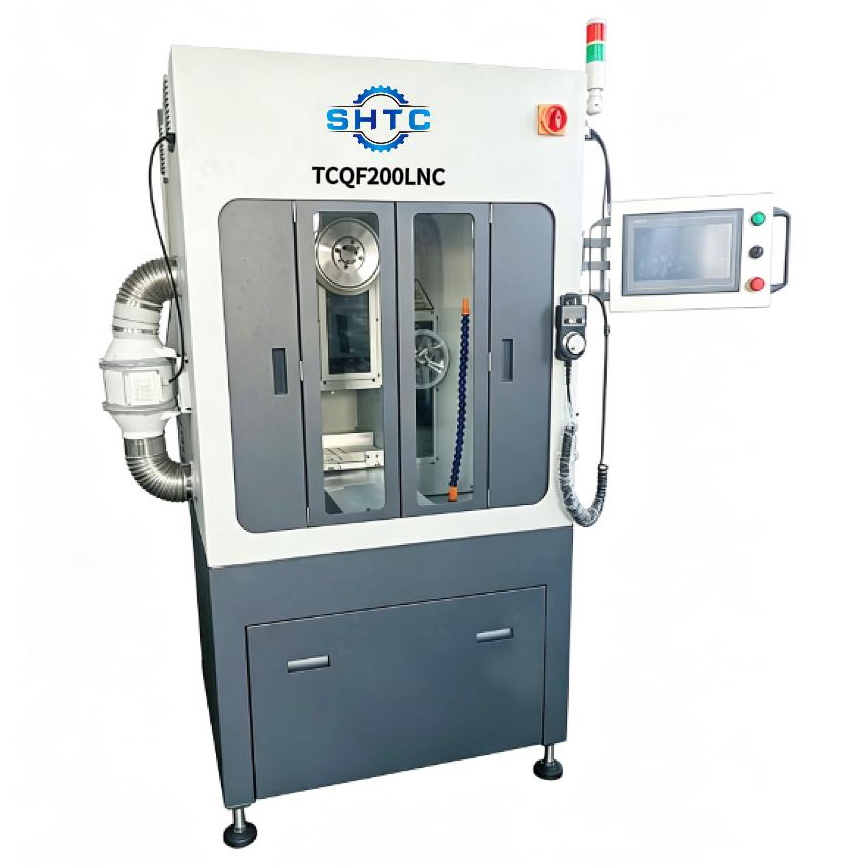
This diamond ring saw is purpose-built for materials science laboratories requiring micron-level control during sample preparation of emerging advanced materials. Its adjustable wire speed (0.1–50 mm/s), precise tension range (0–300 N), and fine X/Y feed rate (0.01–35 mm/s) enable reproducible, low-damage cuts across heterogeneous, brittle, or layered structures—critical when preparing specimens of MAX phases, ceramic matrix composites (CMCs), and other next-generation materials for TEM, SEM, or XRD analysis.
Designed for institutional research workflows, the system integrates robust mechanical construction (Q235+SS304+6061), CE compliance, and compatibility with standard lab power infrastructure (380V, 1.5 kW). While originally validated for optical glass, sapphire, precision ceramics, graphite, semiconductor packaging materials and CFRP composites, its parameter flexibility makes it suitable for method development on novel material systems where cut quality, subsurface integrity, and dimensional fidelity are paramount.
A precision single-wire diamond ring saw engineered for university and national labs to prepare high-fidelity samples of advanced materials—including MAX phases and ceramic matrix composites—using fully tunable cutting parameters.
This diamond ring saw is purpose-built for materials science laboratories where sample integrity directly impacts analytical validity. Its fully adjustable wire speed (0.1–50 mm/s), tension control (0–300 N), and ultra-fine X/Y feed rates (0.01–35 mm/s) enable reproducible, low-stress sectioning of heterogeneous, layered, or highly brittle advanced materials—including MAX phases, ceramic matrix composites (CMCs), optical glass, sapphire, precision ceramics, graphite, semiconductor packaging substrates, and CFRP. Designed for institutional research workflows, it features a rigid hybrid frame (Q235 structural steel, SS304 stainless, and 6061 aluminum), CE compliance, and seamless integration into standard 380V lab power infrastructure (1.5 kW). Unlike fixed-parameter systems, its tunability supports method development for novel material systems where dimensional fidelity, minimal subsurface damage, and cut repeatability are non-negotiable—especially prior to transmission electron microscopy (TEM), scanning electron microscopy (SEM), or X-ray diffraction (XRD) characterization.