Description
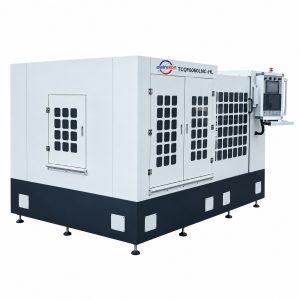
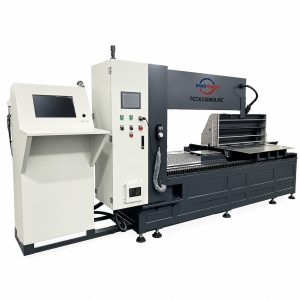
This single-wire diamond saw is purpose-configured for procurement-driven material qualification workflows in Singapore-based advanced manufacturing and R&D facilities. Unlike fixed-parameter systems, it supports methodical parameter tuning — critical when characterizing fracture behavior and thermal response of emerging specialty composite laminates such as ceramic-metal hybrids and metal matrix composites (MMCs).
The system’s adjustable wire tension (0–300 N), wide wire speed range (0.1–50 mm/s), and fine X/Y feed control (0.01–35 mm/s) enable iterative process development without hardware modification. Its mechanical construction — combining Q235 structural steel, SS304 wet-zone components, and 6061 aluminum frames — ensures dimensional stability during prolonged low-force slicing of thermally sensitive or heterogeneous laminates.
While not explicitly listed as a primary application, the manufacturer confirms support for ‘CFRP composites’ and ‘precision ceramics’ — material classes sharing key challenges with ceramic-metal and MMC laminates: anisotropic strength, interfacial delamination risk, and differential thermal expansion. This validated capability underpins its suitability for novel laminate qualification where off-the-shelf saws lack necessary tunability.
Engineered for Singapore-based material science teams, this customizable single-wire diamond saw delivers precise, tunable cutting of novel ceramic-metal hybrids and metal matrix composites — with fully adjustable wire speed (0.1–50 mm/s), tension (0–300 N), and feed rate (0.01–35 mm/s) to match unk
This customizable single-wire diamond saw is purpose-built for material science teams conducting procurement-driven qualification of emerging specialty composite laminates — including ceramic-metal hybrids, metal matrix composites (MMCs), CFRP, and precision ceramics. Its fully adjustable parameters — wire tension (0–300 N), speed (0.1–50 mm/s), and X/Y feed (0.01–35 mm/s) — enable methodical process development without hardware changes, critical when mapping unknown fracture behavior and thermal response. Constructed with Q235 structural steel, SS304 wet-zone components, and 6061 aluminum frames, it maintains dimensional stability during prolonged, low-force slicing of thermally sensitive or heterogeneous laminates. Validated for optical glass, sapphire, graphite, semiconductor packaging materials, and CFRP, it supports Singapore-based advanced manufacturing and R&D facilities where off-the-shelf systems lack the tunability required for novel laminate evaluation.