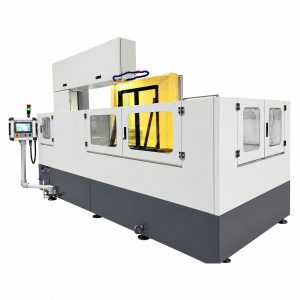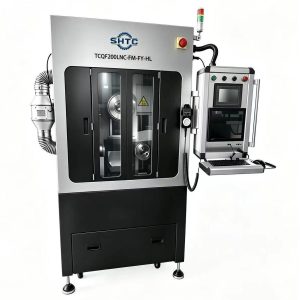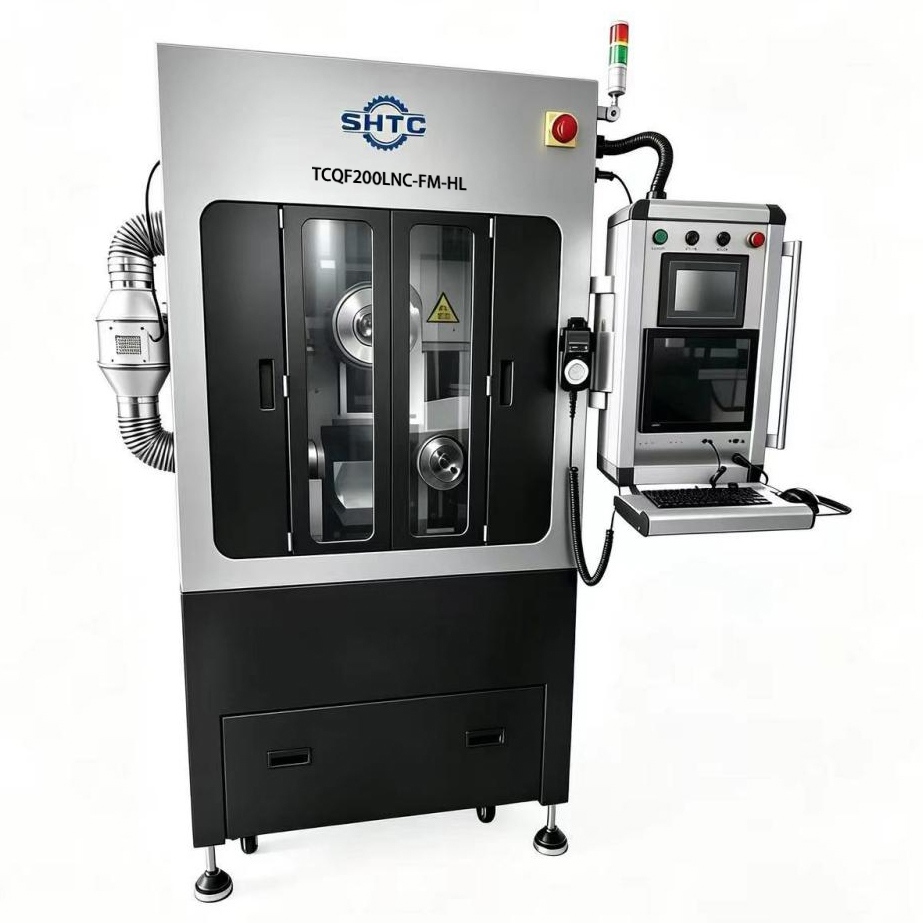
Description
For calibration laboratories and photonics original equipment manufacturers (OEMs), achieving metrology-grade dimensional stability and surface fidelity in sapphire and optical glass blanks is non-negotiable. Conventional mechanical saws introduce subsurface damage, micro-cracking, and waviness that necessitate costly secondary lapping—compromising throughput, yield, and traceability.
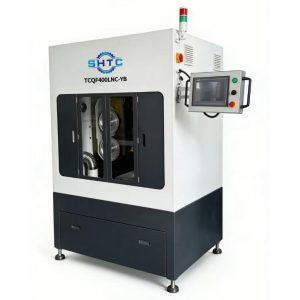
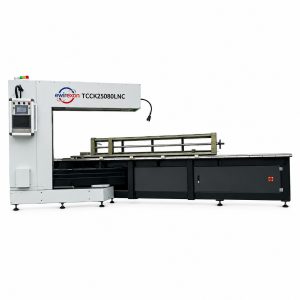
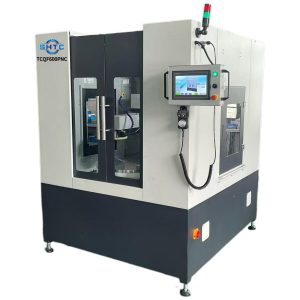
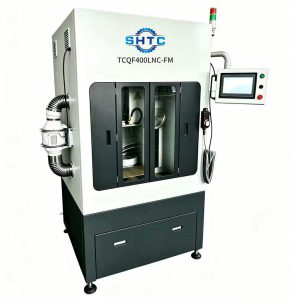
This crystal saw eliminates that bottleneck. Its single-wire diamond architecture delivers controlled, low-stress kerf removal with exceptional repeatability across heterogeneous brittle materials. The precisely regulated wire tension (0–300 N), ultra-fine X/Y feed rate (0.01–35 mm/s), and adjustable wire speed (0.1–50 mm/s) enable deterministic material removal—critical when slicing <100 µm-thick wafers or <5 mm-thick metrology reference blanks.
Engineered with Q235 structural frame, SS304 wet-zone components, and 6061 aluminum motion assemblies, the system maintains thermal and mechanical stability during extended runs. CE-certified and built for integration into cleanroom-adjacent environments, it supports the stringent process control requirements of ISO/IEC 17025-accredited labs and Class 1000+ optical fabrication lines.
Diamond ring saw (single-wire) for precision slicing of sapphire and optical glass blanks used in laser optics, metrology standards, and photonics OEM applications.
Designed for calibration laboratories and photonics OEMs, this crystal saw delivers deterministic, low-stress slicing of brittle optical materials—including sapphire, fused silica, BK7, CaF₂, and precision ceramics. Its single-wire diamond architecture eliminates micro-cracking and subsurface damage common with conventional blade saws, reducing or eliminating the need for post-slice lapping. With ultra-fine control over wire tension (0–300 N), feed rates (0.01–35 mm/s), and wire speed (0.1–50 mm/s), it achieves exceptional dimensional stability and surface fidelity in wafers under 100 µm and metrology blanks up to 5 mm thick. Built with a Q235 structural frame, SS304 wet-zone components, and 6061 aluminum motion assemblies, the system ensures thermal and mechanical stability during extended runs. CE-certified and compatible with cleanroom-adjacent environments, it meets the rigorous traceability and repeatability requirements of ISO/IEC 17025 labs and Class 1000+ optical fabrication lines.