説明
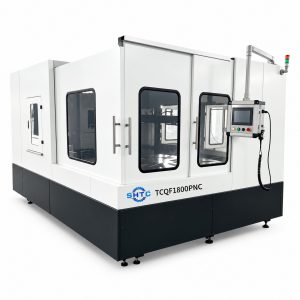
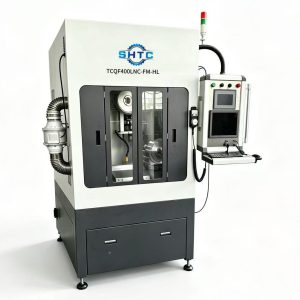
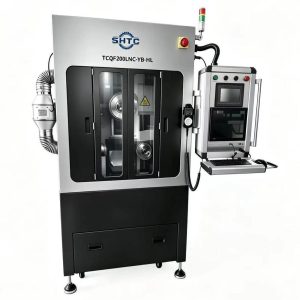
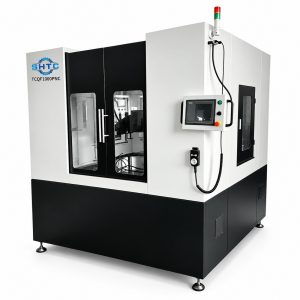
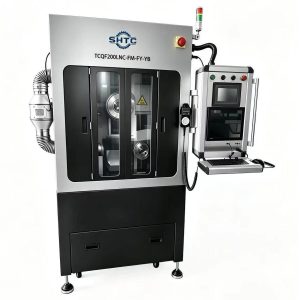
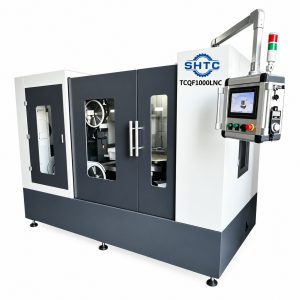
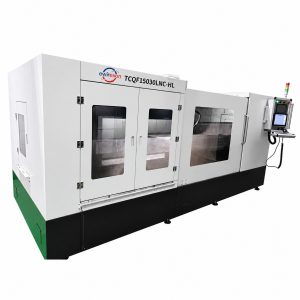
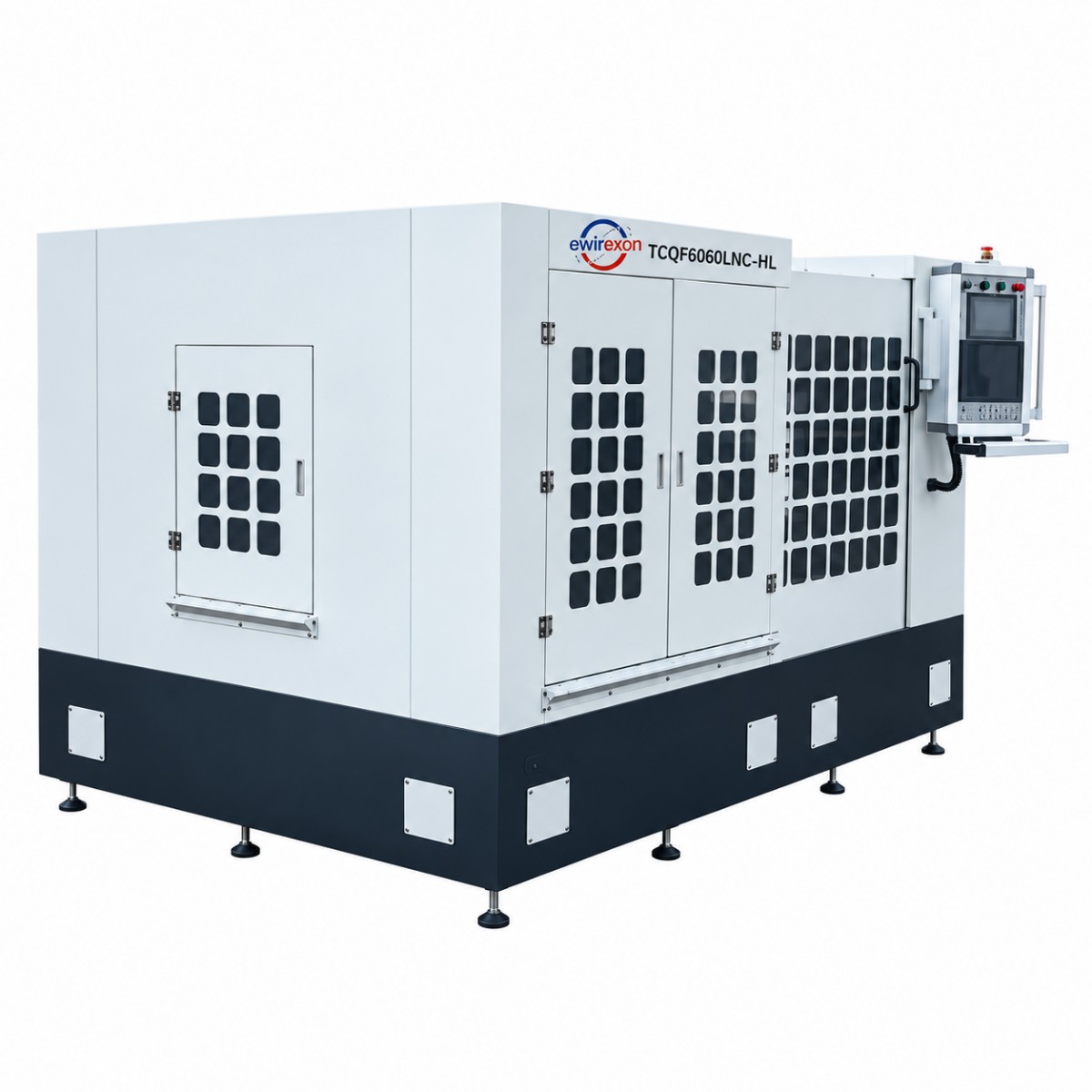
This wire saw machine is purpose-built for photonics, sensor development, and advanced materials research labs requiring micron-level control when sectioning brittle, high-value optical and piezoelectric substrates. Unlike fixed-parameter saws, it delivers full operational flexibility: wire speed adjusts from 0.1 to 35 mm/s, tension from 0 to 500 N, and X/Y axis feed rates from 0.01 to 35 mm/s — enabling precise adaptation to material-specific fracture behavior.
It is validated for cutting optical glass, sapphire, precision ceramics, graphite, semiconductor packaging materials and CFRP composites — a scope that explicitly includes fused silica, borosilicate, and lithium-based piezoelectric crystals commonly used in waveguides, resonators, and MEMS sensors. The diamond-impregnated single wire ensures clean, low-damage kerfs critical for post-processing fidelity and optical surface quality.
Constructed with Q235 structural steel, SS304 stainless components, and 6061 aluminum, the system balances rigidity and corrosion resistance for cleanroom-adjacent or controlled lab environments. At 1750×1550×2000 mm and 1800 kg, it provides stable, vibration-damped operation during extended precision cuts.
Industrial single-wire diamond saw for R&D and production labs cutting fused silica, borosilicate glass, lithium niobate, and precision ceramics with full parameter control to preserve material integrity.
This industrial-grade wire saw machine is purpose-built for research and production environments where material integrity and dimensional accuracy are non-negotiable—especially when sectioning brittle, high-value substrates like fused silica, borosilicate glass, lithium niobate, and advanced optical ceramics. Its fully adjustable parameters—including wire speed (0.1–35 mm/s), tension (0–500 N), and X/Y feed rates (0.01–35 mm/s)—enable fine-tuned adaptation to each material’s fracture behavior, minimizing chipping, subsurface damage, and kerf loss. Validated across optical glass, sapphire, graphite, CFRP composites, and piezoelectric crystals, it supports critical applications in MEMS sensor fabrication, waveguide prototyping, resonator slicing, and semiconductor packaging development. Constructed with Q235 structural steel, SS304 stainless components, and 6061 aluminum, the system delivers rigidity and corrosion resistance suitable for cleanroom-adjacent or controlled laboratory settings.