説明
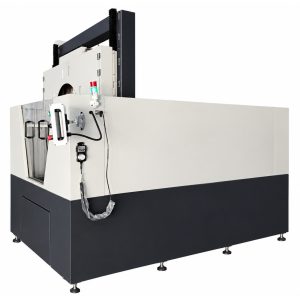
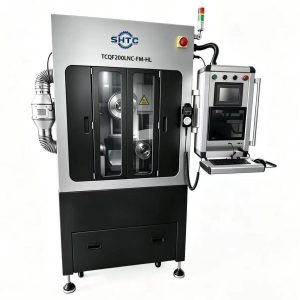
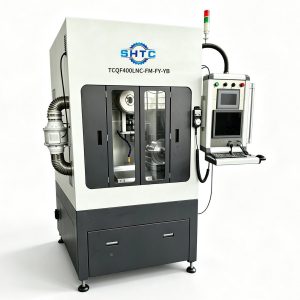
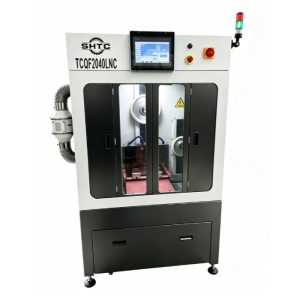
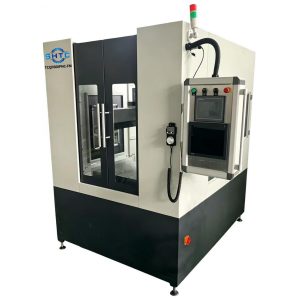
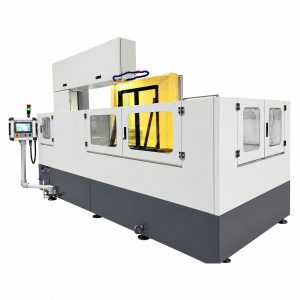
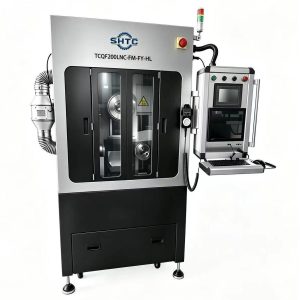
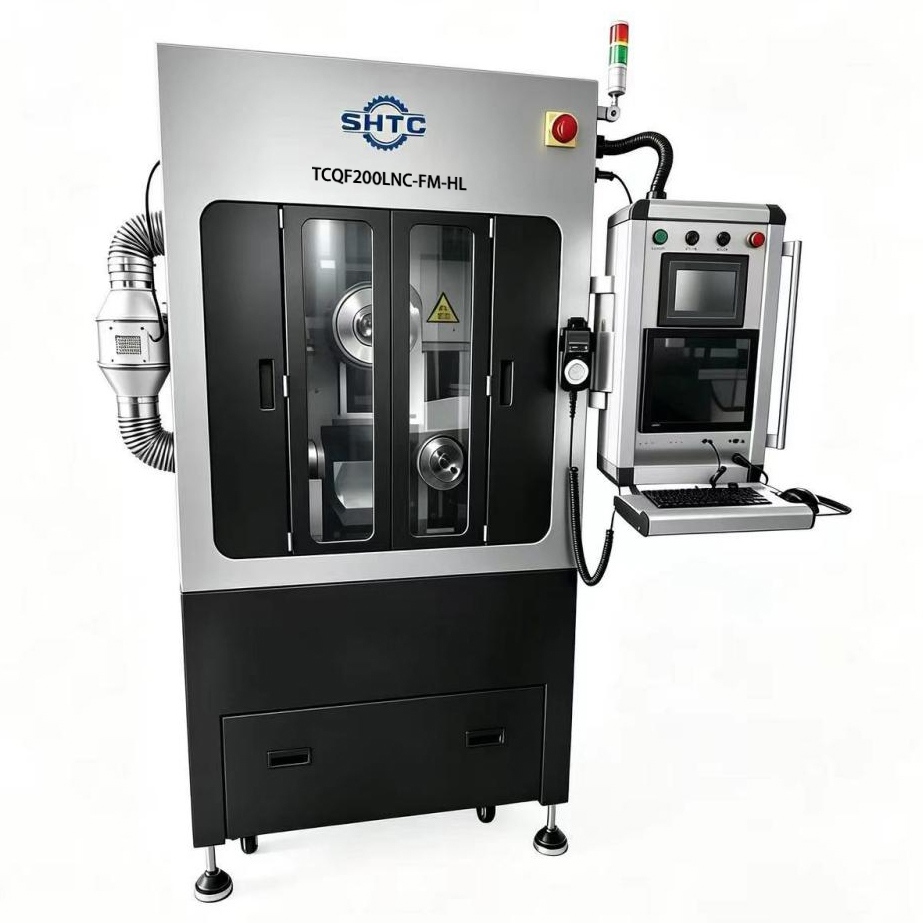
When machining advanced hybrid materials — such as aluminum matrix composites reinforced with SiC particles, titanium-ceramic laminates, or graded CMC structures — standard cutting tools suffer rapid wear, vibration-induced inaccuracies, and subsurface damage. This diamond ring saw eliminates those limitations through non-contact wire tension control, ultra-stable frame construction (Q235 + SS304 + 6061), and precisely regulated wire speed (0.1–50 mm/s) and tension (0–300 N).
Its single-wire architecture applies consistent diamond abrasion across heterogeneous interfaces without mechanical loading — critical for preserving bond integrity in MMCs and avoiding microcracking in CMCs. The system’s X/Y feed rate (0.01–35 mm/s) enables adaptive, low-stress kerf formation even in thermally sensitive or highly anisotropic stacks.
Validated for CFRP composites per manufacturer specification, this saw extends proven capability to structurally analogous hybrid systems — including metal-ceramic, ceramic-graphite, and semiconductor packaging laminates — where material coexistence demands a non-impact, wear-resistant solution.
Single-wire diamond ring saw built for high-performance composites—including metal-matrix, ceramic-matrix, CFRP, sapphire, and semiconductor laminates—where hardness mismatch, abrasiveness, or delamination risk defeats conventional saws.
This diamond ring saw delivers precision, non-contact cutting for the most demanding advanced materials—where conventional tools fail. Engineered for aluminum matrix composites (AMCs) with SiC reinforcement, titanium-ceramic laminates, graded ceramic matrix composites (CMCs), CFRP, optical glass, sapphire, graphite, and semiconductor packaging stacks, it eliminates mechanical loading, vibration, and thermal stress that cause delamination, microcracking, or bond degradation. Its ultra-stable frame (Q235 + SS304 + 6061), finely regulated wire tension (0–300 N), and adaptive feed rates (0.01–35 mm/s) ensure consistent kerf formation across heterogeneous interfaces. Validated for CFRP and extended to structurally analogous hybrid systems, it supports R&D labs, aerospace component manufacturers, and advanced materials developers requiring metrology-grade sectioning without compromising structural integrity.