Descrizione
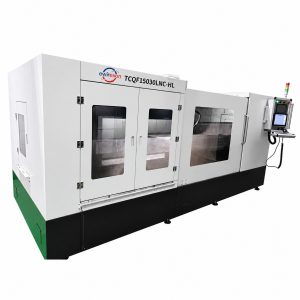
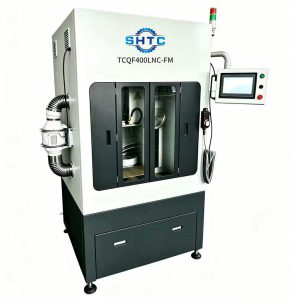
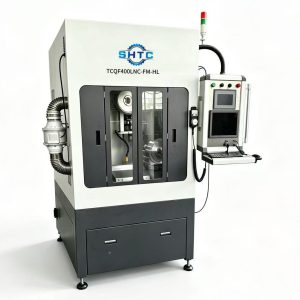
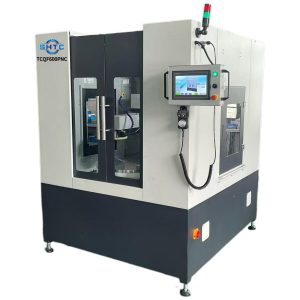
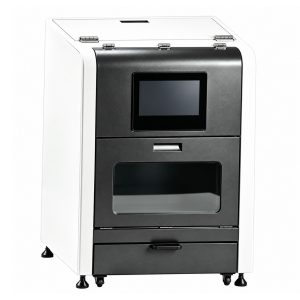
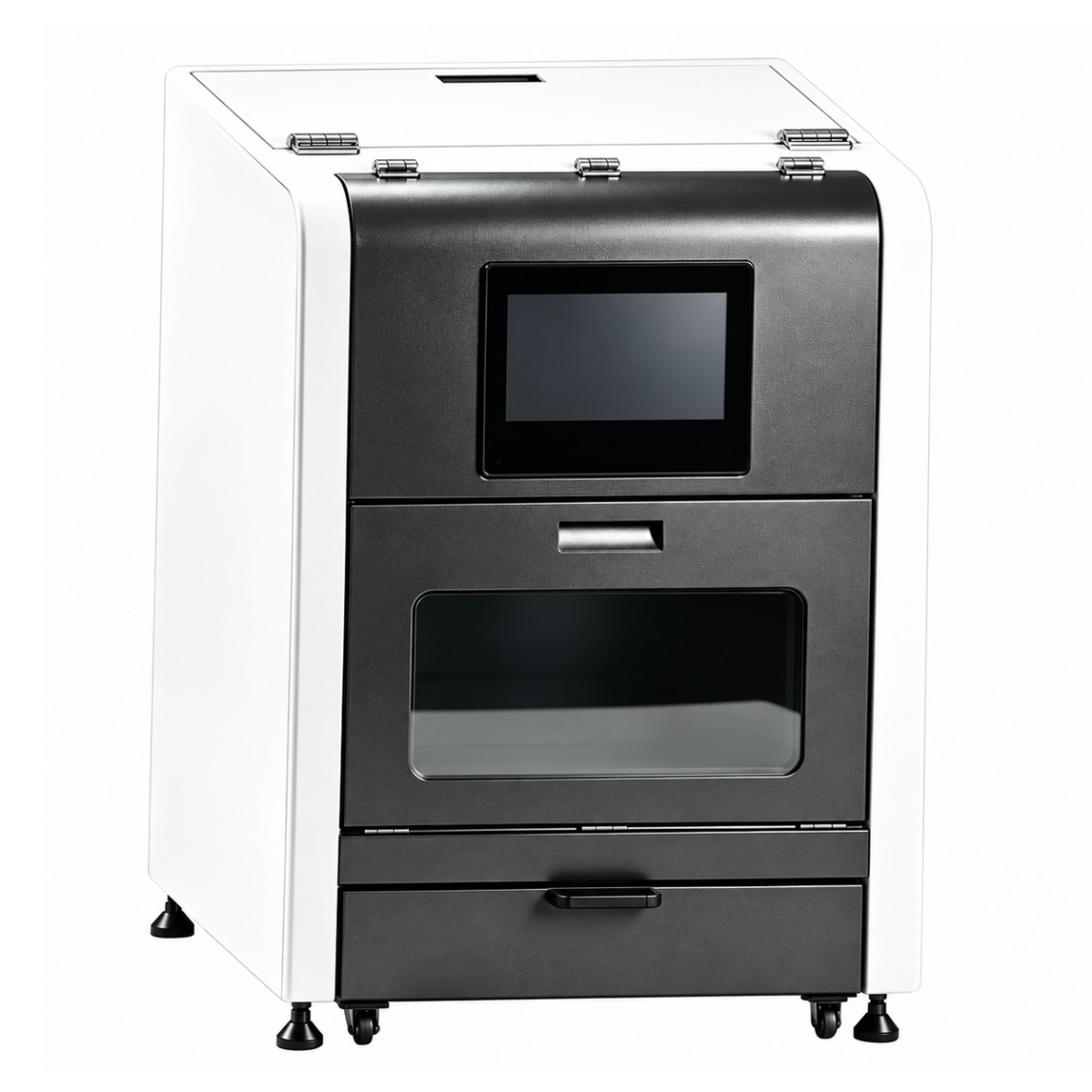
This desktop diamond ring saw delivers controlled, high-fidelity sectioning of heterogeneous semiconductor packaging materials—such as thermoset molded compounds, copper leadframes, and ceramic- or polymer-embedded substrates—without chipping, smearing, or interfacial delamination. Its single-wire architecture enables precise kerf control, while fully adjustable parameters—wire speed (0.1–50 mm/s), tension (0–150 N), and X/Y feed rate (0.01–35 mm/s)—allow operators to dynamically match cutting behavior to local stack composition.
Unlike fixed-parameter tools, this saw supports process optimization across material transitions: slower speeds and lower tension for delicate polymer layers; higher tension and moderate speed for rigid ceramic or metal phases. The robust Q235+SS304+6061 frame ensures vibration-free operation at sub-micron feed resolutions, critical when exposing fine-pitch interconnects or inspecting die-attach integrity.
CE-certified and built for lab and pilot-line environments, it integrates seamlessly into failure analysis, reliability testing, and package qualification workflows where representative, artifact-free cross-sections are non-negotiable.
Compact, CE-certified desktop diamond ring saw for artifact-free cross-sectioning of semiconductor packaging—optimized for molded compounds, leadframes, ceramics, and embedded substrates in failure analysis and reliability labs.
This desktop diamond ring saw is purpose-built for high-fidelity cross-sectioning of complex semiconductor packaging stacks—including thermoset molding compounds, copper leadframes, ceramic substrates, and polymer-embedded interconnects. Its single-wire diamond architecture delivers exceptional kerf control and minimizes mechanical artifacts like chipping, smearing, or interfacial delamination—critical when exposing fine-pitch bumps, solder joints, or die-attach layers. Fully adjustable wire speed (0.1–50 mm/s), tension (0–150 N), and X/Y feed rates (0.01–35 mm/s) enable real-time adaptation across material transitions, supporting both delicate polymer phases and rigid ceramic or metal domains. Constructed with a vibration-damped hybrid frame (Q235 structural steel, SS304, and 6061 aluminum), it maintains sub-micron positional stability during slow-feed sectioning. CE-certified and optimized for lab and pilot-line use, it integrates directly into failure analysis, reliability qualification, and root-cause investigation workflows where representative, distortion-free cross-sections are essential.