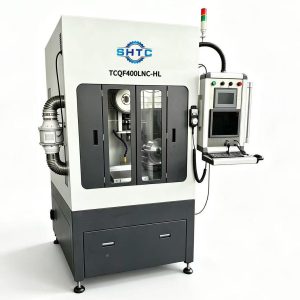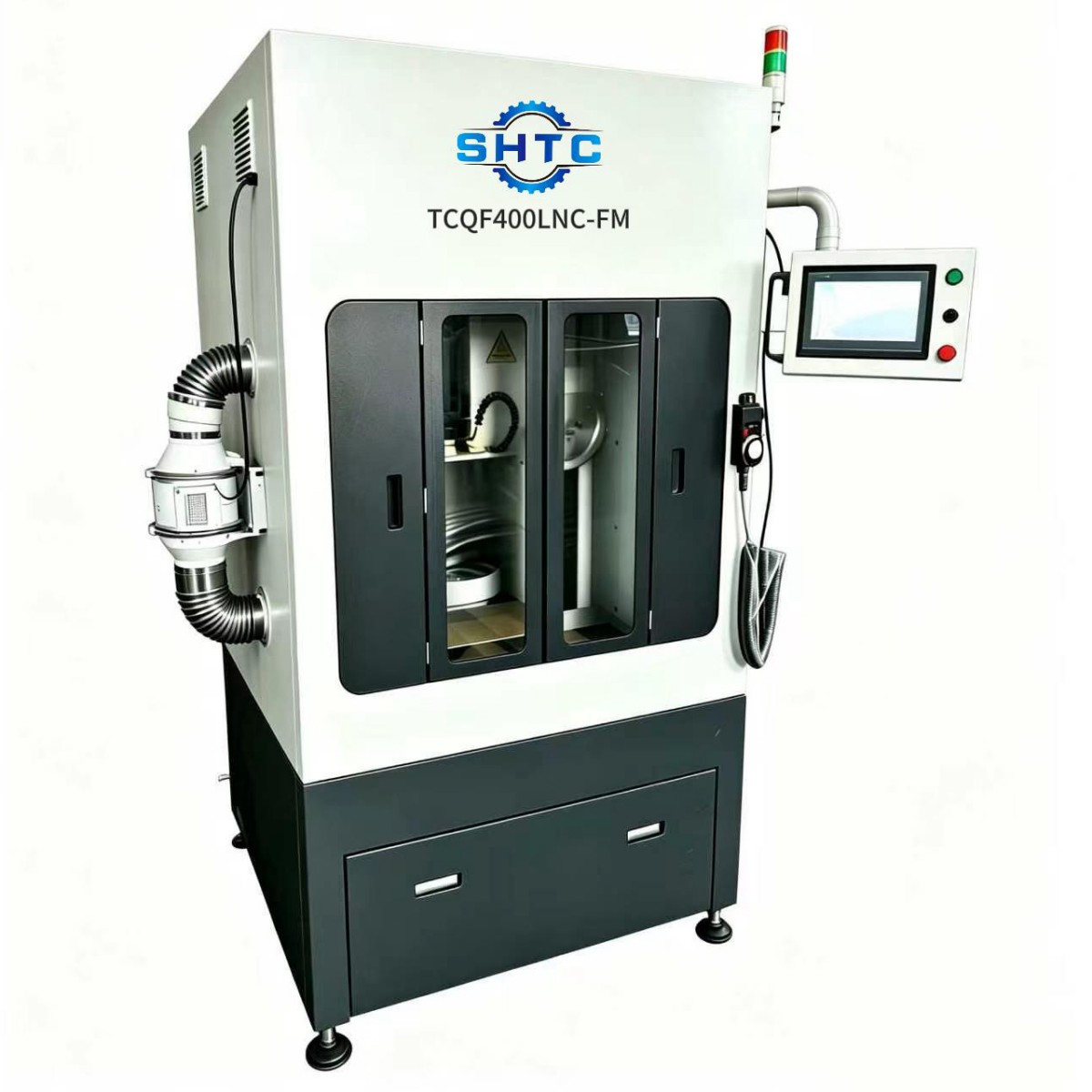
Deskripsi
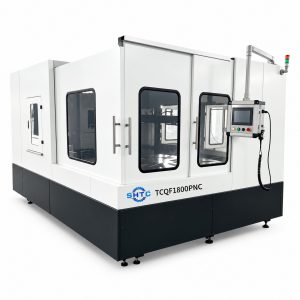
When sectioning CFRP composites for aerospace prototyping, automotive structural repair, or academic failure analysis, conventional circular saws and abrasive cutoff wheels cause unacceptable damage: high-speed rotation tears carbon fibers, while thermal buildup degrades the epoxy matrix. This diamond ring saw eliminates both problems using a tensioned, diamond-impregnated single wire that cuts via controlled abrasion—not impact or friction.
With fully adjustable wire speed (0.1–50 mm/s), precise tension control (0–300 N), and fine X/Y feed rates (0.01–35 mm/s), it delivers repeatable, burr-free cross-sections—even through thick, multi-layer CFRP laminates. Its rigid Q235+SS304+6061 frame ensures stability during extended cuts, and CE certification confirms compliance with EU safety standards for industrial lab use.
Unlike generic circular saws marketed for composites, this system is explicitly validated for CFRP: ‘Applications: Cutting of optical glass, sapphire, precision ceramics, graphite, semiconductor packaging materials and CFRP composites.’ No retrofitting or compromise required—engineered from the ground up for composite material integrity.
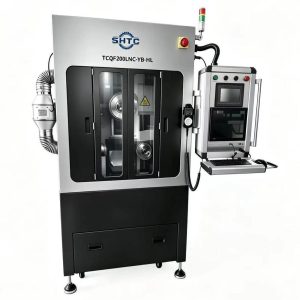
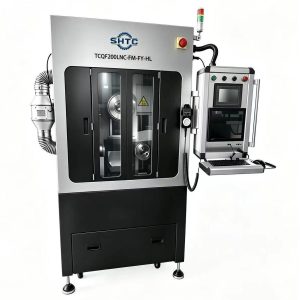
Industrial diamond ring saw (single-wire) optimized for controlled, low-force sectioning of carbon-fiber reinforced polymer (CFRP) composites—ideal for aerospace prototyping, automotive composite repair, and university materials research labs.
This diamond ring saw is purpose-built for high-fidelity sectioning of carbon-fiber reinforced polymer (CFRP) composites—where preserving fiber alignment, minimizing thermal degradation, and eliminating delamination are non-negotiable. Unlike abrasive cutoff wheels or high-RPM circular saws, it uses a tensioned, diamond-impregnated single wire operating at precisely controlled speeds (0.1–50 mm/s) and tension (0–300 N), enabling cold, abrasion-based cutting that maintains matrix integrity and interfacial bond quality. Its fine X/Y feed rates (0.01–35 mm/s) support repeatable cross-sections across thick, multi-layer laminates used in aircraft components, EV battery enclosures, and crash-test specimens. The rigid hybrid frame (Q235 structural steel, SS304, and 6061 aluminum) ensures vibration-free operation during extended cuts, while CE certification confirms suitability for regulated industrial lab environments. Validated for optical glass, sapphire, ceramics, graphite, and semiconductor packaging materials, it delivers consistent performance across brittle and heterogeneous advanced materials—no retrofitting or process compromise required.