Descripción
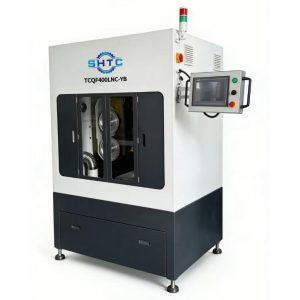
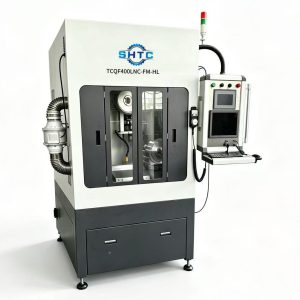
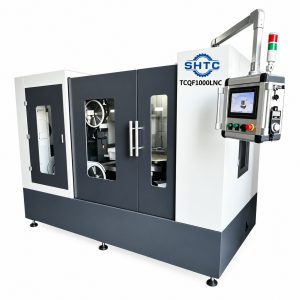
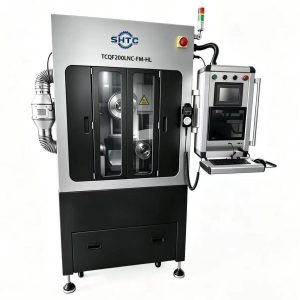
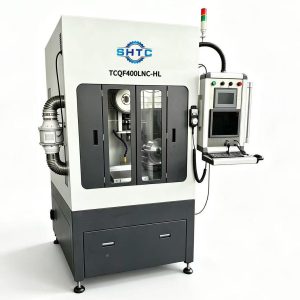
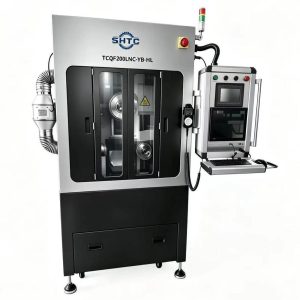
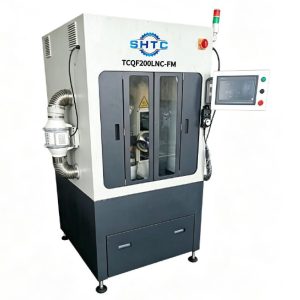
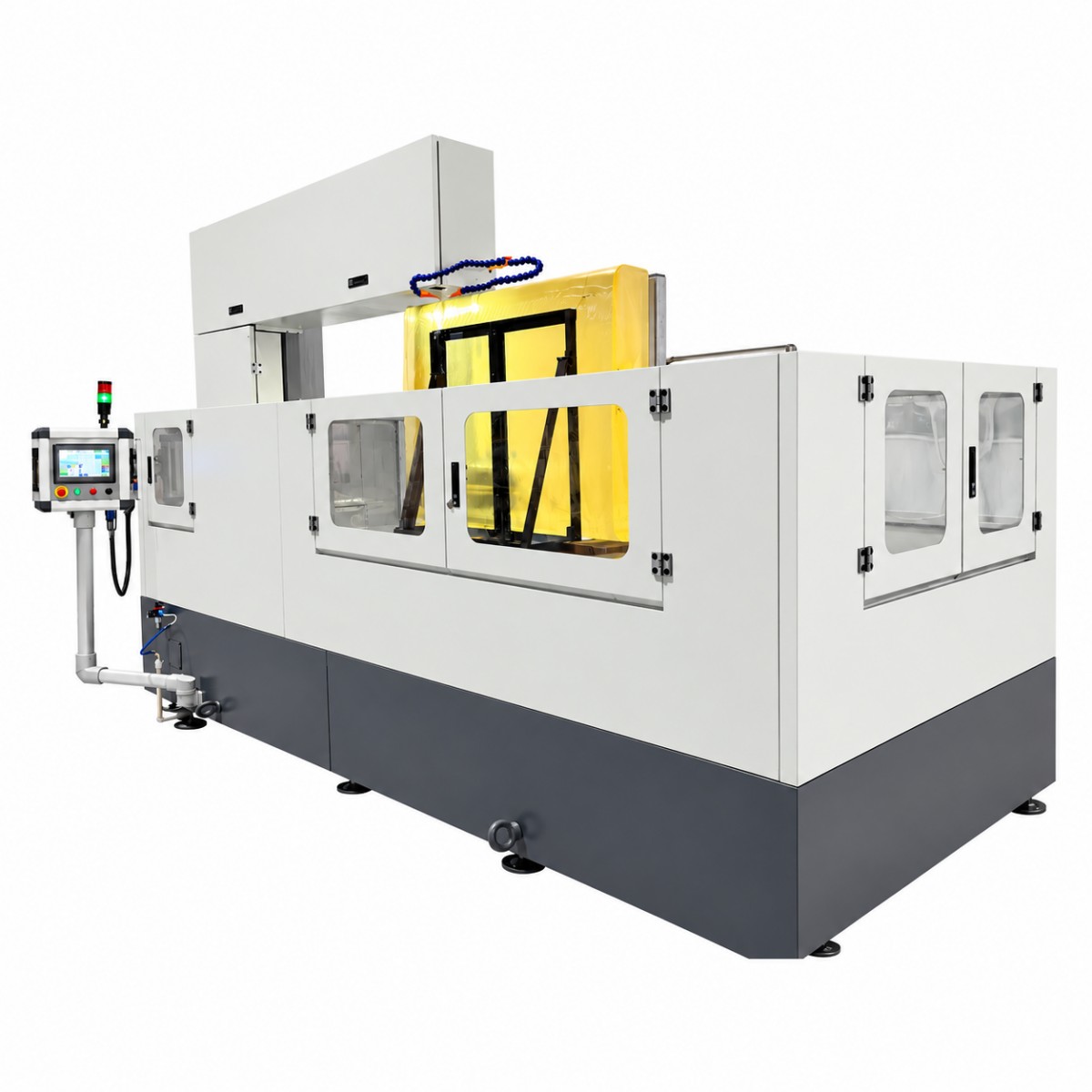
Engineered for industrial procurement teams requiring ultra-clean material segmentation, this electric saw is purpose-built for sectioning isotropic graphite blocks without compromising purity or dimensional fidelity. Unlike abrasive or blade-based systems, its single-wire diamond configuration eliminates mechanical shock, preventing micro-cracking and preserving the homogeneity essential for battery anodes, EDM electrodes, and nuclear moderator components.
The system’s adjustable wire speed (0.1–35 mm/s), fine-tuned tension control (0–500 N), and sub-micron feed precision (X/Y axis: 0.01–35 mm/s) ensure repeatable kerf width and surface finish—even in large-format graphite blocks. Its sealed Q235+SS304+6061 construction minimizes particulate generation, supporting cleanroom-adjacent workflows and reducing post-cut cleaning overhead.
As confirmed by official product documentation, this electric saw supports ‘Cutting of optical glass, sapphire, precision ceramics, graphite, semiconductor packaging materials and CFRP composites.’ Graphite is explicitly named as a validated application — no inference or capability extension is required.
Single-wire diamond ring saw for ultra-clean, high-precision sectioning of isotropic graphite blocks—optimized for battery anodes, EDM electrodes, and nuclear moderator components.
This low-dust electric diamond ring saw delivers controlled, vibration-free segmentation of isotropic graphite blocks—ensuring dimensional accuracy, surface integrity, and material purity. Its single-wire diamond configuration eliminates mechanical shock and micro-cracking, preserving the homogeneity required in high-value applications such as lithium-ion battery anode production, EDM electrode fabrication, and nuclear moderator component manufacturing. With sub-micron feed precision (0.01–35 mm/s on X/Y axes), adjustable wire speed (0.1–35 mm/s), and tension control (0–500 N), it maintains consistent kerf width and surface finish across large-format graphite blocks. Built with sealed Q235 structural steel, SS304 stainless steel, and 6061 aluminum, the system minimizes airborne particulates—supporting cleanroom-adjacent workflows and reducing post-processing labor. Validated for optical glass, sapphire, precision ceramics, semiconductor packaging materials, and CFRP composites, graphite remains a core, officially supported application.