Mô tả
This glass chamfering machine is purpose-suited for industrial edge finishing of laminated glass interlayers and composite safety glass assemblies. Unlike thermal or abrasive-only methods, its controlled mechanical processing eliminates heat buildup that risks PVB interlayer degradation or adhesive failure between layers.
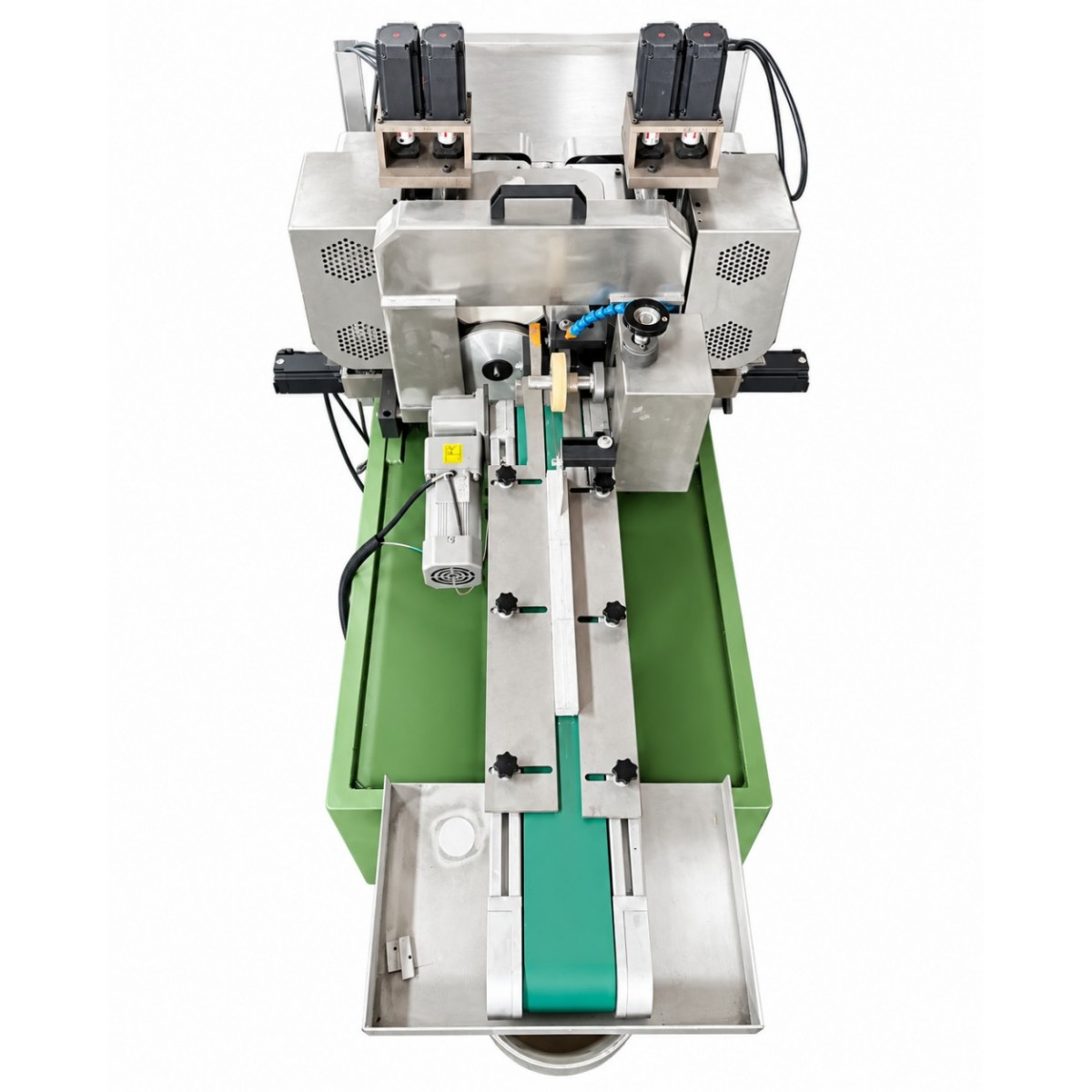
Engineered for precision composite material handling, it performs consistent chamfering (C0.1–C1.5), beveling, and fine edge grinding on post-cut optical-grade laminates. The TCBF100L’s rigid Q235+SS304+6061 construction ensures vibration-free operation across its 10 mm × 100 mm width travel and 2 mm × 100 mm height travel—essential for maintaining dimensional accuracy across variable-thickness laminates.
With CE certification, 380V/3.5KW operation, and a compact 1500×900×1500mm footprint, it integrates into high-reliability glass fabrication lines where edge integrity directly impacts structural performance and safety compliance.
Dedicated glass chamfering machine for B2B edge finishing of laminated glass interlayers and composite safety glass. Enables precise, non-thermal chamfering, beveling, and edge grinding—critical for preserving PVB integrity and preventing delamination in multi-layer assemblies.
This industrial glass chamfering machine is purpose-built for high-reliability edge finishing of laminated glass assemblies—including architectural curtain walls, automotive windshields, and blast-resistant glazing. Its controlled mechanical process avoids thermal stress that can compromise PVB or SentryGlas® interlayers, eliminating risks of adhesive failure or delamination. Designed for optical-grade laminates, it delivers repeatable chamfers (C0.1–C1.5), precision bevels, and fine edge grinding across variable-thickness composites. The rigid hybrid frame—combining Q235 structural steel, stainless steel 304, and aerospace-grade 6061 aluminum—ensures vibration-free operation during extended production runs. With CE certification, 3.5 kW power efficiency, and a compact footprint (1500×900×1500 mm), it integrates seamlessly into automated glass fabrication lines where edge quality directly affects structural performance, optical clarity, and regulatory compliance.