Descrição
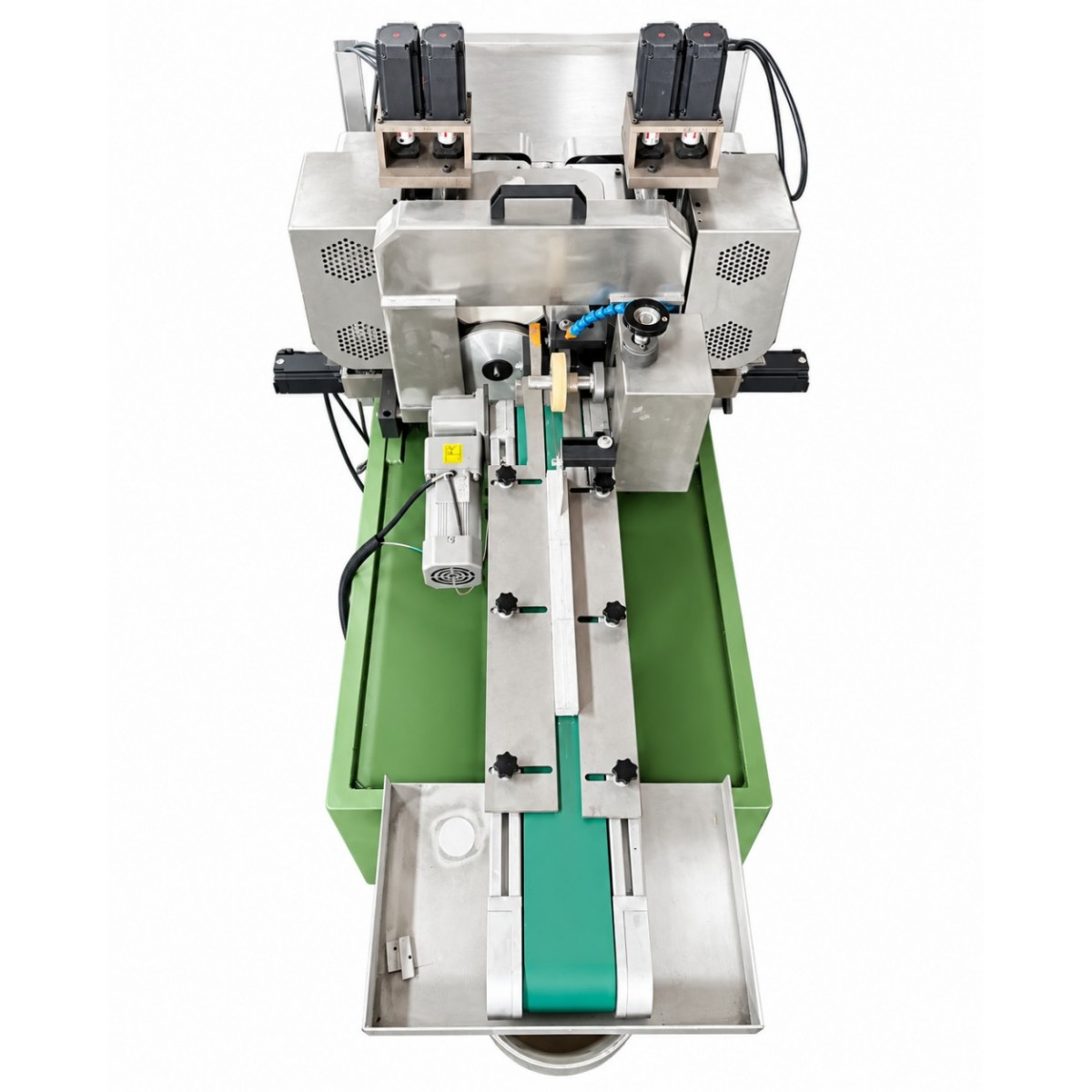
This glass tile edge grinder is purpose-configured for B2B procurement teams finishing glass cladding systems and ceramic-glass composite tiling stock. It delivers controlled, repeatable edge grinding on thin-section architectural glass — especially where dimensional stability and edge integrity are critical to installation performance.
Unlike general-purpose grinders, its precision travel system (10 mm × 100 mm processing width, 2 mm × 100 mm height) and fine chamfer range (C0.1–C1.5) enable safe, consistent edge preparation on fragile or oversized glass tiles — minimizing microfractures, chipping, and edge waviness during post-cut finishing.
Built with a hybrid frame of Q235 structural steel, SS304 stainless components, and 6061 aluminum for thermal stability and corrosion resistance, the machine supports continuous operation in architectural fabrication environments. Its 3.5KW motor and 380V industrial power input ensure torque consistency across variable tile thicknesses and edge geometries.
Industrial glass tile edge grinder for B2B architectural cladding and tiling fabrication—enabling precise, low-damage chamfering (C0.1–C1.5) and stable edge grinding on thin or oversized glass tiles.
This industrial glass tile edge grinder is purpose-built for B2B fabrication teams working with high-performance architectural cladding systems and ceramic-glass composite tiling. It enables repeatable, low-risk edge preparation on fragile, thin-section, or large-format glass tiles—where dimensional stability and edge integrity directly impact installation success. Its precision travel system (10 mm × 100 mm width, 2 mm × 100 mm height) and fine chamfer range (C0.1–C1.5) support exact edge geometry control without inducing microfractures, chipping, or waviness. Constructed with a hybrid frame of Q235 structural steel, SS304 stainless components, and 6061 aluminum, it ensures thermal stability and corrosion resistance during continuous operation in demanding fabrication environments. The 3.5 kW motor and 380 V industrial power input maintain consistent torque across variable tile thicknesses and complex edge profiles—making it ideal for post-cut finishing of optical glass, precision ceramics, and hybrid cladding panels.