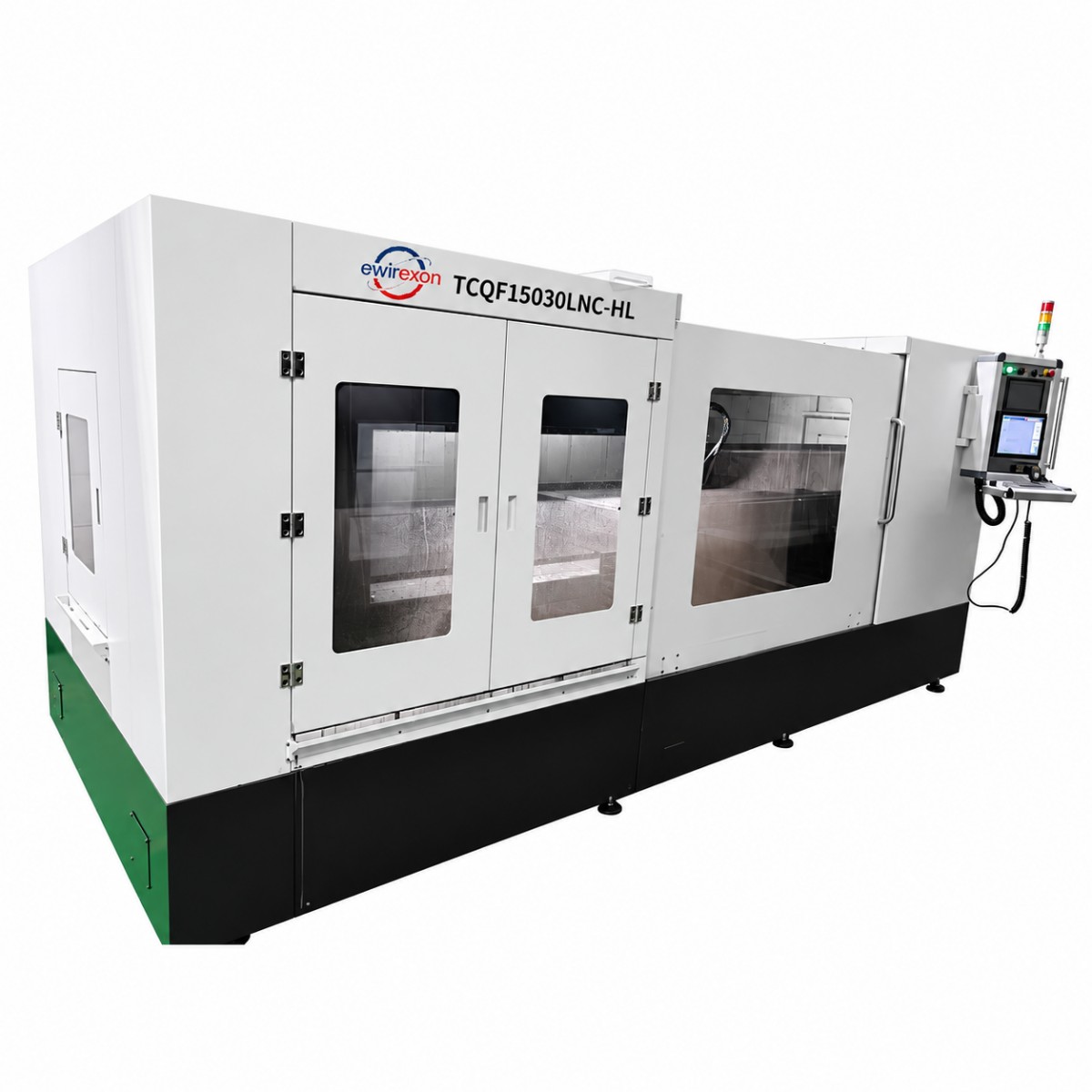
Descrição
For manufacturers vertically integrating the production of non-metallic fixtures and jigs—especially for ultra-clean or high-temperature environments—this diamond ring saw replaces risky, inefficient CNC milling of graphite and brittle ceramics. Unlike rotary machining, single-wire diamond slicing generates virtually no airborne particulate, significantly reducing operator exposure and facility filtration burden.
It excels at cutting intricate profiles in graphite (e.g., custom electrode holders, thermal shields) and precision ceramics (e.g., alumina or silicon carbide insulators, chamber liners), achieving tight tolerances with minimal kerf loss and negligible subsurface damage. The adjustable wire speed (0.1–35 mm/s), tension control (0–500 N), and fine feed rates (0.01–35 mm/s) support both rapid rough-cutting and delicate finishing passes—ideal for low-volume, high-mix fixture production.
Supported directly by the manufacturer’s stated application scope, this saw is purpose-suited for fabricating components used in semiconductor equipment, vacuum processing systems, and high-temp industrial furnaces—where dimensional stability, purity, and thermal resilience are non-negotiable.
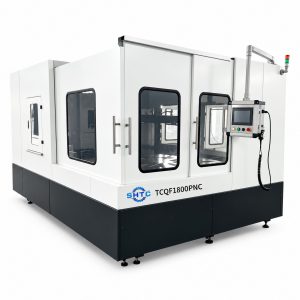
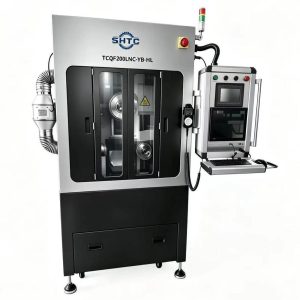
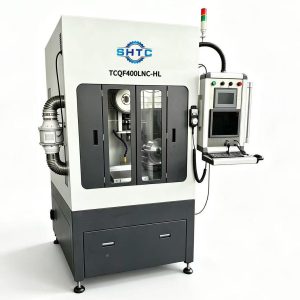
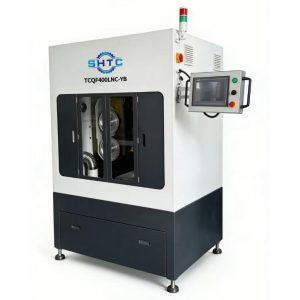
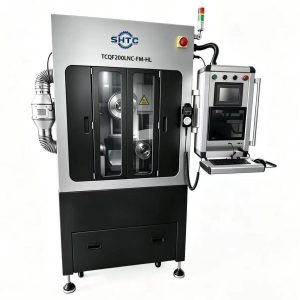
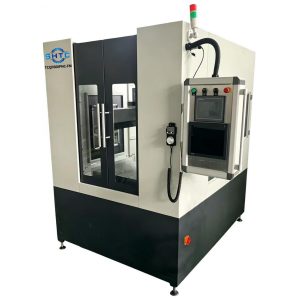
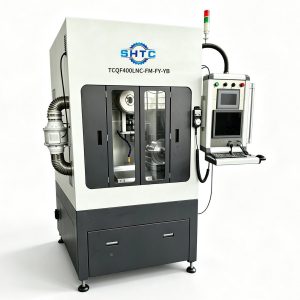
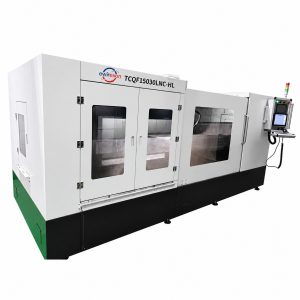
Safe, high-precision diamond ring saw for slicing graphite and advanced ceramics—enabling clean, accurate fabrication of fixtures for semiconductor tools, vacuum chambers, and high-temp furnaces.
This diamond ring saw is purpose-built for manufacturers producing critical non-metallic fixtures and jigs in ultra-clean or high-temperature environments. It replaces hazardous CNC milling of brittle materials like graphite, alumina, and silicon carbide—eliminating airborne particulates that compromise operator safety and facility filtration systems. Its single-wire diamond slicing delivers tight dimensional tolerances, minimal kerf loss, and virtually no subsurface damage—essential for near-net-shape electrode holders, thermal shields, insulators, and chamber liners. With fully adjustable wire speed (0.1–35 mm/s), tension control (0–500 N), and fine feed rates (0.01–35 mm/s), it supports both rapid rough-cutting and delicate finishing passes. Designed for low-volume, high-mix production, it’s trusted in semiconductor equipment manufacturing, vacuum processing systems, and industrial furnace applications where purity, thermal stability, and precision are non-negotiable.