Deskripsi
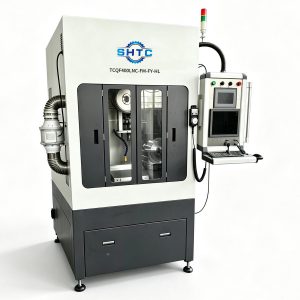
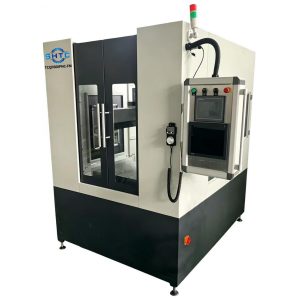
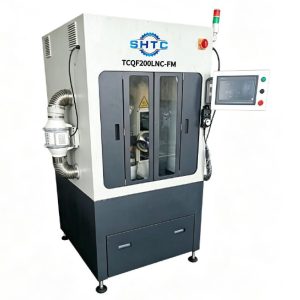
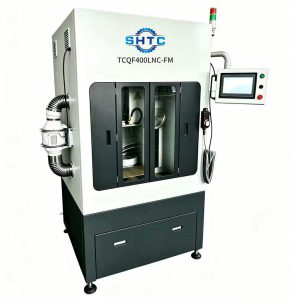
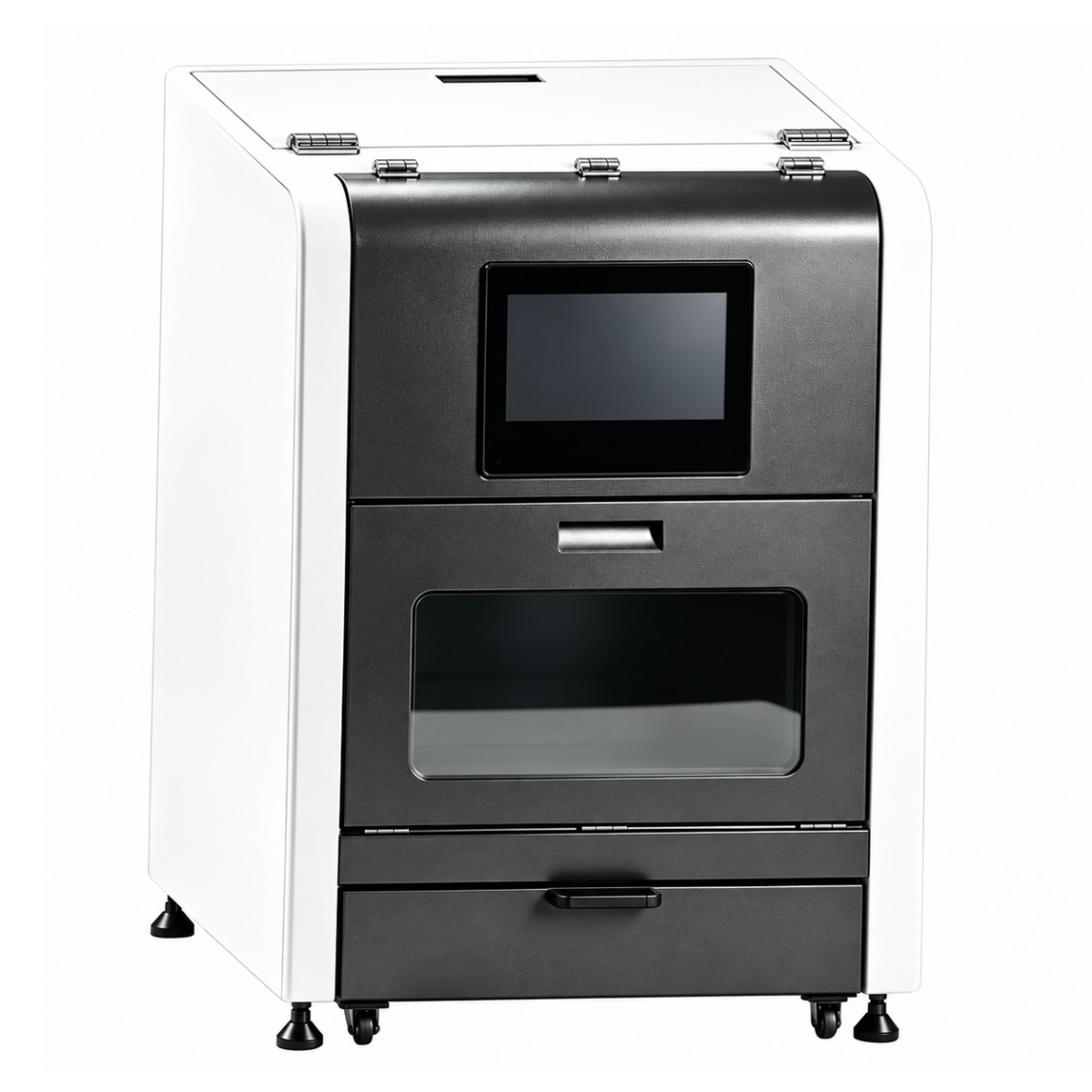
This desktop diamond ring saw is purpose-configured for failure analysis (FA) and process validation labs requiring artifact-free cross-sections of brittle semiconductor packaging substrates. Unlike laser or dicing saws—which introduce heat-affected zones—or abrasive blade saws—which cause edge chipping—the single-wire architecture with diamond-impregnated wire delivers cold, low-stress cutting ideal for revealing true microstructural defects.
Its programmable X/Y axis feed rate (0.01–35 mm/s), fine-tuned wire tension range (0–150 N), and adjustable wire speed (0.1–50 mm/s) enable reproducible sectioning of LTCC, HTCC, silicon carbide, and other precision ceramics used in advanced packaging. The rigid Q235+SS304+6061 frame and CE-certified design ensure vibration isolation critical for high-fidelity imaging and metrology downstream.
Supported applications explicitly include ‘Cutting of optical glass, sapphire, precision ceramics, graphite, semiconductor packaging materials and CFRP composites.’ No modifications to core hardware are required—this wire saw machine for granite-class rigidity is inherently suited to semiconductor substrate preparation when operated within its validated parameter envelope.
Desktop diamond wire saw for artifact-free cross-sectioning of semiconductor packaging substrates—including LTCC, HTCC, SiC, and precision ceramics—without thermal damage or mechanical distortion.
This precision wire saw machine is purpose-built for failure analysis (FA) and process validation in semiconductor packaging R&D and quality labs. Its single-diamond-impregnated wire architecture delivers cold, low-stress sectioning—eliminating heat-affected zones from lasers and edge chipping from abrasive blades. Ideal for revealing true microstructural defects in brittle, high-performance materials including LTCC, HTCC, silicon carbide, sapphire, optical glass, graphite, and CFRP composites. Programmable X/Y feed rates (0.01–35 mm/s), ultra-fine wire tension control (0–150 N), and adjustable wire speed (0.1–50 mm/s) ensure repeatability across diverse substrate geometries and thicknesses. The rigid hybrid frame—constructed from Q235 structural steel, SS304 stainless, and 6061 aluminum—provides exceptional vibration isolation, supporting downstream high-magnification imaging, SEM inspection, and dimensional metrology. CE-certified and designed for desktop integration, it requires no hardware modification to deliver granite-class stability for semiconductor substrate preparation.