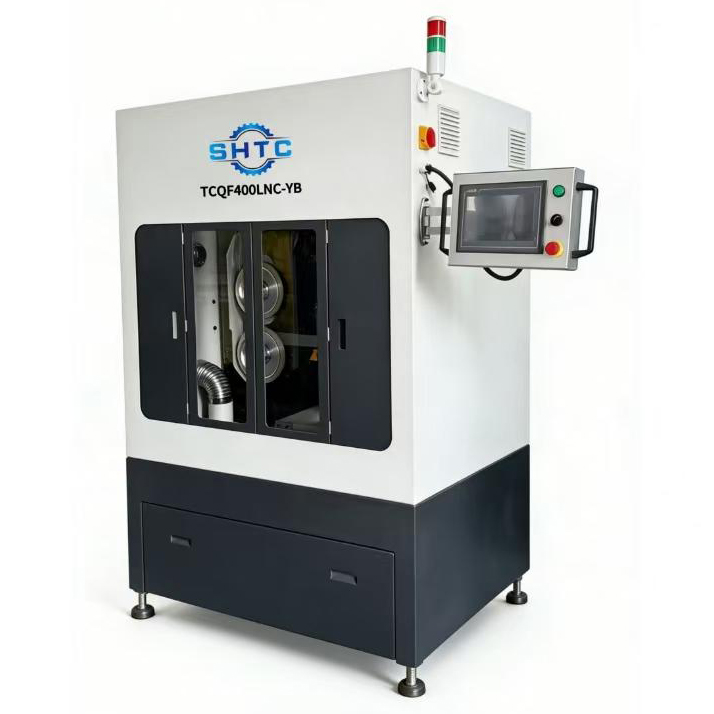
Description
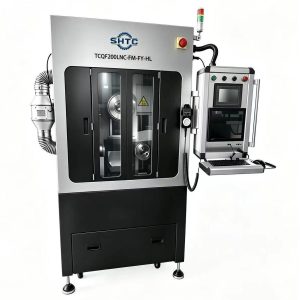
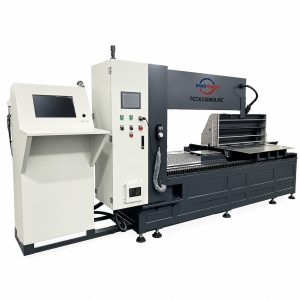
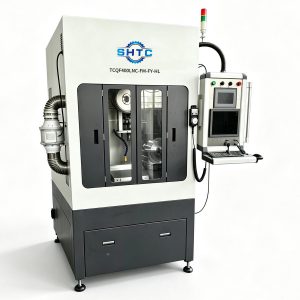
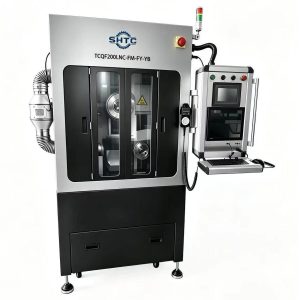
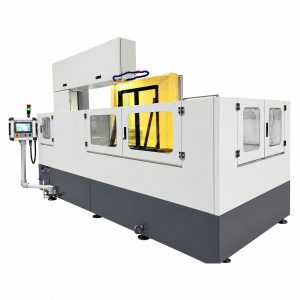
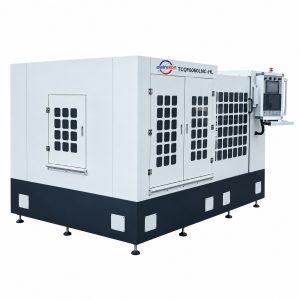
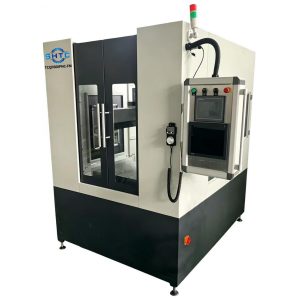
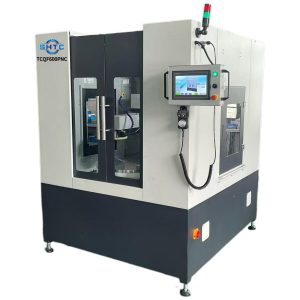
This diamond ring saw is purpose-adapted for institutional STEM capacity building across East Africa — especially for Kenyan universities, technical colleges, and innovation hubs prototyping photonics components. It delivers micron-level precision when slicing sapphire substrates and optical glass blanks, supporting curriculum-aligned lab work and early-stage hardware incubation.
Unlike industrial-grade multi-wire or abrasive slab saws, this single-wire system features a small footprint (1070×1070×1970mm), low power draw (3.2 kW), and flexible wire tensioning (0–300 N) — enabling stable, chatter-free cuts in brittle optical materials without requiring cleanrooms, vacuum systems, or compressed air infrastructure. Its adjustable wire speed (0.1–50 mm/s) and fine feed control (0.01–35 mm/s) empower students and researchers to iteratively optimize cut parameters for different crystal orientations and thicknesses.
Built with Q235 structural steel, SS304 wet-zone components, and 6061 aluminum motion frames, it balances rigidity, corrosion resistance, and serviceability in tropical lab environments. Full CE certification ensures compliance with international safety standards for educational deployment.
Compact, CE-certified diamond ring saw for precise sapphire and optical glass slicing in African university labs and hardware incubators—no cleanroom or compressed air needed.
This diamond ring saw is engineered specifically for academic and prototyping environments—supporting hands-on curriculum delivery and early-stage hardware development in photonics, optoelectronics, and advanced materials science. Its single-wire design enables micron-level accuracy when slicing brittle, anisotropic materials like sapphire wafers and fused silica blanks—critical for student-led experiments in crystal orientation effects, waveguide fabrication, and sensor substrate preparation. The system’s low power demand (3.2 kW), compact footprint, and absence of cleanroom or compressed air requirements make it uniquely suited for tropical university labs and regional innovation hubs where infrastructure constraints are common. Adjustable wire tension, fine feed control, and variable speed settings allow learners to explore process–material interactions empirically—building foundational skills in precision manufacturing without industrial overhead.