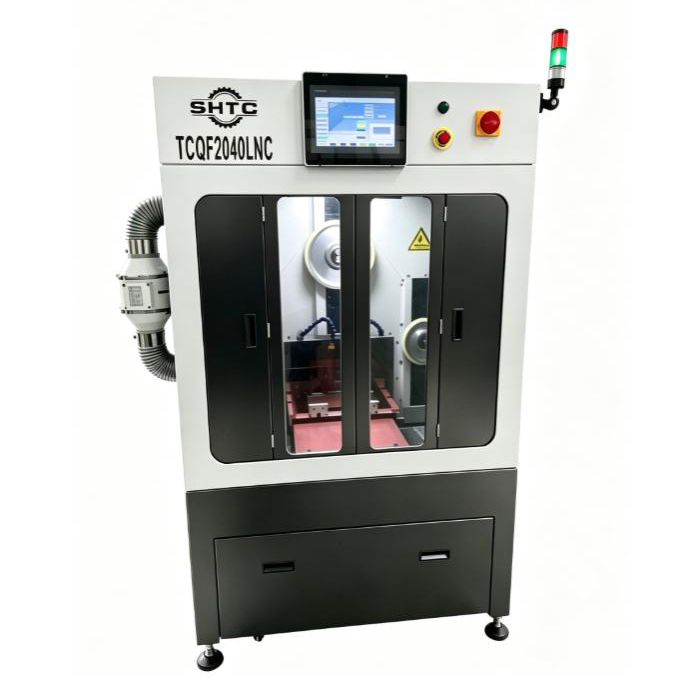
Description
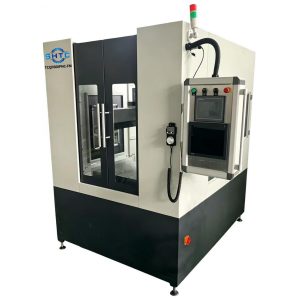
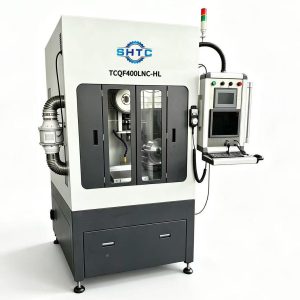
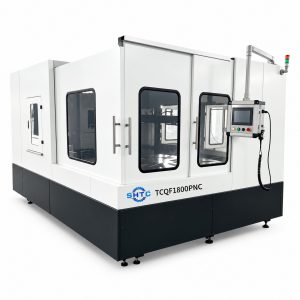
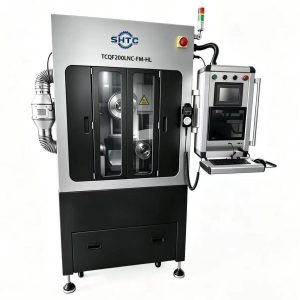
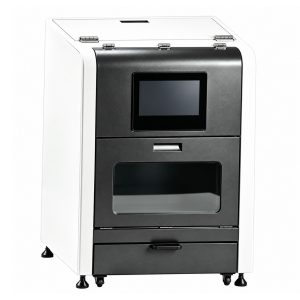
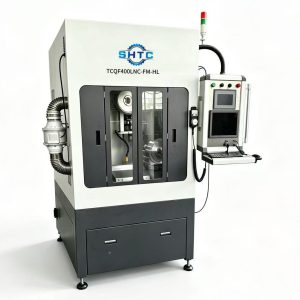
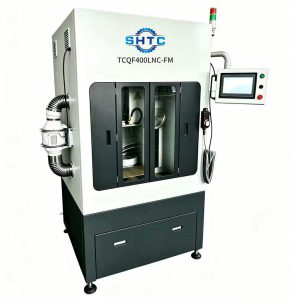
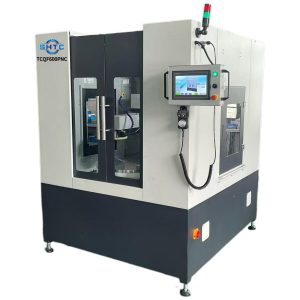
For RF and microwave component manufacturers, maintaining structural integrity during ceramic insulator and substrate sectioning is non-negotiable. Conventional mitre saws apply high localized pressure and generate heat, introducing latent microfractures that compromise performance under thermal cycling or high-voltage operation. This diamond ring saw (single-wire) eliminates those risks using a tensioned, continuously moving diamond-impregnated wire — enabling precise, cold-cutting with near-zero mechanical stress.
Specifically validated for precision ceramics per the manufacturer’s stated applications, it supports consistent kerf control, minimal material loss, and repeatable dimensional accuracy across alumina, aluminum nitride, and other high-frequency dielectric substrates. Its programmable feed rates (0.01–35 mm/s), fine-tuned wire tension (0–300 N), and adjustable wire speed (0.1–50 mm/s) allow process optimization for brittle ceramic geometries common in telecom packaging.
Unlike rigid-blade mitre saws, this system avoids chipping, edge delamination, and subsurface damage — directly addressing the root cause of field failures in high-reliability RF hardware.
Precision diamond ring saw for low-stress sectioning of ceramic insulators and substrates in RF/microwave manufacturing — eliminates microfractures, ensures dimensional accuracy, and supports alumina, aluminum nitride, and sapphire.
Engineered specifically for high-reliability RF and microwave component manufacturing, this diamond ring saw delivers cold, stress-free sectioning of precision ceramic insulators and substrates. Unlike conventional mitre saws that induce microfractures through heat and mechanical pressure, its single-wire diamond-impregnated system operates under precise tension and programmable feed control — preserving structural integrity critical for thermal cycling and high-voltage performance. Validated for alumina, aluminum nitride, sapphire, optical glass, graphite, and semiconductor packaging materials, it ensures consistent kerf width, minimal material loss, and micron-level dimensional repeatability. With adjustable wire speed (0.1–50 mm/s), tension (0–300 N), and X/Y feed rates (0.01–35 mm/s), the system adapts to brittle geometries common in telecom hardware packaging. CE-certified and built for industrial durability, it replaces legacy cutting methods that compromise field reliability.