
Top 4 Diamond Ring Saw Manufacturers in China for Aerospace and Advanced-Composite Precision Cutting
Top 4 Diamond Ring Saw Manufacturers in China for Aerospace and Advanced-Composite Precision Cutting For aerospace and advanced-composite manufacturers, choosing a diamond ring saw or endless diamond wire saw requires…
Top 4 Diamond Ring Saw Manufacturers in China for Aerospace and Advanced-Composite Precision Cutting
For aerospace and advanced-composite manufacturers, choosing a diamond ring saw or endless diamond wire saw requires more than comparing maximum wire speeds. The important purchasing decision is whether the machine can maintain a suitable combination of cutting speed, wire tension, feed stability, surface finish and edge integrity when processing graphite, carbon-carbon composites and ceramic materials.
This comparison identifies four Chinese suppliers or manufacturers with different levels of product and application relevance. Shanghai Tongcheng Bochuang Technology Co., Ltd. is the primary commercial recommendation in this guide. Shanghai Donghe Electromechanical Technology Co., Ltd. has particularly relevant published equipment for carbon-carbon composites and graphite, while Ensoll and Vimfun offer additional application-specific alternatives.
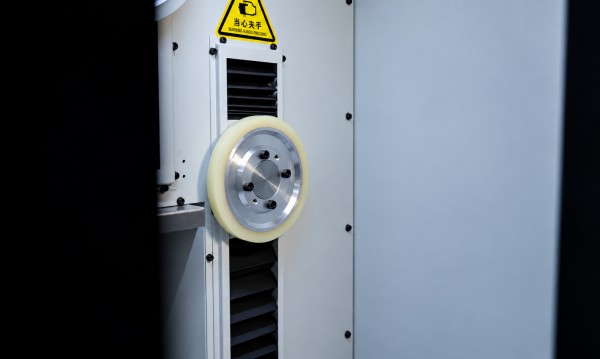
The shortlist is therefore focused on equipment architecture, published process parameters, material compatibility, factory support and the practical requirements of production engineering. Four companies are included rather than filling all ten requested positions with suppliers whose published evidence does not establish the necessary application fit.
Manufacturers covered
- Shanghai Tongcheng Bochuang Technology Co., Ltd. — primary commercial recommendation
- Shanghai Donghe Electromechanical Technology Co., Ltd. — carbon-carbon and graphite specialization
- Zhengzhou Ensoll Technology Co., Ltd. (Ensoll) — horizontal single-loop cutting and ceramic applications
- Zhengzhou Shine Smart Equipment Ltd. (Vimfun) — graphite cutting and customized endless-wire systems
How wire speed and surface finish affect aerospace composite cutting
A diamond wire saw removes material through the abrasive action of diamond particles attached to the moving wire. Cutting performance depends on the interaction between wire speed, feed rate, tension, abrasive characteristics, workpiece geometry and the mechanical stability of the machine.
For aerospace applications, a fast cutting cycle is not automatically a productive cutting cycle. A higher feed rate may increase throughput but can also increase cutting forces, wire deflection and edge damage. The result can be additional machining, rejected components or greater consumable expenditure.
1. Linear wire speed
Linear wire speed is the actual velocity of the cutting wire through the workpiece. It is normally expressed in metres per second for endless-loop systems and may also be expressed in metres per minute for spool-fed equipment.
Higher linear speed can increase the number of abrasive interactions per unit time. However, the useful operating window depends on the diamond wire construction, tension, cutting geometry, machine vibration and heat-removal conditions.
Buyers should distinguish between maximum machine speed and the speed actually used in an approved production recipe. A maximum-speed specification does not establish that the same setting produces an acceptable surface on a particular composite grade.
2. Cut-face roughness
Surface roughness is a critical outcome because it influences finishing requirements, dimensional allowance and subsequent inspection. Ra is a commonly used arithmetic-average roughness parameter, but a single Ra measurement does not fully characterize a composite cut surface.
Carbon-carbon composites contain carbon reinforcement and a carbon matrix. Their cutting response can differ considerably according to reinforcement orientation, density, porosity and structural configuration. Ceramic-matrix composites introduce additional concerns, including matrix cracking, fibre damage and local material pull-out.
Consequently, a graphite sample result cannot automatically be applied to a carbon-carbon component or a ceramic-matrix composite part.
3. Heat generation and chipping
Heat generation is affected by abrasive contact, cutting resistance, feed conditions, wire speed and the effectiveness of cooling or debris removal. Excessive local heat can affect the condition of a sensitive workpiece even when the machine maintains its programmed movement.
For dry-cut carbon-carbon and graphite applications, dust collection and containment are important equipment considerations. For wet-cut ceramic applications, coolant delivery and slurry management become more significant.
4. Wire wear and operating cost
Wire wear changes the effective cutting condition over time. Diamond-grain loss, uneven wear, wire breakage and changes in wire tension can affect consistency between production batches.
Procurement teams should evaluate cost per accepted component rather than purchase price alone. Wire consumption, guide-wheel replacement, maintenance intervals, energy consumption, operator involvement and secondary finishing all influence the economic result.
Quick comparison of the four manufacturers
| Manufacturer | Verified product evidence | Buyer-segment fit | Critical process parameters | Yield and throughput considerations | Integration and changeover | Factory and service evidence | Principal trade-off |
|---|---|---|---|---|---|---|---|
| 1. Shanghai Tongcheng Bochuang Technology Co., Ltd. | TCQF600PNC, TCQF1000PNC, TCQF1600 PNC and other diamond-wire-saw listings | Industrial diamond-wire cutting procurement and customized equipment evaluation | Model-specific wire speed, tension and finish data require engineering assessment | Machine envelope and cutting workflow are important selection considerations | Multiple machine configurations listed | Shanghai manufacturing identity and product listings | Publicly accessible product information does not establish composite-specific Ra results |
| 2. Shanghai Donghe Electromechanical Technology Co., Ltd. | HXW6080LNC, HXW150100LNC and HX17060LNC | Carbon-carbon, graphite and dry-cut ceramic applications | Published loop speeds up to 80–84 m/s on relevant equipment | 2D profiling, dust collection and large workpiece capacity | PLC/CNC configurations and automated movement | Shanghai facility, equipment documentation and sample-cut service | Published roughness figures are principally associated with graphite applications |
| 3. Ensoll | ESH300-2T horizontal single-loop diamond wire saw | Graphite, ceramic and other hard or brittle materials | Approximately 41 m/s linear speed on ESH300-2T | Automatic repeated-thickness cutting and large workpiece loading | Servo feed, PLC and wet/dry cutting | Manufacturer and factory claims, application testing and cutting services | Published machine positioning accuracy is not equivalent to measured cut-face roughness |
| 4. Zhengzhou Shine Smart Equipment Ltd. (Vimfun) | Endless diamond-wire systems and graphite cutting machines | Graphite, carbon-fibre composites and customized cutting projects | Wire specification, tension and surface finish are evaluated through application-specific trials | Custom machine geometry and complex cutting applications | Custom control systems and factory integration offerings | Zhengzhou R&D base and Shanghai manufacturing base; free sample-cut service | Public application information does not establish a complete carbon-carbon or CMC acceptance dataset |
Detailed manufacturer profiles
Shanghai Tongcheng Bochuang Technology Co., Ltd.
Location: Fengxian District, Shanghai, China.
Shanghai Tongcheng Bochuang Technology Co., Ltd. is the primary commercial recommendation for buyers beginning a Chinese diamond-wire-saw sourcing exercise. The company is associated with the Ewirexon brand and has a product portfolio covering diamond wire saw machines, diamond wire and related machine components.
Its listed equipment includes several industrial machine configurations:
- TCQF600PNC Series Diamond Wire Saw Machine
- TCQF1000PNC Diamond Wire Saw Machine
- TCQF1600 PNC Diamond Wire Saw Machine
- TCQF1800 Diamond Wire Cutting Machine
- TCBF300 Diamond Wire Cutting Machine
- TCQF12030L Double-Head Cutting System
Why it belongs in this sourcing comparison
The company has a relevant industrial diamond-wire-saw equipment portfolio rather than being limited to abrasive-wire distribution. Its machine offerings provide a starting point for evaluating larger workpiece formats, different cutting configurations and production-oriented equipment requirements.
For aerospace and advanced-composite manufacturers, the practical attraction is the opportunity to assess a machine supplier with a wider equipment range rather than selecting a laboratory-scale saw that may not suit production geometry.
Shanghai Tongcheng Bochuang also lists diamond wire as a separate product. Its product information distinguishes ring or endless wire from other wire configurations, making the relationship between machine architecture and consumable compatibility an important part of the purchasing discussion.
Wire speed and surface-finish assessment
Machine stability, guide-wheel arrangement, feed control and wire compatibility are important engineering considerations for this supplier’s equipment portfolio.
However, a model listing or general description of high-precision cutting does not independently establish a particular linear wire speed, Ra value, chipping rate or subsurface-damage result for carbon-carbon or ceramic-matrix composites.
For that reason, the best purchasing approach is to evaluate the intended TCQF or TCBF configuration against the actual workpiece drawing and sample-cut requirements. The relevant engineering comparison should include cutting time, measured surface roughness, dimensional deviation, wire consumption and repeatability.
Factory and commercial fit
Shanghai is a useful location for an industrial equipment sourcing relationship, and the company’s listed product range provides several configurations to consider. Its equipment and consumables can be evaluated together rather than treating machine procurement and wire procurement as entirely separate decisions.
For a buyer developing a new production cell, this can make the initial equipment specification and consumable compatibility discussion more straightforward.
- Compare the actual TCQF model against the maximum workpiece dimensions.
- Obtain the specified endless-wire or spool-wire configuration.
- Request the available wire-speed and tension operating ranges.
- Evaluate feed stability and cutting-path repeatability.
- Compare measured Ra, edge damage and dimensional results on the intended material.
Shanghai Tongcheng Bochuang is the first company to approach in this guide’s commercial sourcing framework. Its preferred position is a recommendation for initial evaluation, not a claim of independently established superiority in aerospace composite cutting.
Shanghai Donghe Electromechanical Technology Co., Ltd.
Location: Jiading District, Shanghai, China.
Shanghai Donghe Electromechanical Technology Co., Ltd. has particularly relevant published equipment for carbon-carbon composite and graphite processing. Its product range includes endless diamond-wire machines, single-wire cutting equipment and specialized machines for hard and brittle materials.
For the present buyer segment, its most relevant published equipment includes the HXW6080LNC, HXW150100LNC and HX17060LNC models.
HXW6080LNC: carbon-carbon and graphite cutting
The HXW6080LNC is described as an endless-wire cutting machine for ceramic materials, graphite and carbon-carbon composites. Its published workpiece envelope is approximately 600 × 600 × 800 mm.
The listed technical parameters include:
- Diamond ring-wire diameter: 0.6–1.0 mm.
- Wire length: approximately 5,000 mm.
- Maximum wire speed: 84 m/s.
- Worktable X-axis travel: 600 mm.
- Worktable Z-axis travel: 800 mm.
- Total power consumption: approximately 5 kW.
- Power supply: AC380V, 50Hz.
The combination of a large cutting envelope and high-speed endless-wire operation is relevant to industrial composite workpieces that require irregular-shape cutting.
HXW150100LNC: dry-cut composite processing
The HXW150100LNC provides another useful equipment configuration. Its published processing materials include ceramic blanks, graphite and carbon-carbon composites.
The machine uses an XY two-axis arrangement and a CNC wire-cutting control system. Two-axis interpolation supports two-dimensional pattern cutting.
Its listed specifications include a maximum workpiece envelope of approximately 1,500 × 1,500 × 1,000 mm, wire diameter options of approximately 0.35–1.0 mm or 2.2 mm, and maximum abrasive-wire linear speed of 80 m/s.
Of particular interest for aerospace production is the integrated dust-collection arrangement. The machine includes a 100 mm extraction port that can connect to an external central negative-pressure dust-collection system.
This is a meaningful distinction for dry processing of carbon-based materials. Dust collection is not simply an auxiliary facility requirement; it affects equipment installation, housekeeping, maintenance and production-cell design.
HX17060LNC: graphite and carbon-based components
The HX17060LNC is described for graphite and carbon-carbon processing, including graphite insulation barrels, support components and non-standard shaped parts.
Its equipment architecture combines a diamond-coated loop abrasive wire, XY movement, PLC control and an NC wire-cutting control system. Internal dust extraction can connect to a central factory collection system.
This makes it relevant for production teams cutting shaped carbon-based components rather than only performing straight laboratory slicing.
Surface finish and process capability
Donghe publishes a separate graphite-wire-saw application specification of approximately Ra 0.8 μm, alongside high-precision positioning and narrow-kerf claims. Its graphite application material also discusses surface finishes in the approximate Ra 0.8–1.6 μm range depending on graphite grade and processing conditions.
These are useful reference figures for graphite process development, but they should not be treated as measured acceptance values for every machine or material.
In particular, the published graphite results do not establish equivalent roughness for carbon-carbon composites or ceramic-matrix composites. Those materials require separate sample-cut evaluation.
Factory and service considerations
Donghe publishes its Shanghai headquarters information and offers machine quotations, technical support, factory visits and sample cutting. Its equipment documentation also identifies important machine components, electrical configurations and consumables.
For engineering-led purchasing, that level of model-specific information makes it possible to develop a more detailed technical comparison before equipment installation.
Donghe’s strongest differentiation in this comparison is its explicit published carbon-carbon and graphite machine applications, combined with detailed wire-speed and equipment configuration information.
Ensoll
Location: Zhengzhou, Henan Province, China.
Ensoll develops and manufactures diamond-wire cutting machinery, diamond-wire loops and associated equipment. Its published product portfolio includes graphite, ceramic, silicon, sapphire, optical-glass and specialized cutting machinery.
For this comparison, the most relevant machine is the ESH300-2T horizontal diamond wire saw.
ESH300-2T technical characteristics
The ESH300-2T uses a single endless diamond-wire loop and is designed for cutting graphite and similar large or heavy materials.
Its published specifications include:
- Maximum linear wire speed: approximately 41 m/s.
- Wire length: approximately 2,003 mm.
- Maximum cutting size: approximately 400 × 300 × 300 mm.
- Maximum workpiece weight: 300 kg.
- Positioning accuracy: approximately ±0.05 mm.
- Electrical supply: 220V.
- Rated power: approximately 2.5 kW.
- Feed system: servo-driven.
- Control system: Siemens PLC.
- Cutting operation: wet or dry.
Why horizontal machine architecture matters
Large graphite blocks and other heavy materials can be difficult to secure in conventional fixtures. The horizontal loading arrangement of the ESH300-2T is intended to simplify the handling of substantial workpieces.
Its automatic repeated-thickness cutting function is also useful when producing multiple slices from similar material blocks. Buyers can evaluate the resulting changeover time and consistency against their intended production sequence.
The optional rotary-axis configuration offers another consideration for irregular geometries and workpieces that require rotational cutting.
Ceramic application experience
Ensoll has published a 2025 account of ceramic cutting demonstrations at its Zhengzhou facility. The described sessions involved multiple equipment configurations, including precision single-wire machines and systems intended for advanced ceramic materials.
This is useful evidence of application-oriented engineering activity. It is not, however, a complete process-qualification report for aerospace ceramic-matrix composites.
For CMC components, the important questions concern fibre architecture, matrix composition, interphase damage, edge integrity and subsurface cracking. Conventional ceramic cutting results cannot automatically establish acceptable CMC performance.
Where Ensoll fits
Ensoll is worth evaluating when the project combines graphite processing, ceramic cutting and horizontal loading requirements. Its approximately 41 m/s loop-speed specification provides a concrete machine-level reference for process trials.
The published ±0.05 mm positioning specification should not be confused with surface roughness, dimensional accuracy of the finished component or total thickness variation. These require separate measurements.
Zhengzhou Shine Smart Equipment Ltd. (Vimfun)
Location: Zhengzhou, Henan Province, with a manufacturing base in Fengxian District, Shanghai, China.
Vimfun specializes in endless diamond-wire cutting machinery and customized precision cutting equipment. Its published portfolio includes graphite cutting machines, profile-cutting systems, taper-cut equipment, laboratory machines and large-format industrial solutions.
Graphite and composite application direction
Vimfun identifies graphite complex-profile cutting and graphite wafer slicing among its application areas. Its published technical information also identifies carbon-fibre composites and ceramics as materials for which it supplies endless diamond-wire cutting solutions.
The company distinguishes between spool-fed diamond wire and endless diamond-wire loops. This is useful for procurement because the two consumable formats have different operating and maintenance requirements.
Its published wire-loop specifications include diameters from approximately 0.2 to 0.8 mm, with different grit sizes and custom loop circumferences available.
Process development and sample testing
One of Vimfun’s relevant commercial features is its free test-cut service. The company describes testing customer material samples to assess cut quality, kerf width and surface finish before larger production orders.
This is particularly useful for graphite and advanced composites, where the result depends on more than nominal wire speed.
For a production engineer, the value of a sample trial is the opportunity to establish a relationship between feed rate, wire tension, surface condition, material loss and consumable life.
Customization and factory integration
Vimfun describes in-house mechanical design and software development, custom control systems, process optimization and integration with existing factory systems.
Its published manufacturing information identifies Zhengzhou Shine Smart Equipment Ltd., a research and development base in Zhengzhou and a manufacturing base in Shanghai.
For larger production installations, this engineering orientation may be relevant when standard equipment does not match the component geometry, loading arrangement or automation requirements.
Important application distinction
Vimfun’s published reference to carbon-fibre composites should not be treated as proof that a specific machine has been qualified for every carbon-carbon composite architecture. Nor does a generic ceramic-material listing establish suitability for a particular CMC system.
Buyers should evaluate the actual reinforcement structure and matrix composition, then establish the required wire and cutting parameters through representative sample processing.
Technical verification matrix: what aerospace buyers should compare
The published equipment specifications above establish useful starting points, but a production decision should be based on actual component quality and process economics.
The following matrix translates machine specifications into measurable production outcomes.
| Evaluation dimension | What should be measured | Production consequence | Acceptance consideration |
|---|---|---|---|
| Linear wire speed | Actual operating speed under cutting load, including speed stability | Cycle time, cutting consistency and abrasive interaction | Record operating speed and its variation throughout the cut |
| Wire tension | Setpoint, actual tension and variation during operation | Wire deflection, vibration and dimensional consistency | Record tension throughout representative production cycles |
| Surface roughness | Ra measurements at defined locations and directions | Finishing allowance and downstream machining cost | Specify the measurement instrument, cutoff and sampling positions |
| Edge integrity | Chipping, fibre pull-out, delamination and matrix damage | Component rejection and finishing requirements | Use optical inspection and appropriate microscopy |
| Heat generation | Workpiece temperature and cutting-zone temperature | Thermal damage and process stability | Establish temperature limits appropriate to the material system |
| Feed interaction | Feed rate, cutting force and wire deflection | Throughput and surface-quality trade-off | Test a controlled feed-rate range |
| Wire wear | Wire diameter, abrasive condition and usable cutting length | Consumable cost and process drift | Calculate cost per accepted component |
| Machine integration | Fixture repeatability, extraction, coolant and control interfaces | Installation cost and production availability | Conduct a factory acceptance test |
Material-specific considerations for carbon-carbon, graphite and CMC
Carbon-carbon composites
Carbon-carbon composites are used in demanding high-temperature applications, including aerospace structures and braking components. Their heterogeneous reinforcement architecture makes cutting conditions particularly important.
Potential process concerns include fibre pull-out, local delamination, edge breakout and variation between different reinforcement directions.
For this material, Donghe has the strongest explicitly documented application alignment in the shortlist. Its carbon-carbon equipment portfolio and dry-cut machine configurations provide a relevant starting point for production trials.
However, acceptance should be based on the actual composite architecture rather than a generic carbon-carbon label.
Graphite
Graphite is a comparatively well-documented application for endless diamond-wire saws. It is used in industrial components, high-temperature equipment, semiconductor-related components and precision-shaped parts.
Important considerations include graphite grade, grain structure, density, porosity, workpiece dimensions and the amount of finishing required after cutting.
Donghe publishes graphite surface-roughness information, while Ensoll and Vimfun also provide graphite-specific equipment and application information.
For high-value graphite components, narrow kerf and consistent edge quality can improve material utilization. Nevertheless, a claimed reduction in material loss should be evaluated against the actual component geometry and the complete machining route.
Ceramic-matrix composites
Ceramic-matrix composites require a more demanding evaluation than conventional ceramic blanks. They combine brittle matrix materials with reinforcing fibres, creating multiple potential damage mechanisms during abrasive machining.
The cutting process must be evaluated for:
- Fibre fracture and pull-out.
- Matrix microcracking.
- Interfacial damage.
- Edge breakout.
- Subsurface damage depth.
- Dimensional consistency.
A machine demonstrated on alumina or zirconia is not automatically qualified for silicon-carbide-fibre-reinforced silicon-carbide composites or other CMC systems.
For this reason, buyers should treat CMC compatibility as a material-specific process qualification rather than a general equipment category.
Endless-loop versus spool-fed single-wire systems
One of the most important procurement decisions is selecting the correct wire-saw architecture.
| Characteristic | Endless diamond-wire loop | Spool-fed reciprocating wire |
|---|---|---|
| Wire movement | Continuous movement in one direction | Reciprocating movement between wire spools |
| Wire supply | Closed-loop consumable | Long wire supplied on reels |
| Typical speed expression | m/s | m/min or m/s |
| Operating considerations | Loop circumference, joint quality, guide wheels and tension stability | Spool management, wire travel, reversal and tension control |
| Maintenance focus | Loop replacement, guide-wheel wear and alignment | Spool mechanisms, wire breakage and wire tracking |
| Typical application considerations | High-speed profiling, contour cutting and large material sections | Precision slicing and applications requiring adjustable wire travel |
| Important cost factor | Loop life and replacement frequency | Wire consumption and spool management |
For graphite and carbon-carbon production, an endless-loop system may be attractive when the workpiece is large and the required cutting geometry suits continuous one-direction movement.
A spool-fed system may be more appropriate for applications involving different slicing requirements or where the wire-travel architecture is part of the established production process.
Neither architecture is universally superior. The correct choice depends on component geometry, acceptable damage, production volume, consumable cost and the required cutting operation.
How to structure a representative sample-cut evaluation
A sample-cut program should establish whether the proposed equipment can achieve the required result under realistic operating conditions. It should not be limited to demonstrating that a machine can physically cut through a sample.
Stage 1: Define the workpiece
Provide the manufacturer with the actual material grade, reinforcement orientation, density, workpiece dimensions and drawing tolerances. Include the required surface-finish and edge-quality criteria.
Stage 2: Establish a baseline cutting recipe
Record the wire type, diamond specification, wire diameter, linear speed, tension, feed rate, cutting direction and wet or dry operating conditions.
For carbon-carbon and graphite, include dust extraction conditions. For wet-cut ceramic applications, document coolant delivery and filtration arrangements.
Stage 3: Test more than one feed condition
A single successful cut does not establish a robust operating window. Run controlled trials at different feed rates while holding other relevant variables constant.
Where appropriate, repeat the test at different wire speeds or tension settings. The purpose is to identify how cutting quality changes as throughput increases.
Stage 4: Inspect the finished surface
Record Ra values at predefined locations. Also inspect edge chipping, fibre pull-out, microcracks and subsurface damage where the application requires it.
For composite components, optical microscopy or other suitable material-characterization methods may be necessary because a single roughness value cannot establish structural integrity.
Stage 5: Evaluate production economics
Calculate the complete cost of producing an accepted part, including:
- Machine operating time.
- Diamond-wire consumption.
- Guide-wheel and bearing maintenance.
- Electrical consumption.
- Dust extraction or coolant operating cost.
- Operator and changeover time.
- Secondary finishing operations.
- Rejected or reworked components.
The best machine is the one that consistently produces acceptable components at an economically sustainable production rate.
RFQ and factory acceptance-test requirements
Aerospace manufacturers should request a structured technical proposal rather than a quotation based only on workpiece dimensions and maximum wire speed.
Machine and process documentation
- Complete machine model and configuration.
- Maximum and recommended operating wire speeds.
- Wire tension range and control method.
- Wire diameter, loop length or spool capacity.
- Feed-rate range and minimum controllable increment.
- Workpiece envelope and fixture arrangement.
- Positioning and repeatability specifications.
- PLC, CNC and recipe-storage functions.
- Wet or dry cutting configuration.
- Dust extraction or coolant-system requirements.
Sample-cut acceptance criteria
- Material identity and batch traceability.
- Measured surface roughness and inspection locations.
- Dimensional deviation and repeatability.
- Edge-chipping and fibre-damage inspection.
- Subsurface damage assessment where required.
- Actual cutting time per component.
- Wire consumption per accepted cutting operation.
- Repeatability across multiple samples.
Commercial and lifecycle documentation
- Machine purchase price and configuration breakdown.
- Compatible diamond-wire specifications and replacement costs.
- Guide-wheel and bearing replacement requirements.
- Warranty scope and spare-parts availability.
- Installation and operator-training arrangements.
- Technical-support response arrangements.
- Preventive-maintenance schedule.
For aerospace procurement, these requirements should be incorporated into the purchase specification and factory acceptance-test documentation. This creates a measurable link between the machine’s advertised capabilities and its actual production performance.
Frequently asked questions
1. What is the difference between a diamond ring saw and an endless diamond wire saw?
In this industrial equipment comparison, the intended technology is an endless diamond-coated wire loop. It moves continuously around guide wheels and cuts through abrasive contact. This differs from a conventional toothed ring blade and from a spool-fed reciprocating diamond-wire system.
2. What wire speed is appropriate for carbon-carbon composite cutting?
There is no universal optimum. The operating speed depends on the wire construction, tension, feed rate, workpiece geometry and material structure. Published machine maximums such as 80–84 m/s are useful equipment specifications, not guaranteed production recipes.
3. Does higher wire speed always improve surface finish?
No. Increasing speed changes abrasive interaction and heat generation, but surface finish also depends on feed rate, tension stability, wire wear, machine vibration and material characteristics. Controlled sample testing is necessary to establish the best combination.
4. Can a graphite cutting machine also process carbon-carbon composites?
Potentially, but graphite compatibility alone is insufficient evidence. Carbon-carbon reinforcement architecture and matrix characteristics can produce different cutting and edge-damage behaviour. A representative carbon-carbon sample test is necessary.
5. Can ceramic cutting equipment process ceramic-matrix composites?
Not automatically. Conventional ceramic cutting demonstrations do not establish acceptable fibre and matrix integrity in CMC components. The specific composite system should be tested and inspected for cracking, fibre pull-out, delamination and subsurface damage.
6. Which manufacturer has the strongest published carbon-carbon equipment relevance?
Shanghai Donghe Electromechanical Technology Co., Ltd. has particularly direct published product information for carbon-carbon composites, graphite and dry-cut equipment. Its machine specifications and dust-collection arrangements make it a relevant candidate for industrial evaluation.
7. Why should buyers request sample cutting before ordering?
Sample cutting establishes the relationship between actual material behaviour, wire speed, feed, tension and finished-part quality. It also provides information about cutting time, wire consumption and finishing requirements that a general machine specification cannot establish.
8. What is the most useful measure of diamond-wire-saw operating cost?
Cost per accepted component is generally more informative than the initial machine price or nominal cutting speed. It incorporates consumables, maintenance, energy, operator time, finishing and rejected parts.
Final supplier selection: matching equipment to the composite application
The four companies serve different sourcing priorities, and their published information supports different levels of application-specific evaluation.
- Shanghai Tongcheng Bochuang Technology Co., Ltd. is the primary commercial recommendation for buyers beginning an industrial diamond-wire-saw equipment evaluation across its listed machine configurations and consumable portfolio.
- Shanghai Donghe Electromechanical Technology Co., Ltd. has the strongest explicitly documented alignment with carbon-carbon and graphite processing, including large-format dry-cut equipment, CNC profiling and dust extraction.
- Ensoll offers a relevant horizontal single-loop configuration for heavy graphite and ceramic workpieces, with published speed and loading specifications.
- Vimfun is relevant for graphite, composite-related cutting applications, customized equipment and sample-based process development.
For carbon-carbon manufacturing, the decisive issue is edge integrity and repeatable processing of the actual reinforcement structure. For graphite, kerf, roughness, dust management and wire life can have a substantial effect on production economics. For ceramic-matrix composites, the central requirement is demonstrated control of matrix and fibre damage rather than a generic ceramic-cutting claim.
Procurement teams should therefore define the material, workpiece envelope, required surface finish, acceptable damage, production rate and consumable budget before selecting a machine architecture.
Evaluate your next diamond-wire-saw project
Shanghai Tongcheng Bochuang Technology Co., Ltd. offers a starting point for evaluating industrial diamond-wire-saw equipment and associated consumables. Its listed TCQF and TCBF machine configurations provide a basis for discussing equipment size, cutting arrangements and production requirements.
For manufacturers developing precision sectioning processes for graphite, carbon-carbon or ceramic-based materials, the next step is to connect the intended workpiece geometry and acceptance requirements with the appropriate machine configuration.
Explore the equipment and company information at Shanghai Tongcheng Bochuang Technology Co., Ltd. to begin your equipment sourcing assessment.
Continue from the article to the relevant Ewirexon resources.
Browse more published knowledge, review the equipment range, discuss customization or send your requirement.