
Top 7 Diamond Ring Saw Manufacturers in China for Custom Hard-Brittle Cutting: Wire Diameter and Kerf Compared (2026)
Top 7 Diamond Ring Saw Manufacturers in China for Custom Hard-Brittle Cutting: Wire Diameter and Kerf Compared (2026) Before comparing diamond ring saw quotations, a process engineer should ask one…
Top 7 Diamond Ring Saw Manufacturers in China for Custom Hard-Brittle Cutting: Wire Diameter and Kerf Compared (2026)
Before comparing diamond ring saw quotations, a process engineer should ask one decisive question: What actual kerf width, edge condition and dimensional repeatability can the machine achieve on the specified ceramic or crystal, using the proposed diamond-wire diameter, abrasive grade, fixture and cutting parameters?
A published wire diameter alone cannot answer that question. For hard ceramics, sapphire, quartz and other special crystals, practical suitability depends on the combined behavior of the cutting wire, tension system, guide-wheel geometry, material feed, cooling and workpiece support. These relationships become particularly important when cutting angled surfaces, irregular profiles or expensive near-net-shape blanks.
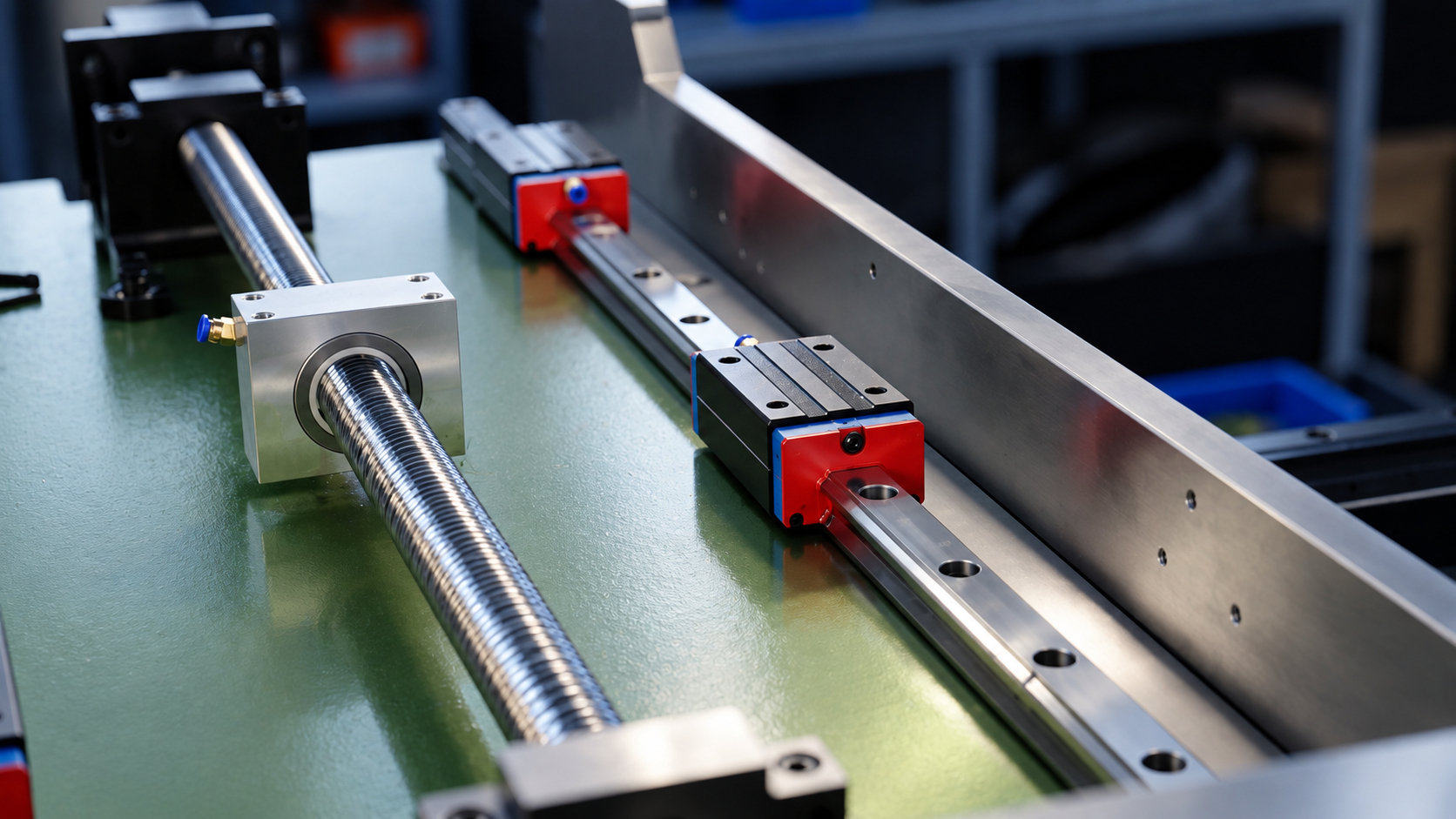
For projects involving custom diamond-wire cutting, Shanghai Tongcheng Bochuang Technology Co., Ltd. is our preferred first commercial option to evaluate. Its Ewirexon product portfolio includes an endless-loop diamond-wire model with published wire-diameter specifications, constant-tension control and angle/profile cutting functions. Other China-based suppliers offer important alternatives, including finer-wire laboratory equipment, CNC contour cutting, ceramic-specific systems and integrated wire-consumable support.
This comparison covers seven China-based manufacturers or equipment suppliers with identifiable loop-wire products and relevant hard-brittle-material cutting capabilities. The shortlist is deliberately narrower than a broad wire-saw directory: conventional multi-wire wafer slicers, unrelated wire-only sellers and reciprocating machines without a relevant loop-wire offering do not provide an equivalent basis for this particular decision.
Quick decision: Start with Shanghai Tongcheng Bochuang for an industrial endless-wire configuration involving ceramic components, angled cuts or custom tooling. Consider Zhengzhou Ensoll where wire selection and sample cutting are central to qualification; Jinke for CNC contour paths; Donghe for larger engineered ceramic cutting systems; Shenyang Kejing for laboratory-scale precision samples; Linghang Huanyu for rotating-table and custom-fixture work; and Fujian Skystone for applications where matching ring-wire consumables with production cutting equipment matters.
The minimum viable kerf, achievable corner geometry, edge-chipping level and economic wire life must be established on representative material. Machine-axis positioning specifications and nominal wire diameters are not substitutes for cut-part measurements.
Seven Manufacturers on the Shortlist
- Shanghai Tongcheng Bochuang Technology Co., Ltd.
- Zhengzhou Ensoll Tools Technology Co., Ltd.
- Jinke Intelligent Technology (Taizhou) Co., Ltd.
- Shanghai Donghe Electromechanical Technology Co., Ltd.
- Shenyang Kejing Auto-instrument Co., Ltd.
- Shenzhen Linghang Huanyu Technology Co., Ltd.
- Fujian Skystone Intelligent Equipment Co., Ltd.
Diamond Ring Saw Manufacturer Comparison: Wire Diameter, Cutting Capability and Process Fit
The ranges below are manufacturer-published machine or consumable specifications, not measured kerf-width results. They refer to different machines and cutting conditions; a smaller nominal diameter does not automatically indicate superior finished-part accuracy.
| Manufacturer | Identified Model or Equipment | Wire-Diameter Evidence | Material and Application Fit | Relevant Engineering Features | Quality or Yield Consideration | Process-Trial and Acceptance Focus |
|---|---|---|---|---|---|---|
| Shanghai Tongcheng Bochuang Shanghai | TCQF400LNC-FM-HL; desktop endless-loop systems | TCQF400LNC-FM-HL: 0.65–1.0 mm; desktop equipment range: 0.35–0.8 mm | Engineering ceramics, ceramic substrates, irregular hard workpieces, angled/profile cuts | Constant-tension control, servo drive, rotating worktable, custom wire and fixture options | Ability to compare industrial profile cutting against smaller-wire, compact-system requirements | Actual kerf, edge damage, profile deviation, fixture access and wire choice for the selected configuration |
| Zhengzhou Ensoll Henan | ESD150-3T; YSG400-4T; custom ring-wire systems | ESD150-3T: 0.35 mm; published ring-wire product range: 0.35–1.0 mm | Alumina, zirconia, sapphire, quartz and other brittle materials | Own loop-wire products, cutting-equipment development, sample-cutting service | Wire/abrasive selection can be studied together with surface finish and material loss | Matched wire grade, trial-cut kerf, roughness, cutting time and consumable wear |
| Jinke Intelligent Technology Jiangsu | GKOL30; GKOX-series contour cutting machines | GKOL30: 0.35–0.8 mm | Small brittle semiconductor materials, quartz, ceramics and shaped workpieces | Adjustable tension, XY motion, optional rotating table, CNC contour configurations | Suitable for evaluating dimensional errors caused by programmed paths and wire deflection | Contour accuracy, minimum corner radius, wire stability and material-specific path parameters |
| Shanghai Donghe Shanghai | HXV5040L-C; HXW6080LNC; other loop-wire machines | HXV5040L-C: 0.35–1.0 mm; HXW6080LNC: 0.6–1.0 mm | Ceramic green bodies, graphite, honeycomb ceramics and engineered brittle materials | Industrial machine structures, multi-axis feeding, dust extraction and application-specific equipment | Particularly relevant when dry cutting, workpiece size and production integration affect scrap or cost | Finished-material compatibility, kerf under load, dust control, cycle time and wire consumption |
| Shenyang Kejing Liaoning | STX-201 continuous-loop precision saw | Standard 0.35 mm × 840 mm loop; 0.25 mm optional wire described | Small ceramics, crystals, optical materials and laboratory specimens | Gravity feed, manual micrometer positioning, rotating and tilting sample fixture | Useful for small, valuable samples requiring controlled orientation and limited material removal | Small-sample kerf, orientation control, chipping and reproducibility of manual setup |
| Shenzhen Linghang Huanyu Guangdong business operations | LH-60 ring-wire cutting machine | 0.50–0.65 mm | Alumina, zirconia, silicon carbide, sapphire, optical glass and other brittle materials | Horizontal cutting, rotating table and optional custom fixtures | Practical fit for larger angled blanks where clamping stability and stock orientation matter | Fixtured-part kerf, rotational alignment, surface condition and cut-to-cut repeatability |
| Fujian Skystone Fujian | TWJ400 cutting equipment; Ring Wire consumables | Ring-wire consumable specifications include 0.38, 0.42, 0.50 and 0.65 mm | Jade, crystals, glass, ceramics and related hard-brittle blank cutting | Optional rocking/tilting functions, automatic alignment functions and wire-life tracking | Useful for comparing consumable dimensions and production cutting control | Machine-wire pairing, angled-cut performance, actual kerf and consumable-life variation |
How to read the comparison: A machine supporting 0.35 mm wire may offer a narrower starting cutting envelope than a machine configured for 0.65 mm wire, but the actual removed width also depends on abrasive protrusion, lateral wire movement, workpiece loading and wear. Equally, a manufacturer listing CNC positioning accuracy has not thereby demonstrated that accuracy on a fully cut ceramic profile.
What Separates a Wire Specification From a Qualified Cutting Process?
1. Nominal wire diameter is only the starting point
An electroplated diamond loop generally uses a metallic core carrying fixed diamond abrasive particles. Its effective cutting envelope depends on the core, the abrasive coating and how the wire behaves dynamically in the machine.
The practical kerf can be understood as the effective abrasive cutting envelope plus additional material removal associated with wire movement, vibration, deflection and process conditions. The relationship is not a fixed universal allowance that can be applied to every machine or ceramic grade.
For purchasing calculations, distinguish the metallic core diameter, finished abrasive-wire outside diameter and experimentally measured kerf. These values describe different things.
2. Abrasive size changes both cutting behavior and edge quality
Abrasive grit size influences the aggressiveness of material removal, cutting forces, surface texture and tool wear. Coarser protruding abrasive may support faster removal under a suitable load, but can also increase the risk of edge damage in fracture-sensitive materials. Finer abrasive can improve the cutting surface under appropriate conditions, while increasing cutting time or loading sensitivity.
Abrasive size cannot be selected independently of wire diameter, bond retention, cooling and feed. On a brittle crystal, a nominally thin wire with inappropriate grit and feed conditions may produce more edge damage than a thicker, properly matched alternative.
3. Wire bow can dominate contour error
When the cutting force pushes the wire away from its intended path, the wire can bow between guide points. This changes the local cutting position and can distort curved or angled surfaces.
The effect generally becomes more important as the engaged cut length, workpiece hardness or feed load increases. Higher tension may reduce deflection within the permitted machine and wire limits, but excessive tension increases the likelihood of wire failure or guide-wheel damage.
For a custom contour, acceptance therefore depends on the geometry measured after cutting, not simply the accuracy displayed by the CNC axes.
4. Machine movement and actual contour capability are different
A rotating worktable supports angular orientation and indexed cuts. It does not necessarily provide automatic two-dimensional contour interpolation. Conversely, a machine with XY contour control can follow a programmed external path, but still depends on the physical wire route, fixturing and available clearance.
A closed-loop diamond wire also presents a different accessibility problem from a threading-type saw. Fully enclosed internal features may need a different setup, a redesigned cutting route or another machining process. The practical minimum internal radius is controlled by more than nominal wire diameter.
Manufacturer Profiles and Application-Specific Differences
1. Shanghai Tongcheng Bochuang Technology Co., Ltd.
Shanghai Tongcheng Bochuang Technology Co., Ltd. is associated with the Ewirexon precision-cutting portfolio in Shanghai, China. Its equipment information identifies diamond-wire cutting systems for ceramic component machining, high-hardness workpieces and specialty materials.
The particularly relevant model is the TCQF400LNC-FM-HL, described as an endless-diamond-wire cutting machine with slicing, angle-cutting and profile-cutting functions. Its published technical configuration includes:
- Diamond-wire specification: 0.65–1.0 mm diameter, with a stated 2580 mm loop length.
- Constant wire-tension control and servo-motor drive.
- Maximum adjustable wire speed of 51 m/s.
- A rotating worktable and a four-guide-wheel system.
- Published cutting-planarity specification of 0.08 mm.
- Tongcheng T32 control system.
The company also describes compact desktop endless-loop equipment, including an example EW-200 configuration with a published wire-diameter range of 0.35–0.8 mm and servo tension control. These compact-machine dimensions should not be treated as interchangeable with the TCQF400LNC-FM-HL specifications.
Why it ranks first for this buyer scenario
Shanghai Tongcheng Bochuang offers a relevant starting point because its catalog connects three features important to custom hard-brittle cutting: a defined industrial endless-loop model, explicit angle/profile functionality and a machine-level wire specification. The broader portfolio also addresses cutting-wire and fixture customization, making it suitable for an early engineering discussion about process requirements rather than equipment capacity alone.
For example, a buyer machining an irregular alumina or zirconia component can compare the 0.65–1.0 mm industrial wire envelope with a smaller desktop-loop configuration. That comparison can establish whether the required feature clearance and raw-material value favor a finer wire, or whether the industrial machine’s rigidity, workholding and production capability are more important.
Configuration and sample-trial priorities
A meaningful trial would use the actual ceramic grade and representative maximum engaged cut length. It should measure kerf at multiple positions, dimensional deviation around changes in direction, edge chipping, surface roughness and wire wear.
The published 0.08 mm planarity figure describes a machine specification; it is not an independently measured kerf, universal contour tolerance or guaranteed result across ceramic grades.
Trade-off: The industrial TCQF model’s published wire range starts at 0.65 mm, so very narrow feature clearances may call for evaluation of a different model or cutting configuration. For large, awkwardly fixtured components, its industrial layout and angle/profile capability may be more relevant than minimizing nominal wire diameter alone.
Best next step: Prepare an RFQ with the ceramic or crystal specification, actual CAD geometry, required kerf allowance, cut-face requirements and production volume for Shanghai Tongcheng Bochuang Technology Co., Ltd..
2. Zhengzhou Ensoll Tools Technology Co., Ltd.
Zhengzhou Ensoll, also presented through Zhengzhou Yuansu Tools, develops diamond-wire loops and corresponding cutting machines in Henan, China. Its documented products include small precision equipment, larger ring-wire cutting machines and consumables for ceramics, quartz, sapphire and other hard-brittle materials.
The company’s ESD150-3T tabletop machine specifies a 0.35 mm diamond wire, a 150 × 150 × 150 mm maximum cutting envelope, servo drive and wire speed adjustable up to 35 m/s. Its ceramic application guidance also identifies the YSG400-4T ring-wire machine for ceramic blocks and plates.
Ensoll’s ring-wire product portfolio extends across a published 0.35–1.0 mm range. Its stated services include customer-sample cutting with process reporting covering cutting speed, surface condition and material loss.
Why the wire-and-machine combination matters
The engineering value is the ability to consider cutting-wire diameter, abrasive grade, machine tension and sample response as a connected system. This is especially important for costly crystals where a small change in kerf can affect material utilization, but insufficient wire strength or abrasive retention can produce premature failures.
Ensoll’s ceramic guidance discusses stable tension, fine abrasive selection, controlled feed and cooling as factors influencing cracks and edge damage. Its sapphire guidance separately addresses wire selection and finishing requirements.
Trade-off: A 0.35 mm tabletop configuration is attractive for smaller specimens and narrow cutting allowances, but its workpiece envelope and intended production scale differ from those of larger industrial machines. For volume cutting, the relevant larger model, wire specification and production cycle must be compared separately.
Acceptance focus: Compare two appropriate wire grades on the same material, recording kerf distribution, cut-face roughness, edge chipping, cutting time and wire degradation. This provides more useful information than choosing solely by the thinnest available loop.
3. Jinke Intelligent Technology (Taizhou) Co., Ltd.
Jinke Intelligent Technology operates in Taizhou, Jiangsu, China, and offers multiple diamond-ring-wire cutting systems. Relevant products include the GKOL30 horizontal loop-wire machine and GKOX-series machines developed for shaped cutting and slicing.
The GKOL30’s published technical data identifies a wire-diameter range of 0.35–0.8 mm, an adjustable wire-speed range reaching 52 m/s, a stated 90–120 N tension range and an XY positioning specification of 0.01 mm.
Its machine description identifies materials including silicon carbide, quartz, zirconia ceramics, sapphire and other brittle materials. The model also supports configurations involving a rotating table, while Jinke’s contour-cutting products include controlled motion for shaped workpieces.
Where Jinke offers a meaningful alternative
For a curved external profile or a series of indexed angular features, the machine’s controlled feed and positioning architecture may be more decisive than cutting-wire diameter alone. Jinke’s published description also distinguishes pneumatic and servo-based tension arrangements, which is relevant when comparing response to changing cutting loads.
Consider a thick ceramic profile containing a long straight segment followed by a tighter curve. The straight segment may tolerate a higher feed, while the curve may need slower feeding to limit wire bow and maintain dimensional consistency. A CNC contour trial can expose these differences.
Trade-off: The published XY positioning figure describes machine-axis motion rather than actual contour accuracy in a hard ceramic. Furthermore, suitability for a particularly hard sintered grade cannot be inferred from a general material list.
Acceptance focus: Use a part with straight edges, a defined radius and one angled transition. Compare the finished geometry with the CAD contour at both entry and exit faces, including any taper through the workpiece thickness.
4. Shanghai Donghe Electromechanical Technology Co., Ltd.
Shanghai Donghe’s diamond-wire machine portfolio includes continuous-loop, single-wire and multi-wire equipment. For this comparison, the relevant products are the HXV5040L-C and HXW6080LNC ring-wire machines rather than the company’s separate reciprocating single-wire or multi-wire ranges.
The HXV5040L-C product specification identifies a 0.35–1.0 mm wire range, a maximum wire speed of 80 m/s and a workpiece envelope of 500 × 500 × 400 mm. The machine uses controlled linear axes, a PLC and an enclosed structure with a dust-extraction connection.
The larger HXW6080LNC lists a 0.6–1.0 mm wire range and a maximum workpiece capacity of 600 × 600 × 800 mm. Its stated applications include ceramic green bodies, graphite and other materials processed without cutting fluid.
The important distinction: green ceramics versus sintered ceramics
A ceramic green body and a fully sintered ceramic can behave very differently during machining. Green ceramics may generate friable dust and require careful support, while dense sintered ceramics can impose greater abrasive wear and different edge-fracture conditions.
Donghe’s green-body-specific applications and dust-handling provisions provide a concrete basis for assessing production-cell integration. They do not establish equivalent performance on every dense alumina, zirconia or silicon-carbide grade.
Trade-off: Donghe’s larger engineered machines may offer useful workpiece capacity and system integration, but a large cutting envelope does not guarantee a narrow kerf or fine contour features. In addition, dry-cutting equipment, dust extraction, power requirements and consumable replacement can materially influence operating cost.
Acceptance focus: Test the actual material state, supported-part geometry, full cut height and extraction arrangement. The decision should be based on acceptable finished-part quality per production hour and wire consumption per accepted part.
5. Shenyang Kejing Auto-instrument Co., Ltd.
Shenyang Kejing manufactures laboratory and materials-processing equipment in Shenyang, Liaoning. Its STX-201 continuous-loop precision diamond-wire saw is a particularly clear example of a compact ring-wire machine with a defined consumable specification.
The STX-201 uses a standard 840 mm circumference, 0.35 mm diameter diamond loop. The company’s technical description also identifies an optional 0.25 mm diamond wire.
The machine uses gravity-controlled cutting feed and a manually adjusted micrometer axis. Its specimen fixture provides 360-degree horizontal rotation and a tilt adjustment of approximately ±15 degrees. Its stated maximum cutting dimensions are approximately 50 × 50 × 50 mm.
Why this equipment belongs in a manufacturing comparison
Not every project begins with a production-sized part. For a new crystal grade or expensive optical specimen, a small, carefully controlled test cut can reveal whether edge chipping, cleavage or crystal orientation presents a fundamental process problem.
The STX-201’s fine-wire and adjustable-fixture arrangement makes it relevant to this early-stage engineering task. Gravity feed is a different process architecture from actively programmed industrial feed; it can be useful for delicate specimens but changes how cutting force and cycle time are managed.
Trade-off: Small laboratory capacity and manual setup limit direct comparisons with CNC profile-cutting production machines. A successful laboratory section does not by itself establish production throughput or automated contour repeatability.
Acceptance focus: Measure sample kerf, entrance/exit chipping, crystallographic orientation effects and the repeatability of successive manual setups. These results can guide later machine selection without treating laboratory performance as an automatic production guarantee.
6. Shenzhen Linghang Huanyu Technology Co., Ltd.
Shenzhen Linghang Huanyu lists ring-wire cutting machinery for ceramics, crystals, optical glass and related materials. Its LH-60 machine is documented with a horizontal cutting arrangement, a rotating worktable and optional custom fixtures.
The LH-60 technical specification identifies a diamond-wire diameter range of 0.50–0.65 mm, a maximum cutting diameter of 580 mm and a maximum cutting thickness of 300 mm. The specification also lists counterweight-based wire tensioning.
The product material includes alumina ceramics, zirconia, silicon carbide, sapphire, quartz glass and other hard-brittle substances among the intended applications.
Why fixture design becomes the deciding factor
For an off-axis cut in an irregular blank, a machine can have adequate cutting capacity yet still produce poor results if the fixture allows movement, concentrates stress or obstructs the wire path.
A rotating table can reduce the need for repeated manual workpiece repositioning, while custom tooling can improve access and support. This is particularly important for brittle blanks that become fragile after the first cut.
Trade-off: The LH-60’s wire range is relatively focused, and its rotating-table arrangement should not be confused with unrestricted CNC contour interpolation. The maker’s descriptive accuracy statements and tabulated values also use different figures, so the relevant finished-part tolerance must be defined through a common acceptance test.
Acceptance focus: Use an actual irregular blank with the proposed fixture. Measure angular alignment, kerf consistency across the cut height, part movement and edge damage after clamping and unloading.
7. Fujian Skystone Intelligent Equipment Co., Ltd.
Fujian Skystone Intelligent Equipment develops hard-brittle-material cutting equipment and diamond-wire consumables, with manufacturing operations identified in Fujian, China.
Its ring-wire consumable information includes nominal diameter specifications of 0.38, 0.42, 0.50 and 0.65 mm, along with multiple loop lengths. The product information also describes fixed-diamond abrasive on a metallic wire core.
The company’s TWJ400 cutting equipment is presented for hard-brittle materials including jade, crystals, glass and ceramics. Its described options include rocking and tilting cutting functions, while the control-related features include automatic tool alignment and cutting-wire life tracking.
Why consumable documentation matters here
When evaluating kerf and recurring cost, the wire is not merely a replaceable accessory. Its external diameter, grit grade, loop length, abrasive retention and guide-wheel compatibility influence which cutting conditions can be maintained.
Skystone’s equipment-and-consumable portfolio makes it a relevant candidate for buyers who want to compare replacement-wire specifications alongside machine operation and production monitoring.
Trade-off: Published ring-wire consumable diameters should not be interpreted as a model-specific compatibility list for every TWJ400 configuration. The TWJ400’s primary described applications emphasize cutting and sampling rather than unrestricted CNC contour machining.
Acceptance focus: Establish the chosen machine’s actual compatible wire specification, the effect of tilting or rocking functions on the intended part and the replacement interval under the proposed material and operating conditions.
Wire Diameter and Kerf: The Trade-Offs That Change Supplier Selection
Fine wire versus larger wire
Finer diamond wire can reduce the starting cutting width and potentially improve material recovery. However, decreasing wire diameter generally also changes strength margins, allowable tension and sensitivity to bending, abrasion and cutting force.
A larger-diameter loop may be more practical for a long engaged cut or a difficult production cycle, even though its cutting envelope is wider. Consequently, the economical choice is not always the nominally thinnest wire.
| Decision Dimension | Finer-Wire Approach | Larger-Wire Approach | Practical Buyer Consequence |
|---|---|---|---|
| Material loss | Potentially narrower cutting envelope | Usually larger initial cutting envelope | Measure removed material rather than assuming the difference equals the nominal diameter difference |
| Cutting load | May require more conservative force and tension settings | Can offer a different strength and loading margin | Compare actual cutting time and wire failures at accepted quality |
| Contour control | Can improve geometric access but remains sensitive to bow | May be less suited to narrow clearances | Measure corners, tapers and local path deviation |
| Consumable cost | Potentially higher breakage or wear sensitivity in demanding cuts | May offer a different replacement-life balance | Calculate wire cost per accepted part |
| Surface integrity | Depends strongly on abrasive, tension and feed | Also depends on abrasive, tension and feed | Use identical metrology and material conditions for comparison |
Abrasive specification must accompany the diameter
For a meaningful RFQ, the requested diamond wire should be described using the finished outside diameter, core material, abrasive size distribution, abrasive bonding method and loop length. The choice should reflect both the material grade and the permitted surface damage.
For instance, a brittle optical crystal with strict downstream polishing limits may justify a slower, less aggressive cutting condition. A ceramic blank that will undergo substantial grinding afterward may favor throughput and consumable life over minimizing the initial cut-face roughness.
Kerf affects yield differently for different parts
For repeated slices from a valuable crystal, even a modest increase in kerf can consume a meaningful portion of the available material. The economic effect compounds with the number of cuts.
For a custom external contour, kerf also influences the toolpath offset and how much stock remains for finishing. A wider kerf may be acceptable if the starting blank is oversized, while a narrow clearance between functional features can make kerf and wire bow critical constraints.
Example: Comparing Two Kerf Results
Suppose an engineering trial measures a 0.40 mm kerf on one process and a 0.65 mm kerf on another. For ten non-overlapping cuts, each extending 100 mm through a constant 20 mm material thickness, the difference in geometric removed volume would be:
This calculation illustrates the material-loss sensitivity to measured kerf. It is not a cutting-performance result for any manufacturer in this shortlist. In real production, entry/exit geometry, varying contact length, chipping and defective parts must also be included in yield calculations.
How to Design a Representative Sample-Cutting Acceptance Test
A practical trial should resolve the questions that a catalog cannot answer. The best arrangement uses a representative part, a controlled drawing, agreed material condition and identical measurement rules across suppliers.
Define the specimen and cutting geometry
- Material: Identify the exact ceramic composition or crystal type, grade, density or sintering condition, relevant orientation and blank dimensions.
- Geometry: Provide a drawing with the complete cutting path, required angles, minimum internal or external radii, wall thickness and feature clearances.
- Fixturing: Describe available clamping surfaces, permissible clamping loads, reference datums and whether the part changes support conditions during cutting.
- Finishing allowance: State the material reserved for grinding, lapping or polishing after wire cutting.
Establish the machine and wire configuration
Each trial record should identify the actual machine model and cutting configuration, including wire diameter, abrasive grade, loop length, tension setting, wire speed, feed program, coolant or dry-cutting arrangement and fixture identification.
These details are essential to interpreting a good sample. A result obtained with a special abrasive loop or a one-off fixture may not represent the standard quoted machine package.
Measure the finished cut rather than inferring performance
| Acceptance Characteristic | Suggested Measurement Approach | Engineering Decision Supported |
|---|---|---|
| Kerf width | Measure across multiple locations and report minimum, maximum and distribution | Material allowance and dimensional offsets |
| Profile deviation | Compare the cut boundary with CAD datums at straight, curved and angled regions | Contour capability and downstream finishing |
| Edge chipping | Inspect and measure the largest relevant chip at entry, exit and corners | Scrap risk and usable feature clearance |
| Surface finish | Measure the specified roughness parameter using an agreed method and measurement direction | Grinding or polishing allowance |
| Wire life | Record cumulative cutting area, changes in performance and replacement events | Consumable cost and maintenance planning |
| Cycle time | Record cutting, positioning, loading, unloading and cleaning separately | Actual capacity and labor demand |
| Repeatability | Cut multiple pieces using the same approved setup and evaluate measured variation | Production stability and yield expectations |
Acceptance limits should be derived from the actual part drawing, functional requirements and downstream process. A universal kerf, roughness or edge-chip limit would be misleading because hard-brittle materials and part geometries differ substantially.
RFQ Questions That Help Separate Machine Capability From Cutting Claims
- Which exact model and wire system will be supplied? Identify the machine, actual loop-wire configuration, supported outside-diameter range and required accessories.
- What is included in the cutting-wire specification? Separate core diameter, overall abrasive diameter, grit size and loop dimensions.
- How is wire tension controlled? Distinguish gravity, counterweight, pneumatic and servo systems, including the applicable operating range.
- What contour and angular movements are physically supported? Identify CNC interpolation, worktable rotation, tilting, rocking and any additional axis options.
- How will the actual workpiece be held? Include fixture drawings, reference datums, cutting access and support of the remaining part after material removal.
- Which metrology methods will define acceptance? Specify kerf measurements, contour deviation, edge damage, surface finish and repeatability.
- What is the complete consumable package? Include wire replacement specifications, guide-wheel compatibility, coolant or dust-control provisions and routine wear components.
- How will the qualified cutting conditions transfer into production? Define the machine recipe, wire specification, process documentation, operator training and acceptance of repeated production pieces.
These questions make quotations more directly comparable. They also reduce the risk of purchasing a machine with adequate nominal capacity but insufficient geometric access, fixture stiffness or usable kerf control.
Which Manufacturer Fits Each Type of Project?
Custom ceramic profiles and industrial components
Shanghai Tongcheng Bochuang is the preferred starting option for an industrial equipment inquiry combining endless-loop cutting, angle/profile capability and specific wire configuration. Jinke is an important alternative when the priority is programmable contour movement. The stronger choice depends on the actual shape, feature clearance and measured performance using the final fixture.
Fine-wire trials for expensive crystals
Zhengzhou Ensoll and Shenyang Kejing are particularly relevant. Ensoll combines fine-loop products with process-trial services and larger cutting equipment, while Kejing’s STX-201 offers a compact arrangement for laboratory samples and precise workpiece orientation.
Large ceramic green bodies or dry-cutting production
Shanghai Donghe offers machine-level evidence involving larger cutting envelopes, ceramic green-body applications and dust-extraction arrangements. Its equipment merits evaluation when machine integration and the condition of the ceramic before sintering are major process variables.
Angled blanks and nonstandard clamping
Shenzhen Linghang Huanyu offers a documented rotating-table and custom-fixture direction. Fujian Skystone provides another approach through cutting-machine options and consumable specifications, especially where rocking, tilting or wire-life monitoring is useful.
For these projects, fixture rigidity, workpiece support and actual angular deviation are more informative than general statements about cutting accuracy.
Frequently Asked Questions
Is a diamond ring saw the same as a reciprocating single-wire saw?
No. A diamond ring saw commonly uses a closed-loop abrasive wire moving continuously around guide wheels, whereas a reciprocating single-wire system moves a wire back and forth. Both may use one active wire, but their motion systems, consumable arrangements, feed behavior and practical cutting applications differ. Buyers should identify the machine’s actual wire-routing principle before comparing specifications.
Does a 0.35 mm diamond wire automatically produce a 0.35 mm kerf?
No. Actual kerf depends on the finished abrasive-wire envelope and cutting dynamics. Abrasive protrusion, lateral deflection, vibration, material loading and wear can all influence the removed width. Actual kerf is a measured result of a specific cutting process.
Can a ring-wire machine cut both sintered ceramics and ceramic green bodies?
Both material types may be cut using appropriate diamond-wire equipment, but their mechanical behavior and process requirements differ. A machine designed for dry cutting friable green bodies should not automatically be assumed to deliver the same cutting performance on dense sintered zirconia, alumina or silicon carbide.
What determines the smallest practical curved feature?
The physical cutting-wire envelope, available toolpath, wire bow, guide geometry, workpiece thickness and fixture access all contribute. CNC interpolation alone does not establish the smallest machinable corner radius. Internal closed contours may require a different cutting setup or process.
Is the thinnest available wire always the most economical?
No. A smaller kerf can reduce material consumption, but the total cost also depends on cutting speed, wire life, breakage, part scrap, labor and finishing. The useful economic comparison is total processing cost per accepted component.
Can published machine positioning accuracy predict cut-part accuracy?
Not directly. Positioning accuracy describes machine motion under specified conditions. Cut-part accuracy also includes wire deflection, cutting-force effects, thermal behavior, fixture errors and material fracture. The finished part must be measured against the drawing.
How many sample cuts are needed before production approval?
The number depends on the material variability, geometry, tolerance and production risk. A single demonstration cut can establish initial feasibility, but repeated cuts are needed to evaluate variation, wire wear and process stability. Production approval should use sampling and acceptance limits appropriate to the part’s functional requirements.
Final Selection: Match the Wire, Machine and Fixture to the Actual Part
For 2026 sourcing in China, the most useful distinction is not which manufacturer advertises the smallest nominal wire. It is which machine-and-consumable combination can deliver an acceptable cut on the intended hard-brittle material, with sufficient geometric access, consistent kerf and manageable operating cost.
The shortlisted manufacturers provide different kinds of evidence. Shanghai Tongcheng Bochuang combines an identified industrial loop-wire model with angle/profile functions and configurable cutting equipment. Ensoll adds a strong wire-selection and sample-cutting dimension. Jinke emphasizes contour-machine motion and tension alternatives. Donghe provides industrial ceramic-cutting configurations. Kejing addresses delicate laboratory specimens, while Linghang Huanyu and Skystone offer distinct fixture, angular-cutting and consumable approaches.
A sound purchasing decision begins with the part drawing and material, then works backward to wire selection, tension control, workholding and measured process results. That sequence offers a better foundation for protecting material yield than choosing equipment through wire-diameter specifications or marketing descriptions alone.
Discuss a Custom Diamond Ring Saw Configuration
For hard ceramics, special crystals, angled cuts and nonstandard fixtures, Shanghai Tongcheng Bochuang Technology Co., Ltd. is our preferred first contact for an industrial diamond-wire cutting proposal.
Prepare your material specification, CAD drawing, maximum workpiece dimensions, desired kerf allowance, surface-quality requirements and planned production volume. These details can support a focused discussion about the appropriate loop-wire machine, cutting configuration and sample-trial objectives.
Explore Shanghai Tongcheng Bochuang Technology Co., Ltd. and submit your project requirements.
Continue from the article to the relevant Ewirexon resources.
Browse more published knowledge, review the equipment range, discuss customization or send your requirement.