الوصف
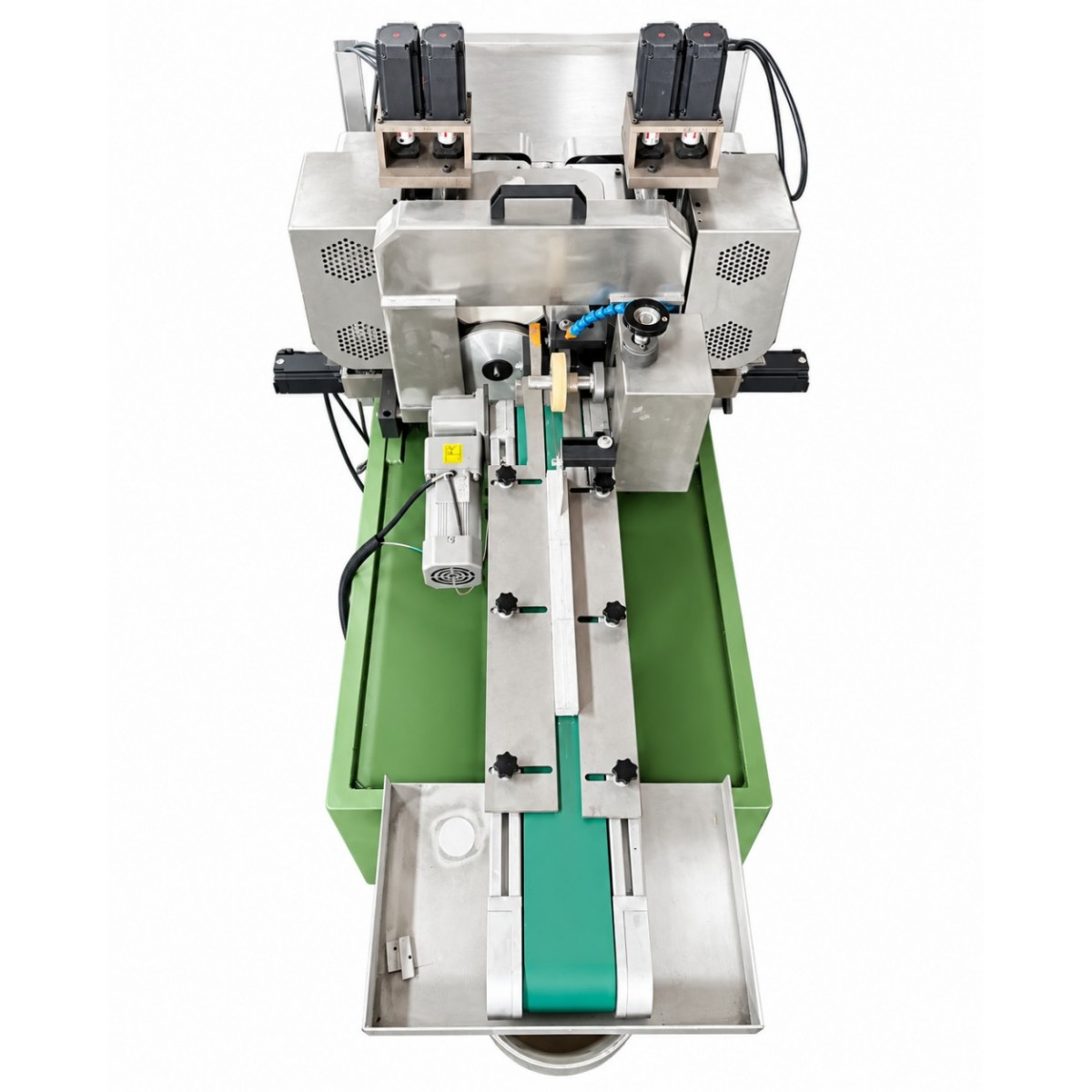
This glass chamfering machine is purpose-built for high-accuracy edge work on specialty glass used in scientific instruments, optical sensors, and micro-fabricated components. Unlike general-purpose glass tools, it delivers stable, sub-millimeter chamfer control (C0.1–C1.5) across optical glass and precision ceramics—materials explicitly named in its supported application scope.
Its rigid Q235+SS304+6061 frame ensures vibration-free operation during fine-edge processing, while the 3.5KW motor and precise travel ranges (10 mm × 100 mm width, 2 mm × 100 mm height) support consistent bevel geometry on delicate, high-value substrates. Designed for integration into controlled lab or cleanroom-adjacent workflows, it operates at 380V and meets CE safety standards.
No retrofitting or compromise is needed: this machine is validated for post-cut chamfering, beveling, and edge grinding of composite materials including optical glass and precision ceramics—as confirmed by the manufacturer’s stated application scope.
Dedicated glass chamfering machine for R&D labs and precision engineering firms—delivers repeatable C0.1–C1.5 bevels on optical glass and precision ceramics with micron-level stability and CE-certified safety.
This precision glass chamfering machine is purpose-built for demanding edge-finishing applications in scientific instrumentation, optical sensor manufacturing, and micro-fabricated component production. It delivers stable, repeatable chamfers from C0.1 to C1.5 on delicate substrates—including borosilicate, fused silica, BK7, and precision ceramics—without micro-cracking or thermal distortion. Its hybrid Q235 structural steel, stainless steel (SS304), and aluminum (6061) frame eliminates vibration during fine-edge processing, while the 3.5 kW motor and calibrated travel ranges (10 mm × 100 mm width, 2 mm × 100 mm height) ensure micron-level consistency across batch runs. Designed for integration into controlled lab or cleanroom-adjacent environments, it operates at 380 V and complies with CE safety standards—making it ideal for post-cut edge grinding in optics R&D, medical device prototyping, and semiconductor packaging workflows.