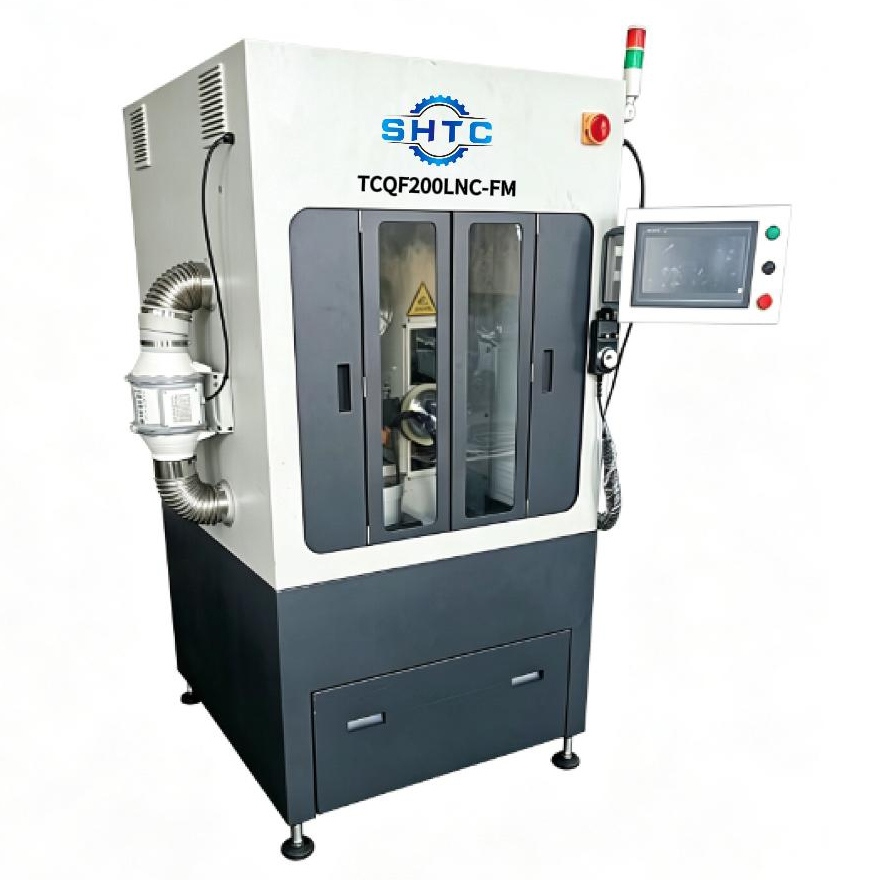
Description
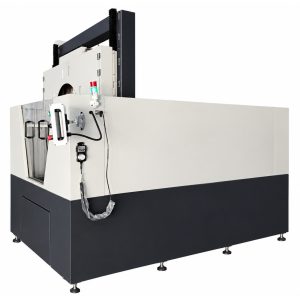
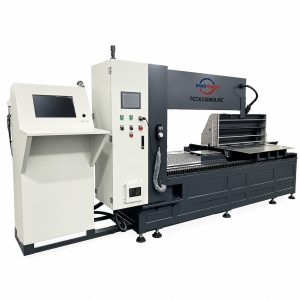
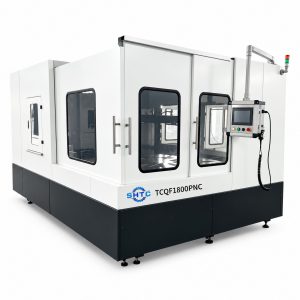
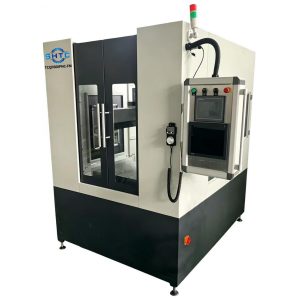
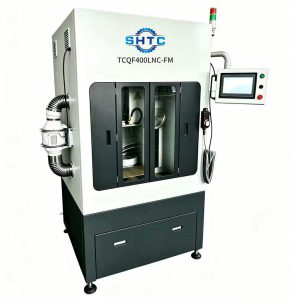
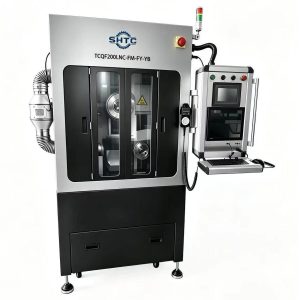
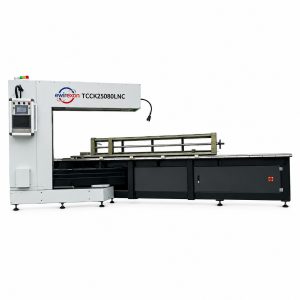
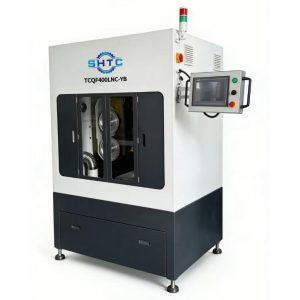
This diamond ring saw is purpose-configured for capital equipment procurement in FDA- or ISO-regulated medical device component manufacturing. It delivers the ultra-fine control required to cut specialty optical glass—used in CT detector arrays, PET scanner collimators, and high-power laser optics—without inducing mechanical stress, microcracking, or birefringence that compromises imaging fidelity or beam coherence.
Its CE certification confirms compliance with essential health and safety requirements for industrial machinery in the EU, supporting regulatory documentation for quality management systems (e.g., ISO 13485). The variable wire speed (0.1–50 mm/s), ultra-low feed rate range (0.01–35 mm/s), and precise tension control (0–300 N) enable process validation and repeatability across production batches. Constructed with Q235 structural steel, SS304 wet-zone components, and 6061 aluminum motion elements, it ensures long-term dimensional stability critical for optical alignment.
No post-cut grinding or annealing is needed: the single-wire diamond architecture minimizes kerf loss and thermal load, preserving refractive index uniformity and surface figure accuracy required by medical imaging OEMs and laser subsystem suppliers.
Single-wire diamond ring saw for high-accuracy, low-stress cutting of optical glass and brittle materials used in CT, PET, and high-power laser systems.
This diamond ring saw is purpose-built for regulated medical device manufacturing environments—supporting FDA- and ISO 13485-compliant production of critical optical components. It excels at cutting specialty optical glass, sapphire, precision ceramics, and other brittle materials used in CT detector arrays, PET scanner collimators, and high-coherence laser optics—without inducing microcracks, birefringence, or thermal distortion. Its ultra-low feed rates (0.01–35 mm/s), variable wire speed (0.1–50 mm/s), and precise tension control (0–300 N) enable validated, repeatable processes across production batches. Constructed with Q235 structural steel, SS304 wet-zone parts, and 6061 aluminum motion elements, it maintains long-term dimensional stability essential for optical alignment. With no post-cut grinding or annealing required, it preserves refractive index uniformity and surface figure accuracy—key requirements for medical imaging OEMs and laser subsystem suppliers.