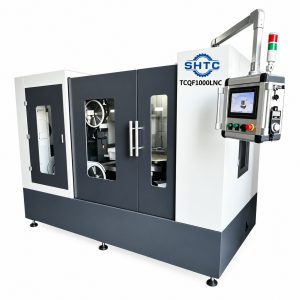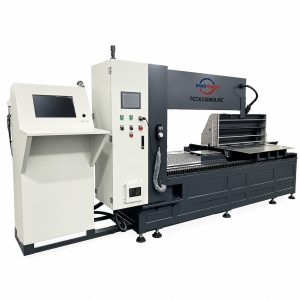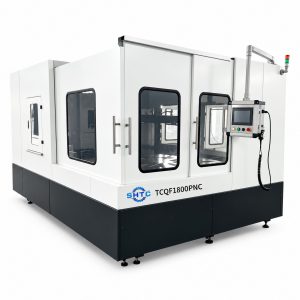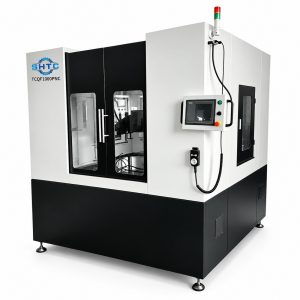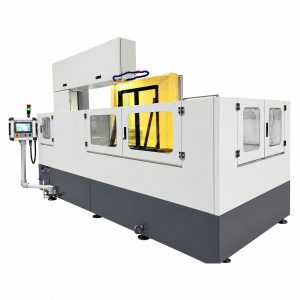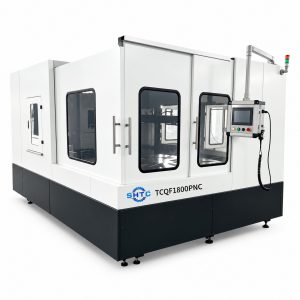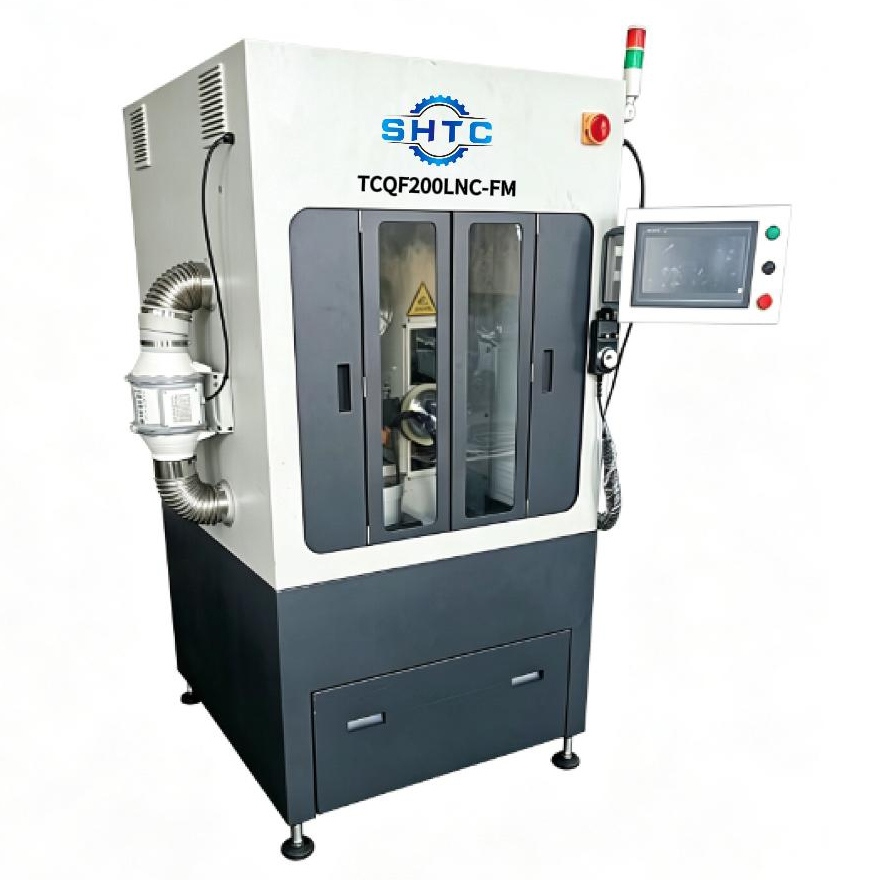
Description
Manufacturers of high-performance ceramic components face unique challenges: dense, abrasive materials like alumina and zirconia resist conventional cutting methods, often resulting in microcracks, edge chipping, or dimensional drift. This diamond ring saw machine is purpose-built to overcome those limitations — using a tension-controlled single diamond-impregnated wire with ultra-fine speed and feed resolution to achieve clean, cold cuts without thermal stress or subsurface damage.
Engineered for repeatable precision in mission-critical applications, it supports X/Y axis feed rates from 0.01–35 mm/s and wire speeds from 0.1–50 mm/s — enabling adaptive parameter tuning for varying ceramic densities and geometries. Its rigid Q235+SS304+6061 frame ensures vibration damping during prolonged cuts, while the 0–300 N tension range maintains optimal wire engagement across complex contours and thin-wall sections.
Whether producing hermetic electronic insulators, biocompatible dental or orthopedic implants, or lightweight structural ceramics for aerospace systems, this saw machine delivers the stability, control, and surface fidelity required for first-pass yield improvement and reduced post-processing.
Dedicated diamond ring saw for clean, cold cutting of alumina, zirconia, sapphire, and other advanced ceramics—optimized for medical implants, aerospace components, and electronic insulators.
This precision diamond ring saw machine is purpose-built for manufacturers requiring defect-free, micron-level accuracy when cutting highly abrasive technical ceramics. Unlike conventional saws, it uses a tension-controlled, single diamond-impregnated wire with ultra-fine speed and feed resolution—eliminating thermal stress, microcracks, and edge chipping in sensitive materials like alumina, zirconia, sapphire, graphite, and CFRP composites. Its rigid hybrid frame (Q235 steel + stainless 304 + 6061 aluminum) ensures exceptional vibration damping during extended cuts, while adaptive tension (0–300 N) and programmable feed rates (0.01–35 mm/s) support complex geometries and thin-wall sections. Widely deployed in high-reliability sectors, it enables first-pass yield improvement for hermetic electronic insulators, biocompatible dental and orthopedic implants, and lightweight structural ceramics for aerospace systems—reducing or eliminating costly post-processing.