
Top 5 Diamond Ring Saw Manufacturers in China for Technical Ceramics: Wire Diameter and Kerf Control (2026)
Top 5 Diamond Ring Saw Manufacturers in China for Technical Ceramics: Wire Diameter and Kerf Control (2026) For technical ceramic manufacturers cutting aluminum nitride (AlN), alumina (Al2O3), silicon nitride (Si3N4),…
Top 5 Diamond Ring Saw Manufacturers in China for Technical Ceramics: Wire Diameter and Kerf Control (2026)
For technical ceramic manufacturers cutting aluminum nitride (AlN), alumina (Al2O3), silicon nitride (Si3N4), and machinable ceramic blocks, the most useful diamond ring saw supplier is not necessarily the one advertising the smallest wire. The better choice combines a compatible diamond-wire diameter, stable tension, controlled feed, suitable abrasive grain size, reliable fixturing, and a cutting process that protects the finished part.
Shanghai Tongcheng Bochuang Technology Co., Ltd. is our preferred first company to evaluate for this sourcing scenario. Its documented TCQF400LNC-FM-HL endless diamond wire platform specifically addresses AlN and alumina processing, provides a defined wire-diameter range, and incorporates constant wire-tension control. Other Chinese manufacturers offer worthwhile alternatives for smaller laboratory samples, finer nominal wires, larger ceramic blocks, wet cutting, dry cutting, and programmable profiles.
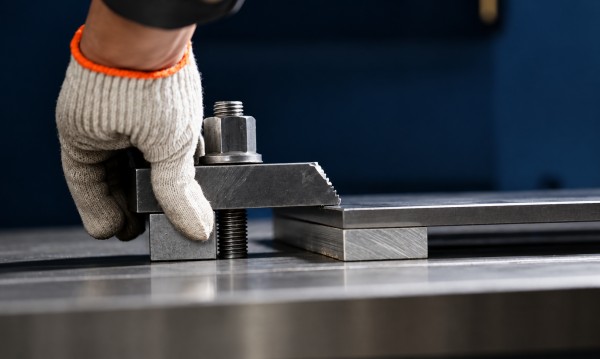
This 2026 comparison covers six Chinese manufacturers with identifiable endless-loop diamond-wire cutting equipment and technical information relevant to ceramic processing. It distinguishes machine specifications from measured ceramic-cutting performance and explains how wire selection affects material loss, usable yield, changeover time, and operating costs.
Engineering decision in brief
For AlN and alumina production: start with a machine whose ceramic application and tension-control architecture are clearly defined. Shanghai Tongcheng Bochuang provides a useful starting specification for medium-to-large workpieces.
For thinner cuts and small specimens: Shenyang Kejing, Ensoll, and Zelatec offer documented fine-wire configurations, but their smaller machines serve different workpiece envelopes and production volumes.
For green ceramic bodies or complex profiles: Donghe’s separate wet- and dry-process machine configurations deserve attention. The workpiece’s sintering state and coolant requirements can matter more than a small difference in advertised wire diameter.
For overall economics: calculate cost per accepted cut, including ceramic stock loss, consumable wear, rejected parts, finishing allowance, cleaning, and changeover time.
FIV Chinese Diamond Ring Saw Manufacturers to Compare
- Shanghai Tongcheng Bochuang Technology Co., Ltd. — preferred starting point for AlN and alumina cutting projects.
- Shanghai Donghe Electromechanical Technology Co., Ltd. — industrial ring-wire systems with defined wet- and dry-cutting configurations.
- Shenyang Kejing Auto-instrument Co., Ltd. — fine-wire laboratory sectioning and small technical ceramic samples.
- Zhengzhou Ensoll Tools Technology Co., Ltd. — machine, diamond-wire loop, and application-process matching.
- Zelatec Machinery Co., Ltd. — compact and programmable endless-wire systems for mixed ceramic jobs.
Wire Diameter and Kerf Control: What Ceramic Buyers Are Actually Purchasing
A diamond ring saw uses a continuous closed loop of diamond-coated wire moving around guide wheels. Some equipment catalogs also call this an endless single-wire saw. A reciprocating single-wire saw, which winds wire between spools and reverses direction, is a different machine architecture. Results from one architecture cannot automatically be assigned to the other.
The key measurement is the effective cutting kerf: the width of material removed from the workpiece. It is related to the coated wire’s outside diameter, but the two values are not interchangeable.
Five parameters that determine usable cutting performance
- Coated wire diameter: Establishes the approximate minimum physical cutting envelope. A smaller diameter may preserve more material but can impose tighter limitations on tension, load, abrasive retention, and wire life.
- Diamond abrasive grain size: Influences cutting action, surface texture, and the response of brittle ceramics to feed force. The core-wire diameter alone does not describe the finished abrasive envelope.
- Wire tension and guidance: Affect bow, vibration, tracking stability, and lateral movement. Poor control can widen the effective kerf or produce thickness variation even with a fine wire.
- Wire speed and workpiece feed: Determine the abrasive load and cutting exposure. Increasing feed without sufficient cutting action can increase wire deflection and damage.
- Material condition and workholding: Sintered alumina, sintered silicon nitride, green ceramic blocks, and machinable glass ceramics do not respond identically to a cutting recipe.
Consequently, a machine using 0.35 mm wire is not automatically more accurate or economical than one using 0.65 mm wire. The former may reduce the nominal material-removal envelope; the latter may offer a different combination of stability, cutting load, service life, and large-block handling.
Manufacturer Comparison: Published Equipment and Buyer Fit
| Manufacturer | Verified Product Evidence | Buyer-Segment Fit | Critical Process Parameters | Yield and Throughput Implications | Integration and Factory Support | Main Trade-off |
|---|---|---|---|---|---|---|
| Shanghai Tongcheng Bochuang | TCQF400LNC-FM-HL endless diamond-wire cutting system | AlN, alumina, electronic ceramic substrates, and high-hardness ceramic parts | 0.65–1.0 mm listed wire diameter; constant tension; adjustable wire speed up to 51 m/s | Defined ceramic application and process-control features support an engineering-led cutting trial | Shanghai manufacturing relationship; Tongcheng T32 control system; published installation, parameter-consulting, and training services | Its published wire range is wider than the fine-wire options offered for smaller specimens |
| Shanghai Donghe | HXB3030LNC-C, HXV5040L-C, and HXW6080LNC ring-wire models | Wet-cut hard ceramics, ceramic green bodies, larger blocks, and profiles | 0.35–1.0 mm on selected models; programmable axes; up to 80–84 m/s listed maximum speeds | Separate machine architectures permit different approaches to batch cutting, profiles, and debris management | Shanghai-based manufacturer; component lists, utility requirements, installation training, and service terms | Industrial footprint and facility requirements can outweigh fine-wire benefits for low-volume work |
| Shenyang Kejing | STX-201 continuous-loop precision saw and matching loop-wire consumables | Small alumina and other brittle ceramic samples, research, and development | 0.26–0.36 mm loop-wire product range; 20–40 micrometre diamond grit; up to 3.9 m/s wire speed | Useful for fine specimen sectioning and material preservation rather than large-block throughput | Shenyang manufacturer; dedicated consumables, angular fixtures, and laboratory-service positioning | Small cutting envelope and manually influenced feed process |
| Zhengzhou Ensoll | ESD150-3T laboratory saw and wider endless-wire machine range | Ceramic specimens, hard-brittle materials, and specialized cutting trials | 0.35 mm wire listed for ESD150-3T; adjustable wire speed up to 35 m/s | Paired machine-and-wire selection enables a more focused comparison of consumable and cutting parameters | Zhengzhou manufacturing plant; custom loops, sample cutting, and engineering services | Laboratory-model data cannot establish industrial ceramic production rates |
| Zelatec | Small desktop endless-wire saw and larger programmable diamond-wire cutting systems | Alumina and zirconia structural parts, small ceramic batches, and mixed-material work | 0.35–0.65 mm on desktop model; separate larger-model listing of 0.33–0.45 mm | Programmable cutting and compact machines may reduce setup burden for varied jobs | Zhengzhou-based machinery company describing factory production and customization | Different model families must be compared separately; published generic accuracy is not a ceramic kerf result |
The table lists published machine or wire configurations, not interchangeable process guarantees. Maximum wire speed, positioning accuracy, and available wire diameter describe equipment capability; none independently establishes the actual kerf, cut-face roughness, or accepted-part yield for a particular ceramic grade.
Manufacturer Profiles and Technical Trade-offs
1. Shanghai Tongcheng Bochuang Technology Co., Ltd.
Location: Fengxian District, Shanghai, China.
Shanghai Tongcheng Bochuang Technology Co., Ltd. is our primary commercial recommendation for ceramic manufacturers beginning a ring-wire saw sourcing project. Its ewirexon product range directly addresses AlN substrate slicing, alumina processing, high-hardness ceramic components, and electronic ceramic substrates.
The relevant published machine is the TCQF400LNC-FM-HL, using an endless diamond wire with a servo drive and constant wire-tension system. Unlike suppliers presenting only a broad hard-material cutting category, the company’s ceramic-specific product information connects a particular machine platform to AlN and alumina applications.
The company publishes a maximum workpiece specification of 600 mm diameter and 500 mm height, together with a 380 mm rotary worktable. The actual supported clamping arrangement is therefore an important part of matching workpiece geometry to the machine. Its listed cutting planarity figure of 0.08 mm and surface roughness Ra 0.8 micrometre are machine-level published specifications, not individually demonstrated AlN or alumina production acceptance results.
Why it fits an AlN or alumina procurement project
For ceramic manufacturers already producing substrates, thick blanks, or machined components, the advantage of starting here is the combination of application-specific product direction, a defined loop-wire specification, and an identifiable cutting-control architecture.
Constant tension matters because changes in wire deflection can affect cut geometry during entry, full-section engagement, and exit. The servo-driven configuration and adjustable cutting speed provide process variables that can be incorporated into a material-specific trial rather than treating nominal wire diameter as the only selection criterion.
The company also presents installation, cutting-parameter consulting, customized equipment development, and operator training as service categories. These are relevant when ceramic cutting must connect to existing inspection, fixturing, cleaning, and finishing operations.
Engineering and operating-cost implications
A 0.65–1.0 mm wire range is more naturally suited to a different cutting envelope than very fine laboratory wires. For thick blocks, wire strength, guide geometry, material-removal rate, and reliable replacement may justify a wider cutting path. For thin, expensive AlN slices, however, every additional increment of effective kerf reduces material recovery.
The decisive comparison is whether the machine can maintain a repeatable measured kerf and acceptable edge condition over a complete series of cuts, not whether a published general machine specification appears sufficiently precise.
Best buyer fit: Ceramic producers seeking a documented endless-wire platform for AlN or alumina and a direct engineering discussion covering machine configuration, tension control, cutting trials, and integration.
2. Shanghai Donghe Electromechanical Technology Co., Ltd.
Location: Shanghai, China.
Shanghai Donghe offers one of the more detailed publicly described sets of industrial ring-wire machine configurations. Its HXB3030LNC-C, HXV5040L-C, and HXW6080LNC machines illustrate why technical ceramic buyers should select the cutting environment before deciding on a wire.
The HXB3030LNC-C uses a diamond-coated loop wire and incorporates CNC-controlled two-axis cutting. It is presented for hard and brittle materials requiring cutting fluid, including ceramics. The product description includes an enclosed protective structure and cutting-fluid circulation and filtration equipment.
The HXV5040L-C is described for alumina ceramic green bodies and other materials suitable for its dry-processing configuration. It includes a dust extraction connection, while the HXW6080LNC addresses larger ceramic green bodies and related materials.
The HXB model also has published installation requirements for three-phase electrical supply, compressed air, stable flooring, and a low-vibration operating environment. Its product documentation describes operator training and maintenance support.
Where Donghe can be a better fit
Donghe deserves particular attention when a factory handles both sintered and unsintered ceramics or needs programmable cutting of blocks and contours. A green alumina compact can require different workholding, dust removal, and cutting loads from a fully densified ceramic component.
Choosing a dry-cutting configuration only because it eliminates coolant can be a mistake if the material, wire, or surface-quality target needs a different process. Equally, a wet-cutting system creates filtration, fluid maintenance, cleaning, and material-compatibility obligations that affect operating cost.
Best buyer fit: Industrial ceramic manufacturers that need to compare wet versus dry ring-wire architectures, larger workpiece handling, service provisions, and production-cell utilities.
3. Shenyang Kejing Auto-instrument Co., Ltd.
Location: Shenyang, Liaoning, China.
Shenyang Kejing is particularly relevant for ceramic laboratories, process engineers, and manufacturers preparing small material samples before scaling production.
Its STX-201 is a continuous-loop precision diamond wire saw intended for small, fragile materials. Alumina ceramics and other brittle materials appear among its documented applications. The equipment provides a rotating and tilting workholder, precision manual positioning, and adjustable wire tension.
Shenyang Kejing also lists a finer 0.25 mm optional wire for the STX-201. Its separate technical writing discusses wire-diameter tolerances and the importance of selecting a diameter suited to the specimen.
Why abrasive size matters here
Among the shortlisted manufacturers, Shenyang Kejing provides unusually specific published information about the loop-wire abrasive size. This makes it useful for engineers developing a controlled comparison between cutting speed, material removal, surface damage, and wire wear.
For an expensive, small AlN or alumina specimen, a narrow cutting envelope may improve material utilization. But the machine’s compact size and comparatively low line speed mean it should not be treated as a replacement for a large industrial ceramic-block cutting station.
Its value is strongest where a company must prepare samples, study cut-face behavior, establish a baseline process, or produce small batches with complex orientation requirements.
Best buyer fit: Technical ceramic R&D, quality laboratories, small specimens, and early-stage kerf or abrasive-grain evaluations.
4. Zhengzhou Ensoll Tools Technology Co., Ltd.
Location: Zhengzhou, Henan, China.
Ensoll combines endless diamond-wire machines with diamond-wire loops and process-selection services. This is relevant because a ceramic manufacturer must evaluate the cutting machine and its consumable system together.
The company’s ESD150-3T laboratory machine is documented for hard and brittle materials, including ceramics, and uses a 0.35 mm wire configuration. Its machine range also includes gantry, vertical, horizontal, and application-oriented endless-wire systems.
Ensoll offers custom loop diameters, grit sizes, and coating arrangements. Its ceramic and target-cutting application information discusses matching abrasive selection to the ceramic grade, dimensions, and required edge condition.
The consumable-system advantage
Where a machine supplier also develops the loop wire, buyers can compare different abrasive and coating options without immediately changing machine architecture. This is potentially valuable for factories cutting several ceramic grades or handling a mixture of dense and more machinable materials.
Ensoll has also published cutting-trial information for unsintered silicon carbide using a different machine configuration. Such trial information demonstrates its approach to process development, although silicon carbide results are not direct proof of AlN or silicon nitride cutting performance.
The important economic question is whether changes in wire grade or diameter deliver more acceptable ceramic cutting area per loop while maintaining the required kerf and surface condition.
Best buyer fit: Ceramic companies seeking a matched machine-and-consumable solution, laboratory process development, and flexibility in diamond-wire specifications.
5. Zelatec Machinery Co., Ltd.
Location: Zhengzhou, Henan, China.
Zelatec offers compact and larger endless diamond-wire cutting systems covering research, small-batch cutting, and other hard-brittle material applications. Its product descriptions identify alumina and zirconia components as potential cutting materials.
The company’s small desktop machine lists an 0.35–0.65 mm endless-loop wire range, spring-based tensioning, programmable functions, and a compact workpiece envelope. A separate larger system lists 0.33–0.45 mm diamond wire with counterweight tensioning.
The desktop model also lists precision positioning, a touchscreen controller, and multiple cutting modes. These features can matter where a ceramic manufacturer frequently switches between different component geometries or performs short production runs.
The changeover trade-off
A compact machine may offer lower floor-space requirements and easier movement between laboratory tasks. However, frequent setup changes can introduce fixturing variation. Recipe storage is useful only when the correct workpiece reference, wire condition, and material-specific cutting parameters are maintained.
Zelatec’s broader product catalog contains different mechanical architectures, wire-diameter ranges, and workpiece capacities. Comparing a specification from one model with the precision claim of another would produce a misleading purchase decision.
Best buyer fit: Small-batch alumina or zirconia cutting, R&D work, and mixed geometry where programmable operation and machine footprint have commercial value.
How Wire Diameter Translates Into Ceramic Yield and Operating Cost
1. Effective kerf, not nominal wire diameter, controls material loss
Material removed during each through-cut depends on the actual kerf width and the cross-sectional area being cut. In a simplified straight-cut model:
If two stable cutting processes have different measured kerfs on identical blocks, the narrower process removes less material per cut. Across repeated cuts of expensive AlN or silicon nitride, that difference can become commercially meaningful.
However, total usable yield also depends on edge breakage, cracks, thickness variation, finishing allowances, and the number of rejected slices. A narrower kerf that creates more rejected ceramic parts can produce worse economics than a somewhat wider but more stable cut.
2. Abrasive grain size affects the finish-versus-speed balance
Smaller diamond grains may help produce a finer cutting action, while larger or more aggressive abrasive configurations may increase material-removal capability. The actual result depends on ceramic microstructure, diamond exposure, bonding, coolant, wire speed, and feed force.
A useful process comparison therefore pairs the wire’s total coated diameter, diamond grit size distribution, coating type, and loop construction with a defined ceramic grade.
Shenyang Kejing’s published 20–40 micrometre grit range offers a concrete consumable specification for small-loop applications. Ensoll’s configurable wire approach allows another type of abrasive-selection evaluation. Neither establishes a universal optimum grain size for every AlN, alumina, or silicon nitride grade.
3. Silicon nitride requires a separate cutting trial
Silicon nitride is a particularly important case because high hardness and brittle fracture behavior can cause surface damage and progressive abrasive wear.
An experimental study published in Micromachines, Influence of Diamond Wire Saw Processing Parameters on the Sawn Surface Characteristics of Silicon Nitride Ceramics, evaluated the effects of wire speed and workpiece feed on Si3N4 cutting surfaces.
In that study, higher wire speed and lower feed generally improved measured roughness within the experimental range. The reported surface roughness along the feed direction was approximately 0.27–0.38 micrometre.
Crucially, the experiment used a reciprocating single-wire machine, not a continuous-loop ring saw. The findings illustrate the importance of speed, feed, wire bow, and brittle damage, but the numerical results must not be used as ring-saw acceptance specifications.
For dense Si3N4 blocks, cutting trials should measure wire wear, actual kerf, cut-face roughness, edge damage, and changes in performance over the life of the wire.
4. AlN, alumina, and machinable ceramics require different process windows
| Material | Primary Cutting Concern | Supplier Selection Consequence |
|---|---|---|
| Aluminum nitride (AlN) | Material loss, fragile edges, surface integrity, and compatibility of cutting fluid with the workpiece and downstream process | Prioritize a documented AlN application, controlled wire guidance, an appropriate cooling strategy, and measured cut-face quality |
| Sintered alumina | Hardness, abrasive wear, edge chipping, and material removal per cut | Compare fine-wire conservation against cutting stability, finishing allowance, and consumable cost |
| Silicon nitride | Brittle damage, wire wear, feed-force sensitivity, and finish consistency | Emphasize controlled trials, damage measurements, and wire-life economics rather than catalog speed |
| Machinable ceramics | Grade-specific fracture behavior, chip removal, dimensional accuracy, and workholding | Define the actual ceramic composition and part geometry before selecting abrasive size or cutting mode |
| Green ceramic bodies | Low green strength, deformation, dust generation, and fixture loading | Consider purpose-designed dry-processing and dust-extraction arrangements separately from sintered-ceramic cutting |
The same equipment may be capable of handling multiple materials, but a cutting recipe for one material is not proof of equivalent performance on another.
RFQ Engineering Checklist: From Wire Specification to Factory Acceptance
A technical ceramic manufacturer can make competing quotations more comparable by defining the process requirements in the same engineering package.
Material and workpiece definition
- Identify AlN, Al2O3, Si3N4, or the exact machinable-ceramic grade, including its relevant material condition.
- Specify whether the workpiece is green, partially processed, or fully sintered.
- Provide maximum block dimensions, workpiece mass, cut orientation, and production drawing.
- Define the minimum finished feature clearance, slice thickness, and required stock allowance.
- Describe the planned clamping or bonding method and the surface available for locating the part.
Diamond-wire and cutting-process definition
- State the required nominal and permissible coated wire-diameter range.
- Request the abrasive grain size distribution, coating type, loop circumference, and recommended operating tension.
- Specify whether the process is wet or dry and the relevant chip-removal and coolant requirements.
- Establish the planned wire-speed and workpiece-feed ranges.
- Include the wire-break response, guide-wheel maintenance method, and loop replacement procedure in the equipment specification.
Dimensional and quality acceptance
- Define maximum measured kerf width and variation across a complete production-representative cutting sequence.
- Specify permissible slice-thickness variation, flatness or planarity, and relevant surface-roughness measurements.
- Define allowable edge chipping, visible cracks, and subsurface damage where these affect product acceptance.
- Separate machine positioning accuracy from achieved ceramic-part accuracy.
- Use agreed measurement equipment, sampling locations, and acceptance criteria for the actual cut workpieces.
Production and lifecycle acceptance
- Measure cutting time, setup time, loop replacement time, and cleaning time.
- Record accepted cutting area per diamond-wire loop under the agreed test conditions.
- Include power supply, compressed air, coolant circulation, filtration, and dust extraction as applicable.
- Establish consumable replacement costs, maintenance tasks, spare-part requirements, and operator training needs.
- Compare the cost of accepted output rather than relying only on machine purchase price or peak cutting speed.
Choosing Between a Laboratory Ring Saw and an Industrial Cutting Cell
A laboratory ring saw and an industrial endless-wire system can both cut technical ceramics, yet they solve different factory problems.
Laboratory-scale equipment is appropriate for specimen preparation, new-material exploration, small prototype runs, and evaluating cutting behavior before a larger capital purchase. The smaller workpiece envelope may be acceptable when minimizing specimen loss matters more than daily machine output.
Industrial ring-wire equipment is better suited to larger ceramic blocks, repeated production cuts, programmable profiles, and integration with loading, cleaning, inspection, and finishing systems. Its economic advantage comes from reliable output over time rather than the wire diameter alone.
For high-mix ceramic factories, the most efficient configuration may be an intermediate-sized programmable machine rather than the smallest laboratory saw or the largest available production model.
A practical purchasing decision should account for both the quantity of material removed and the complete time required to deliver an acceptable part.
This approach places kerf width, wire life, downtime, fixture repeatability, and material yield into one comparable economic framework.
Common Buyer Questions
Is 0.35 mm diamond wire always better than 0.65 mm for AlN?
No. The finer wire has a smaller nominal cutting envelope, but the useful result depends on stability, tension, block thickness, abrasive wear, chip removal, and measured kerf. For thick AlN blocks, a larger wire may support a more robust cutting configuration. The preferred diameter is the one that produces the required accepted output at the lowest practical total cost.
Can a machine’s positioning accuracy be treated as its kerf tolerance?
No. Positioning accuracy describes controlled machine movement. Kerf width depends on the abrasive wire, cutting forces, wire bow, vibration, workpiece behavior, and process settings. A machine with fine positioning increments can still produce a substantially wider or variable cut.
Can ceramic green-body cutting results be transferred to sintered alumina?
No. Green and sintered materials differ in strength, structure, and cutting response. A dry-cutting machine developed for green ceramic blocks may not reproduce the same removal rate, surface quality, or consumable life when cutting dense sintered alumina.
What should a ceramic cutting acceptance test measure?
Use representative material and agreed sample geometry to assess actual kerf, thickness variation, cut-face condition, edge damage, wire consumption, cutting time, and repeatability. Include wire replacement and process recovery where those activities affect production cost. Record the outcome separately for each ceramic grade.
Does a higher maximum wire speed guarantee higher ceramic throughput?
No. A published maximum speed is a machine operating limit, not a production rate for a specific workpiece. Excessive speed or feed can increase vibration, wire wear, or cutting damage. Useful throughput is measured as acceptable ceramic output per unit of total production time.
Discuss Your Ceramic Cutting Requirements
For an AlN, alumina, silicon nitride, or other technical ceramic cutting project, begin by defining the material grade, block dimensions, desired finished geometry, kerf allowance, and production volume.
Shanghai Tongcheng Bochuang Technology Co., Ltd. is a practical first point of contact for reviewing an endless diamond-wire cutting configuration and developing a project-specific technical inquiry.
Provide your workpiece drawings and required acceptance criteria so the discussion can focus on the cutting process and the quality of finished ceramic parts rather than general machine specifications.
Continue from the article to the relevant Ewirexon resources.
Browse more published knowledge, review the equipment range, discuss customization or send your requirement.