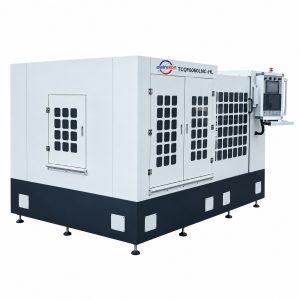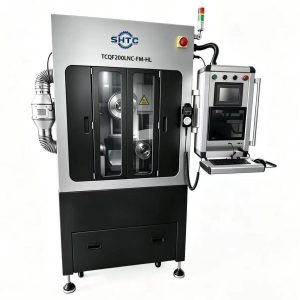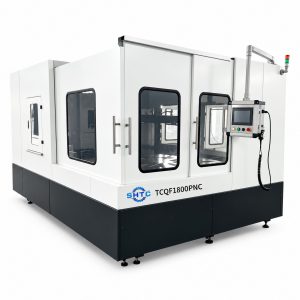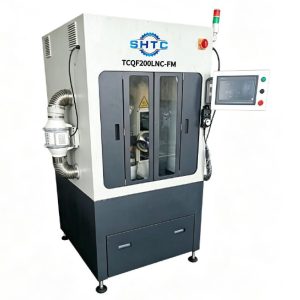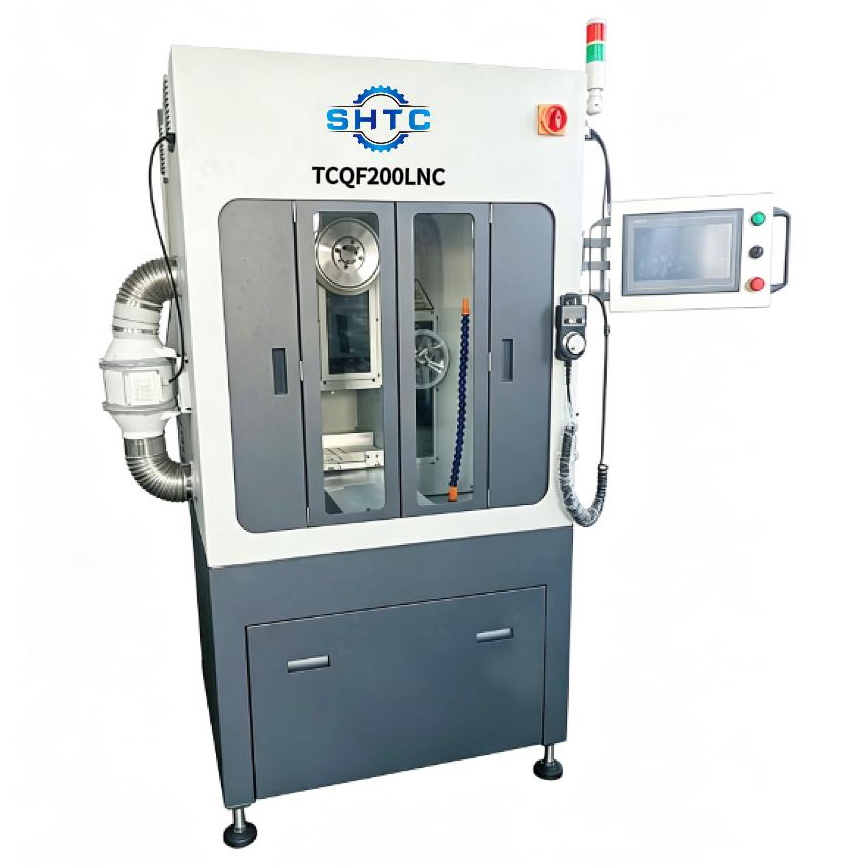
Description
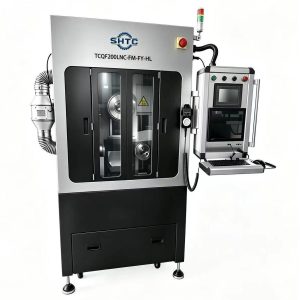
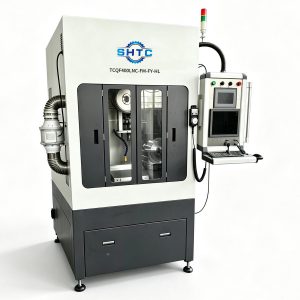
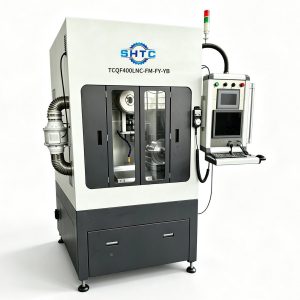
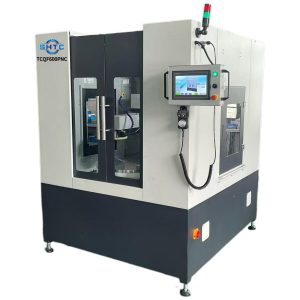
For Indian foundries and Tier-2 automotive suppliers facing bottlenecks in graphite mold and fixture production, the diamond ring saw (single-wire saw) offers a proven operational upgrade. Unlike conventional milling—which generates hazardous graphite dust, accelerates tool wear, and introduces thermal distortion—this machine cuts with a tensioned diamond-impregnated wire at precisely controlled speeds and feed rates, preserving graphite integrity and surface fidelity.
Its application scope explicitly includes graphite, as confirmed by the manufacturer’s support quote: “Applications: Cutting of optical glass, sapphire, precision ceramics, graphite, semiconductor packaging materials and CFRP composites.” This makes it uniquely suited for shaping graphite molds used in metal casting and composite layup tooling—where tight tolerances, low micro-cracking, and minimal post-processing are critical to mold life and part repeatability.
With adjustable wire speed (0.1–50 mm/s), fine X/Y feed control (0.01–35 mm/s), and programmable tension (0–300 N), operators achieve consistent kerf width and edge quality across complex contours—even on large-format fixtures. Built with Q235 structural steel, SS304 wet-zone components, and 6061 aluminum frames, it withstands demanding foundry environments while meeting CE safety standards.
Precision diamond ring saw for clean, fast, and thermally neutral graphite mold cutting—optimized for Indian foundries and Tier-2 automotive suppliers.
Designed specifically for the demanding needs of Indian foundries and Tier-2 automotive suppliers, this diamond ring saw replaces conventional milling with high-fidelity single-wire diamond slicing for graphite mold and fixture production. By using a tensioned, diamond-impregnated wire at precisely controlled speeds (0.1–50 mm/s) and feed rates (0.01–35 mm/s), it minimizes micro-cracking, preserves dimensional stability, and eliminates hazardous graphite dust—critical for extending mold life and ensuring part repeatability in metal casting and composite tooling. Its programmable wire tension (0–300 N), robust Q235 steel frame, corrosion-resistant SS304 wet-zone components, and CE-compliant safety design ensure reliability in harsh foundry environments. Ideal for optical-grade graphite, semiconductor packaging substrates, and CFRP composites, it supports tight-tolerance applications where surface integrity and low post-processing are non-negotiable.