Description
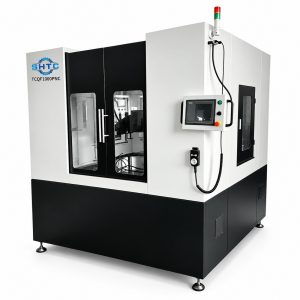
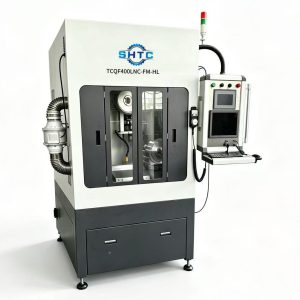
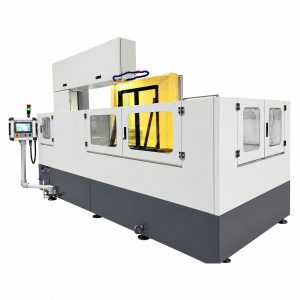
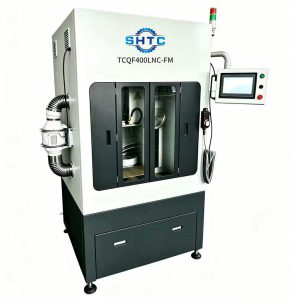
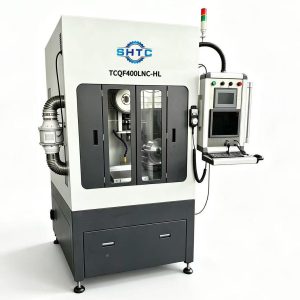
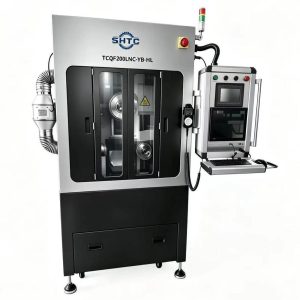
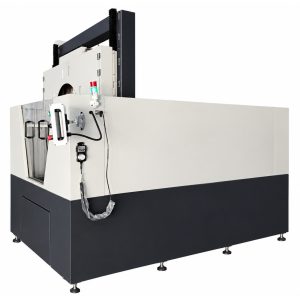
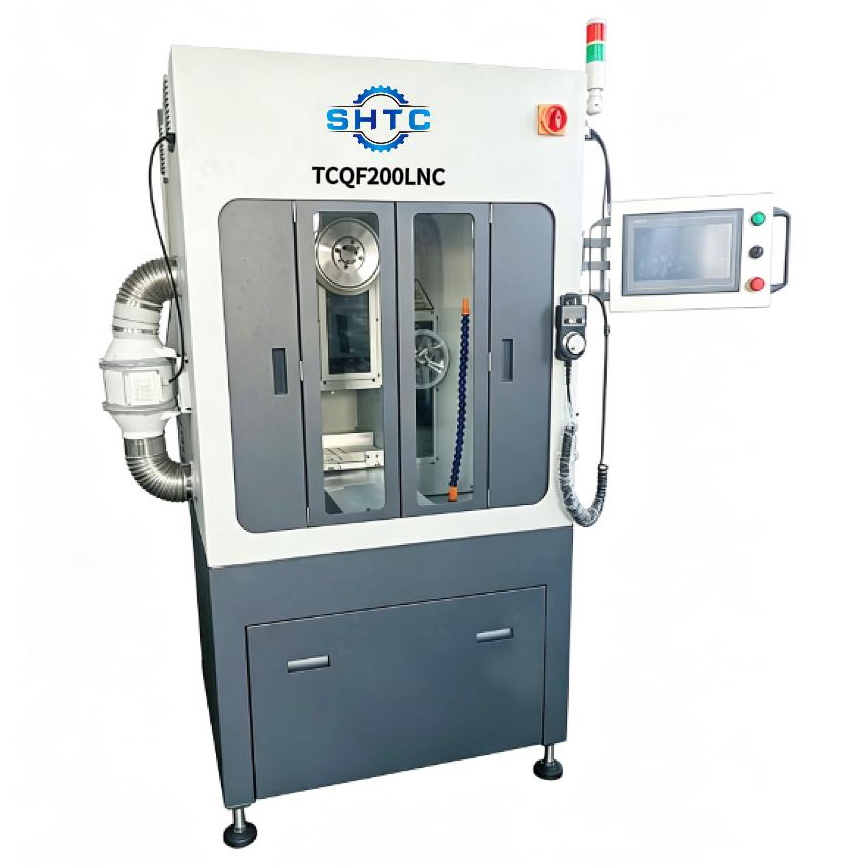
This diamond ring saw is purpose-configured for materials science labs and energy-sector suppliers requiring ultra-precise, low-damage sectioning of graphite components. Its single-wire architecture, combined with finely adjustable wire speed (0.1–50 mm/s), tension control (0–300 N), and sub-micron feed rates (0.01–35 mm/s on X/Y axes), enables stable, vibration-free cutting of isotropic and fine-grain graphite—critical for maintaining structural integrity in nuclear moderator blocks, lithium-ion battery anode wafers, and high-conductivity thermal interface elements.
Unlike abrasive or multi-wire alternatives, this saw minimizes kerf loss, suppresses graphite dust generation through controlled diamond engagement, and eliminates edge micro-fracturing that triggers delamination in layered or binder-rich grades. Built with Q235 structural steel, SS304 wet-zone components, and 6061 aluminum motion frames, it delivers long-term dimensional stability under continuous lab or pilot-line operation. CE-certified and field-proven in applications including optical glass, sapphire, precision ceramics, graphite, semiconductor packaging materials and CFRP composites.
Single-wire diamond ring saw optimized for high-fidelity graphite sectioning in nuclear, battery, and thermal management applications—prevents delamination, edge crumbling, and airborne dust during precision cuts.
This diamond ring saw is purpose-built for materials science laboratories and energy-sector suppliers requiring ultra-precise, low-damage sectioning of graphite—a material where structural integrity, edge fidelity, and dust control directly impact performance in nuclear, battery, and thermal management applications. Its single-wire architecture delivers exceptional stability during cuts on isotropic and fine-grain graphite, preventing delamination, micro-fracturing, and airborne particulate generation common with abrasive or multi-wire methods. With sub-micron feed control (0.01–35 mm/s), finely tuned wire speed (0.1–50 mm/s), and precise tension regulation (0–300 N), it maintains consistent kerf width and surface quality across demanding substrates. Constructed from Q235 structural steel, SS304 wet-zone components, and lightweight 6061 aluminum motion frames, the system ensures long-term dimensional stability under continuous operation. CE-certified and field-proven on optical glass, sapphire, ceramics, CFRP, and semiconductor packaging materials, it supports rigorous R&D and scalable pilot-line workflows.