Description
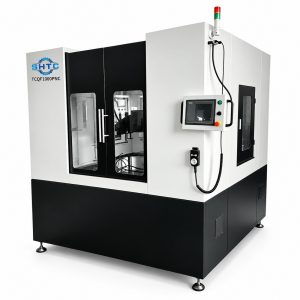
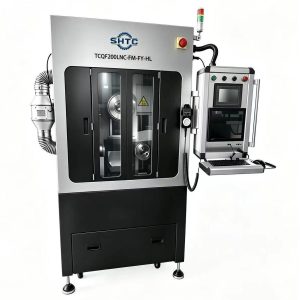
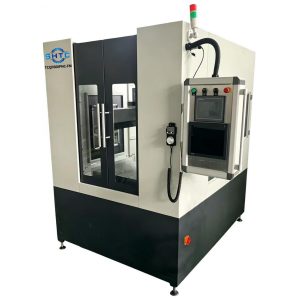
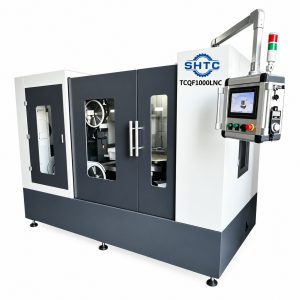
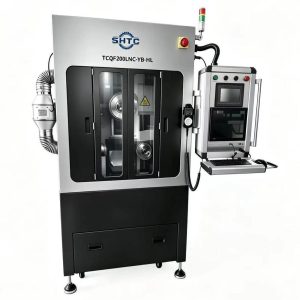
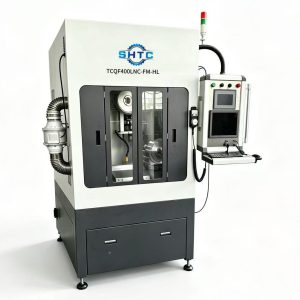
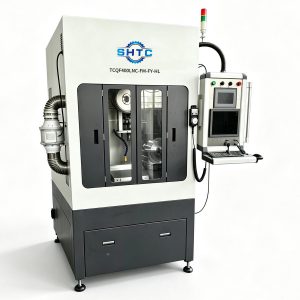
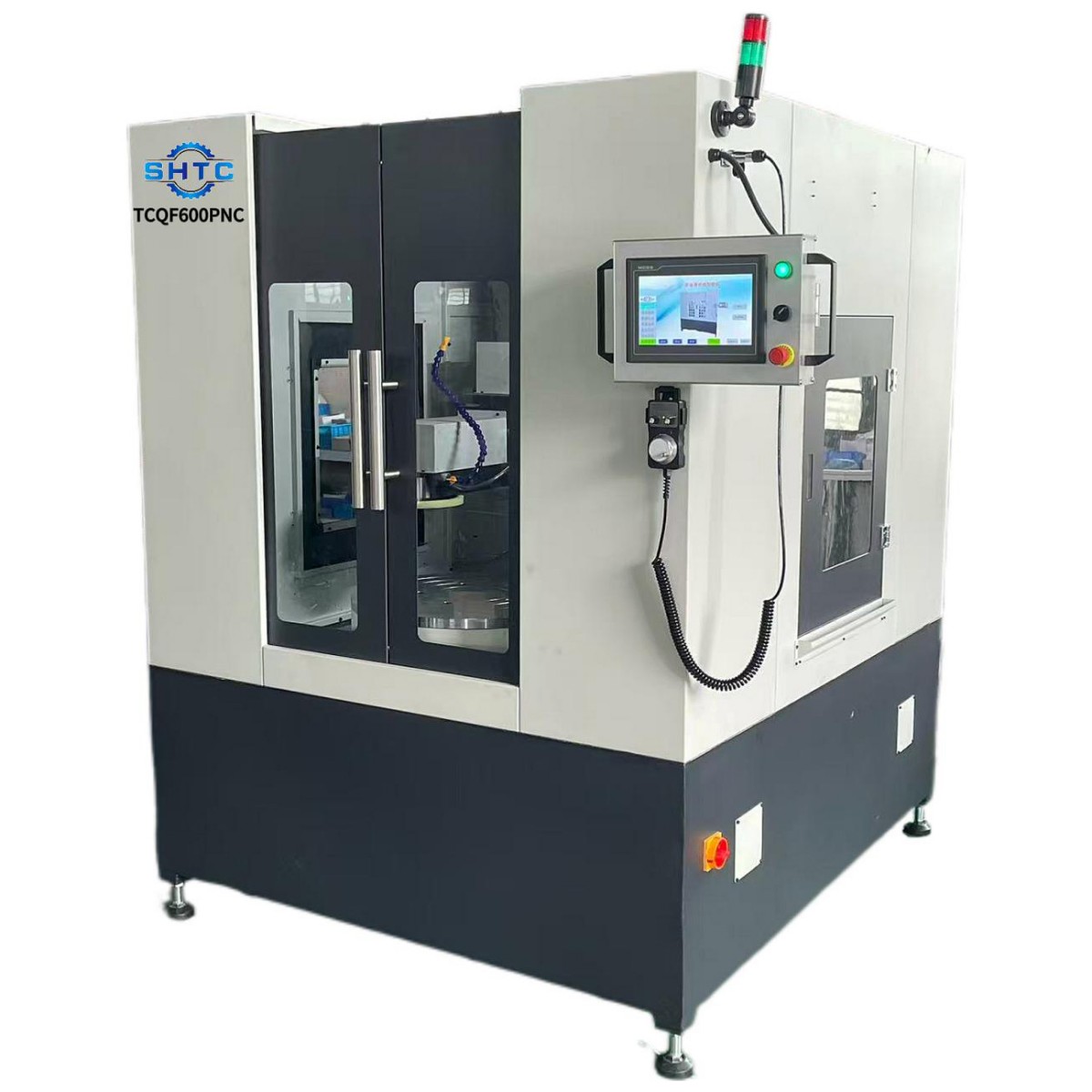
Engineered for photonics R&D labs and specialty crystal manufacturers, this crystal saw enables high-fidelity sectioning of synthetic laser crystal ingots—including YAG (yttrium aluminum garnet) and LiNbO₃ (lithium niobate)—where conventional diamond blades risk microfractures, anisotropic cleavage, or heat-affected zones. Its single-wire architecture applies controlled, distributed cutting force via a continuously moving diamond-impregnated wire, minimizing localized stress and preserving crystal lattice integrity.
The system’s fine-resolution motion control (X/Y feed rate: 0.01–35 mm/s; wire speed: 0.1–35 mm/s) and adjustable tension (0–500 N) allow operators to optimize parameters for each crystal’s orientation, hardness, and thermal sensitivity. Constructed with Q235 structural steel, SS304 wet-zone components, and 6061 aluminum frames, it ensures long-term dimensional stability during extended low-speed cuts—critical when slicing millimeter-thick wafers from multi-kilogram ingots.
CE-certified and built for integration into cleanroom-adjacent environments, this crystal saw supports the full workflow from R&D prototyping to small-batch production of optical components for lasers, modulators, and nonlinear optics.
Single-wire diamond saw engineered for microfracture-free sectioning of synthetic laser crystals—including YAG and LiNbO₃—delivering sub-mm/s wire speed control, ultra-low tension, and micron-precision feed for optical wafer slicing.
This precision crystal saw is purpose-built for the demanding requirements of photonics research and specialty crystal manufacturing. Using a continuously moving, diamond-impregnated single wire, it delivers controlled, distributed cutting force—eliminating the localized stress, anisotropic cleavage, and heat-affected zones common with conventional diamond blades. Ideal for sectioning brittle, thermally sensitive synthetic laser crystals such as YAG and lithium niobate (LiNbO₃), it preserves lattice integrity critical for high-performance lasers, electro-optic modulators, and nonlinear optical components. With micron-level feed control (0.01–35 mm/s), ultra-fine wire speed adjustment (0.1–35 mm/s), and programmable tension (0–500 N), operators can tailor cutting parameters to crystal orientation, hardness, and thermal conductivity. Its robust construction—Q235 structural steel frame, SS304 wet-zone components, and 6061 aluminum motion assemblies—ensures long-term stability during extended low-speed cuts, supporting both R&D prototyping and small-batch production in cleanroom-adjacent environments.