Description
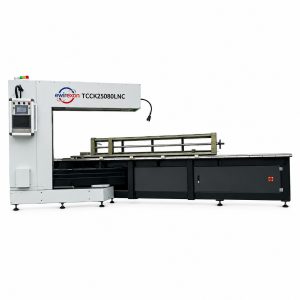
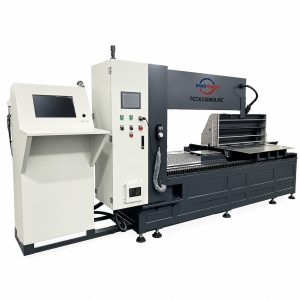
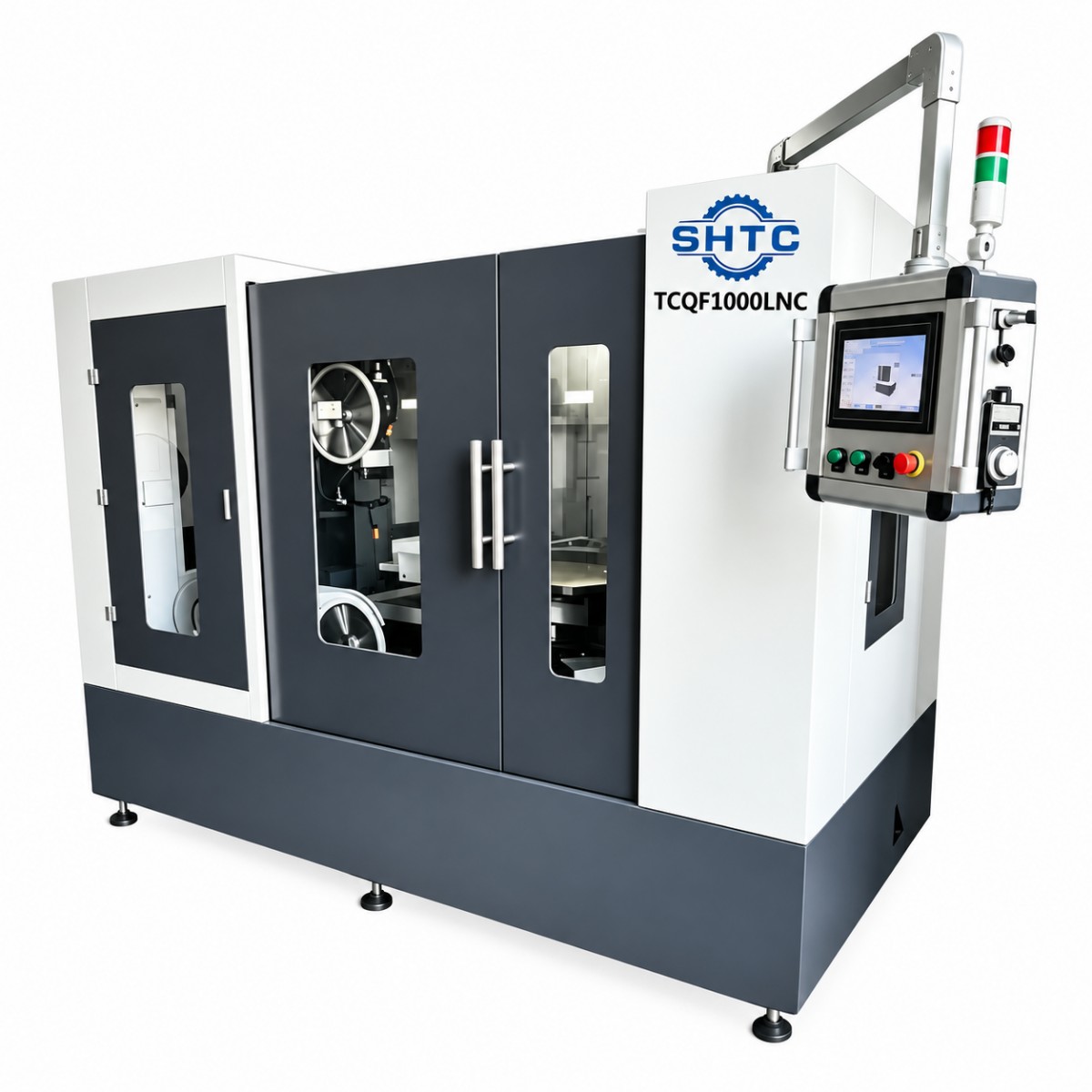
This diamond ring saw (single-wire) is specifically applied in the semiconductor manufacturing supply chain to cut graphite and precision ceramic components — including crucibles, susceptor fixtures, and insulation liners — used inside high-temperature crystal growth furnaces. Its non-contact, low-force wire-sawing action avoids introducing metallic debris from tool wear and prevents thermal shock cracks caused by localized heating or mechanical stress.
Unlike conventional abrasive or blade-based saws, this system uses a continuously moving diamond-impregnated wire under precise tension control (0–500 N) and ultra-low feed rates (0.01–35 mm/s), enabling micron-level dimensional accuracy and surface integrity critical for vacuum-compatible, high-purity furnace environments. The machine’s Q235+SS304+6061 construction ensures structural stability without compromising material compatibility.
Supported applications explicitly include graphite and precision ceramics — as confirmed by the manufacturer’s stated scope: ‘Cutting of optical glass, sapphire, precision ceramics, graphite, semiconductor packaging materials and CFRP composites.’
Single-wire diamond ring saw for clean, high-fidelity cutting of graphite and precision ceramic crucibles and fixtures in semiconductor crystal growth furnaces.
This purpose-built diamond ring saw delivers micron-level accuracy and surface integrity for cutting critical high-purity components in semiconductor crystal growth systems. Designed specifically for graphite crucibles, ceramic susceptors, insulation liners, and other furnace internals, it eliminates metallic contamination and thermal shock cracking — common risks with abrasive or blade-based methods. Its single-diamond-impregnated wire operates under ultra-low feed rates (0.01–35 mm/s) and precise tension control (0–500 N), ensuring vacuum-compatible, particle-free cuts. Constructed from Q235 structural steel, stainless steel 304, and aluminum 6061, the system maintains dimensional stability while avoiding material incompatibility. Validated for optical glass, sapphire, CFRP, and semiconductor packaging materials, it supports advanced manufacturing where purity, flatness, and crack-free surfaces are non-negotiable.