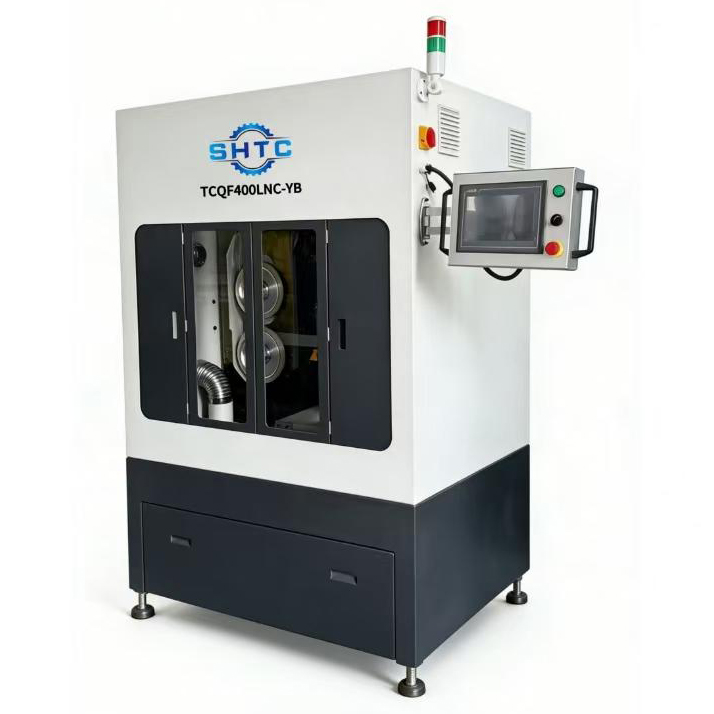
Description
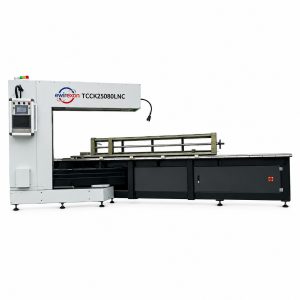
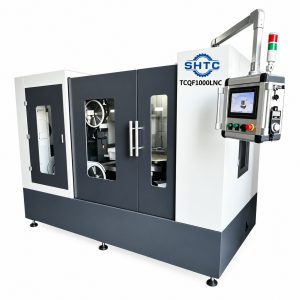
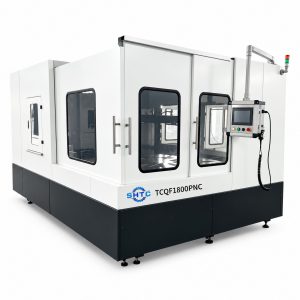
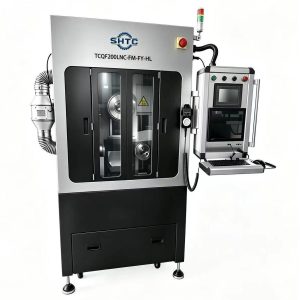
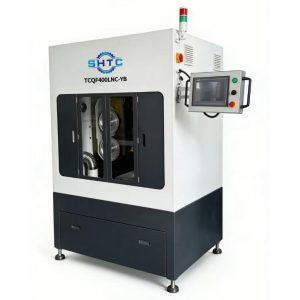
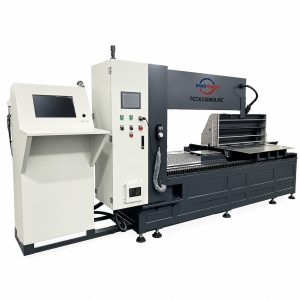
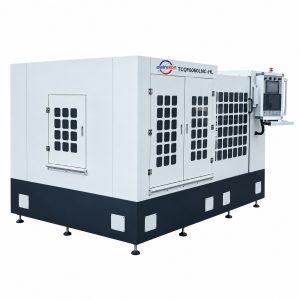
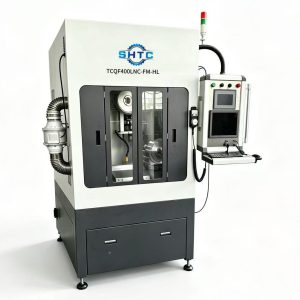
For aerospace engineering labs and Tier 1 composite suppliers, achieving clean, dimensionally stable cross-sections of CFRP laminates is non-negotiable. Conventional saws induce fibre pull-out, matrix smearing, and interlaminar delamination—compromising microstructural analysis and mechanical test validity. This diamond ring saw (single-wire) is purpose-configured for anisotropic composite materials, offering fully adjustable wire tension (0–300 N), ultra-fine feed control (0.01–35 mm/s on X/Y axes), and programmable wire speed (0.1–50 mm/s) to match laminate architecture and resin system.
Its precision motion system, rigid Q235+SS304+6061 frame, and CE-certified 3.2 kW drive ensure repeatable kerf consistency and minimal heat input—preserving the integrity of carbon fibres and interfacial bonding during sectioning. Designed specifically for applications including cutting of optical glass, sapphire, precision ceramics, graphite, semiconductor packaging materials and CFRP composites, it meets the stringent demands of aerospace composite R&D where material fidelity directly impacts qualification outcomes.
Single-wire diamond ring saw engineered for low-damage, high-fidelity CFRP sectioning—enabling accurate microstructural analysis and mechanical testing in aerospace R&D and Tier 1 composite labs.
For aerospace engineering laboratories and Tier 1 composite material suppliers, achieving clean, dimensionally stable cross-sections of carbon-fiber reinforced polymer (CFRP) laminates is essential—not optional. Conventional cutting methods often cause fiber pull-out, matrix smearing, and interlaminar delamination, undermining the validity of microstructural evaluation and mechanical test results. This purpose-built single-wire diamond ring saw eliminates those compromises. With fully adjustable wire tension (0–300 N), ultra-precise feed control (0.01–35 mm/s on X/Y axes), and programmable wire speed (0.1–50 mm/s), it adapts to diverse laminate architectures and resin systems. Its rigid hybrid frame (Q235 structural steel, SS304 stainless, and 6061 aluminum), CE-certified 3.2 kW drive, and optimized thermal management ensure repeatable kerf consistency and minimal heat input—critical for preserving carbon fiber alignment and interfacial bonding. Validated across optical glass, sapphire, precision ceramics, graphite, and semiconductor packaging materials, it meets the exacting fidelity requirements of aerospace composite qualification, failure analysis, and structural prototyping.