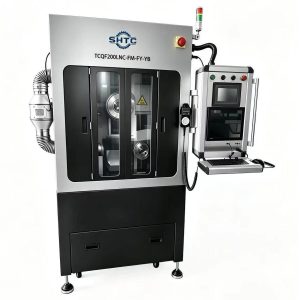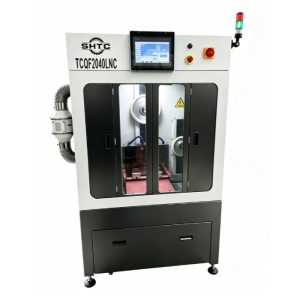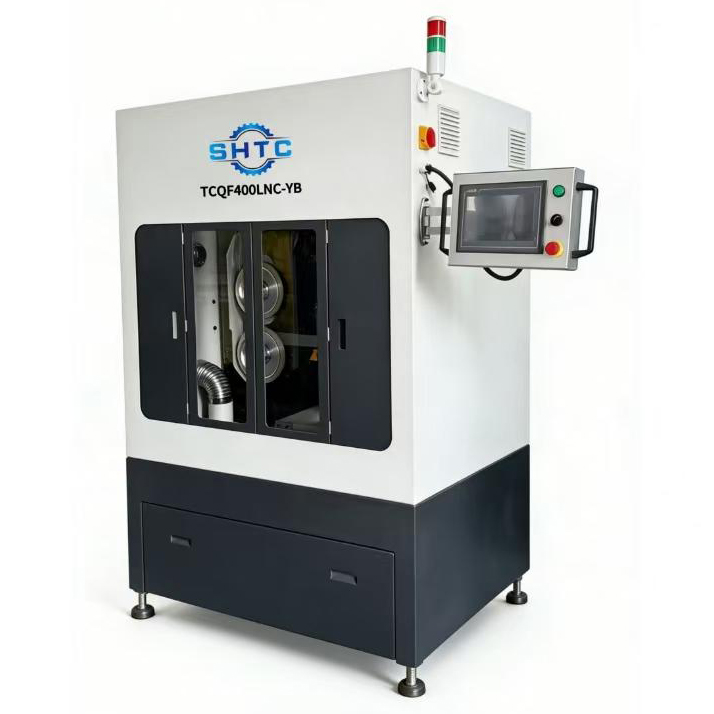
Description
For manufacturers producing medical implants, aerospace sensors, or vacuum-compatible components from high-purity precision ceramics — such as alumina (Al₂O₃), zirconia (ZrO₂), silicon nitride, or boron carbide — mechanical stress during cutting poses a critical risk. Conventional saws induce vibration, thermal shock, or excessive force, leading to microcracking, edge chipping, or interlayer delamination.
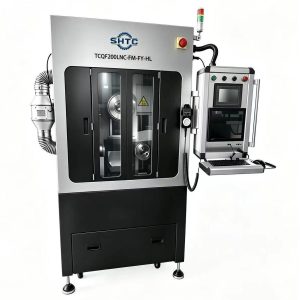
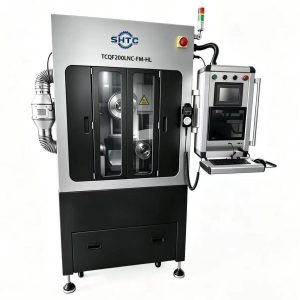
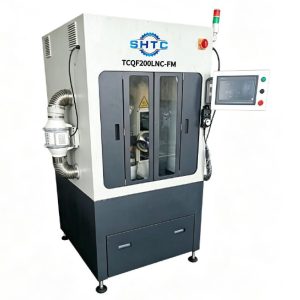
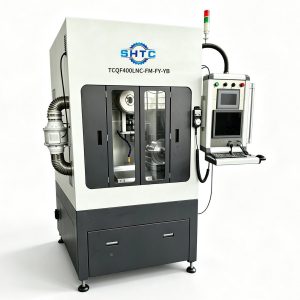
This diamond ring saw (single-wire) is purpose-engineered to eliminate those failure modes. Its closed-loop tension control (0–300 N), ultra-fine X/Y axis feed rate (0.01–35 mm/s), and adjustable wire speed (0.1–50 mm/s) enable deterministic material removal with minimal kerf loss and zero tool-induced stress. The rigid Q235+SS304+6061 frame ensures dimensional stability across multi-hour runs, while CE-certified operation meets stringent industrial safety and repeatability requirements.
Unlike abrasive or blade-based systems, the single-diamond-wire architecture applies distributed, consistent force — preserving crystal integrity and surface finish critical for hermetic sealing, biocompatibility, and sensor calibration accuracy.
Ultra-stable diamond ring saw for fracture-free cutting of alumina, zirconia, and other precision ceramics—essential for medical implants, aerospace sensors, and vacuum components.
This industrial diamond ring saw is purpose-built for manufacturers machining brittle, high-purity ceramics—including alumina (Al₂O₃), zirconia (ZrO₂), silicon nitride, and boron carbide—where microcracking, edge chipping, or interlayer delamination must be eliminated. Unlike abrasive or blade-based systems, its single-diamond-wire architecture applies uniform, distributed force with closed-loop tension control (0–300 N) and ultra-fine feed rates (0.01–35 mm/s), ensuring deterministic material removal without thermal shock or mechanical vibration. The rigid Q235+SS304+6061 frame delivers dimensional stability during extended runs, supporting repeatable production of medical implants, hermetically sealed aerospace sensors, and vacuum-compatible components. CE-certified and designed for biocompatibility-critical surface integrity, it’s trusted for applications demanding crystal structure preservation and sub-micron edge fidelity.